












- WYWIADY
- WIADOMOŚCI
"Trump is already in his third term" - interview with Dr. Robert E. Gutsche

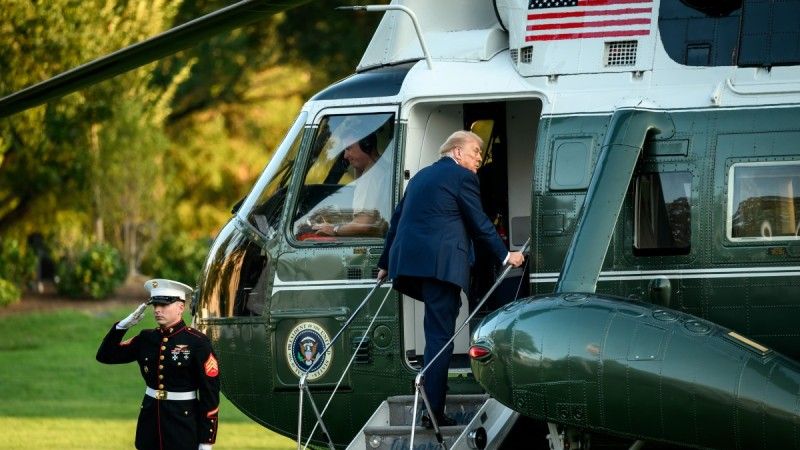
Photo. The White House, www.whitehouse.gov
„I wouldn’t be surprised if the chosen successor comes from outside the traditional political circle — at least as a vice‑presidential candidate. To maintain legitimacy, they need to avoid appearing like a self‑created „deep state” of loyalists” – said dr Robert E. Gutsche in interview with Defence24.com.
Magdalena Górnicka-Partyka: Here in Poland, we follow U.S. politics very closely because everything Donald Trump says somehow impacts our politics and geopolitical situation. I’d like to start with a question about how Trump’s second term differs from his first. What are the main differences?
Dr. Robert E. Gutsche: We might need to think of this second term as essentially his third. During those four years out of office, his team continued working for him. I don’t think Democrats or opposition groups fully understood the depth and complexity of the networks built over those years, including the first campaign. At this point, Trump has become an institution in himself. During his first election, many viewed him as a larger‑than‑life figure but not a political institution. It’s almost surprising to recall how some people laughed at his initial run. The irony now is what has happened to those who laughed then.
We are now seeing networks that were unimaginable at the time but that have aligned clearly with business networks. The pace of activity, the amplification, and what appears to be a 24‑hour operation inside the White House reflects that. The use of executive orders, the interpretation of legal powers, and the elevation of previously dismissed positions from the political right are central. This is often portrayed as a top‑down push, but in many ways it is driven by cultural forces from the local level up — counties, school boards, local religious movements. Trump himself recently said, „I won the counties,” and that county‑level dynamic matters. It’s a trickle‑up cultural movement grounded in longstanding issues like religion in schools and public morality.
When it comes to exercising presidential power, what has changed apart from executive orders? Are there other „hacks” of the system?
The most important change is a culture of fear — fear of opposing him. Lawyers and constitutional experts can outline the structural changes, but culturally, the atmosphere has shifted. A recent example: a journalist asked a policy question, and the answer was „your mom.” That response signals a disregard for established institutional norms, and journalists feel it. There is a growing silent opposition just as there was a silent Trump support base before. Where that leads is difficult to unwind.
We don’t see a lot of daily opposition to Trump. After the large „No Kings” protests, it feels like he can do whatever he wants.
Even during the government shutdown debate, both sides tried to appear calm and in control. But these are significant power moves, and the consequences will be cultural as much as political or financial. To understand what is happening, we need to look beyond personal feelings about Trump. There is a deeper structure at work — what C. Wright Mills called the „power elite,” a network between political and business institutions. Trump is the visible figure, but the networks matter. What is different now is the strategy toward the media — not just individual attacks, but undermining careers, livelihoods, and institutional legitimacy.
You mentioned the media. How is Trump using media differently now compared to his first term?
One surprising factor is the expanded use of alternative media. His team knows exactly where audiences are. They understand market behavior and personal and institutional networks. When there are empty positions in major institutions like the Pentagon, it creates opportunities to fill communication gaps with loyal networks. Democrats are now asking themselves why they did not think of these strategies first. We are also seeing stricter control of journalistic access — for example, pulling press passes for asking certain questions. The battle with the media is daily and intense.
What makes Trump able to navigate controversy without losing support?
Many Americans find him funny. Some people voted for him the first time because they thought he would be entertaining. His humor — often dark, crude, or degrading — resonates culturally. He also taps directly into themes of meritocracy, exceptionalism, manifest destiny, whiteness, and Christian identity. And he does so while being exempt from standards that religious communities normally expect from political leaders. These cultural appeals are deeply American — or more precisely, U.S.‑specific — and they operate far beyond traditional political debates.*
In Poland, many were shocked by the video he posted after the protests. You’re saying this reaction is rooted in American political culture?
I don’t think the humor itself is uniquely American, but the cultural context is. Some people believe life has improved under this style of politics. These dynamics play out in everyday life, even in classrooms and local interactions. Trump doesn’t need a third term — although he has floated the idea. He later walked it back not as an admission of error but with a tone of „it would have been nice.” For other politicians, one failed policy could be politically fatal. But Trump built a system tied deeply into local politics and federal structures, and many see that as a success.
My last two questions. First: free speech as a political tool — especially after the killing of Charlie Kirk. How is it being used?
There is a confusion in the U.S. about what free speech actually means and where it applies — social media, public spaces, private property, institutions. This confusion allows political actors to reshape the boundaries. The government and corporations now exert pressure that blurs the lines between private moderation and state influence. That creates situations where people don’t even know how to defend their rights because the constraints are hidden in corporate terms and informal pressures. The erosion of clarity around free speech norms is concerning.
And finally, who might be Trump’s successor?
Looking at the current cabinet, many appear ready to position themselves. Cabinet meetings show internal competition. Some expected J.D. Vance to emerge, but his influence seems uncertain now. Much may depend on midterms and how the shutdown plays out. I wouldn’t be surprised if the chosen successor comes from outside the traditional political circle — at least as a vice‑presidential candidate. To maintain legitimacy, they need to avoid appearing like a self‑created „deep state” of loyalists.
Thank you so much for your time and your insights.
Dr. Robert E. Gutsche, Jr. is Professor of Digital Culture at Florida Atlantic University, in the U.S., where he researches and teaches digital, political, and environmental communication. He has published research on the Trump Presidency, cultural shifts, and media landscapes.


