












- WIADOMOŚCI
The Ariane 6 rocket launched for the third time

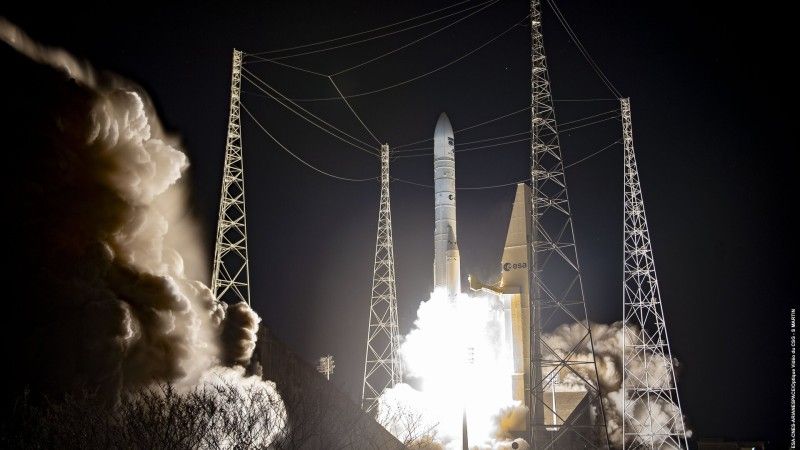
Photo. ESA
On the night of July 12-13, Arianespace launched the Ariane 6 launch vehicle. It was already the third mission using the Old Continent’s most important rocket.
Ariane 6 was launched from the spaceport located in Kourou, French Guiana. The mission, designated VA264, was only the second commercial flight of this rocket. This time, the goal of the launch was to place the Metop-SGA1 satellite into Earth orbit. The launch proceeded without any disruptions or technical problems. It was also confirmed that the payload separated successfully from the rocket.
Liftoff of Ariane 6 flight #VA264 launching Metop-SG-A1 and Copernicus Sentinel-5A to orbit! pic.twitter.com/7HTlq6c9Ow
— European Space Agency (@esa) August 13, 2025
The European Space Agency has confirmed that the deployment of the solar panels of the MetOp-SG-A1 satellite in orbit was successful, ensuring that the satellite will be able to generate energy. “We have received confirmation that MetOp-SG-A1 is operational and doing well!” the agency announced.
Ariane 6 is a relatively new European launch vehicle designed to transport heavy payloads. Its introduction has given Europe greater access to space. The rocket weighs 900 tons and measures approximately 60 meters. For the VA264 mission, Ariane 6 was used in a variant with four boosters. In this version, the system is capable of carrying 21.6 tons of payload into low Earth orbit (LEO).
Mission Payload
The objective of the VA264 mission was to launch the Metop-SG A1 weather satellite into Earth orbit. The satellite was built by Airbus Defence & Space under a contract with the European Space Agency (ESA). It was placed in a sun-synchronous orbit (SSO) at an altitude of approximately 800 km. Throughout its lifetime, the satellite will be operated by EUMETSAT.
The satellite is equipped with a set of instruments that will enable it to provide key data for weather forecasting, including storm prediction and climate monitoring. One such instrument is METimage, a multispectral camera operating in the visible and infrared range, and MWS (Microwave Sounder), which will enable the collection of weather data using microwave waves.

“Data from the second-generation Metop satellites will enable our experts to improve forecasts, strengthen warnings, and gain deeper insight into climate change at a time when up-to-date and reliable information is more important than ever,” emphasized Paul Counet, Director of Strategy, Communications, and International Relations at EUMETSAT.
Metop-SG A1 is the first unit of the new generation of the European polar orbiting meteorological network (EUMETSAT Polar System – Second Generation). Ultimately, it will consist of a total of six satellites. This is a continuation and development of the European MetOp program, which has been providing meteorological data since 2006. The new generation of satellites will operate until the mid-2040s.
Return to Service
Thanks to rockets such as Ariane 6 and Vega-C, Europe has gained an independent capability to launch payloads into space. The decision to build a new rocket was made in 2014. It replaces its predecessor, Ariane 5, which made its last flight in July 2023. Including the VA264 mission described here, Ariane 6 has completed three flights, two of which were commercial. The first commercial mission involved the launch of the French reconnaissance satellite CSO-3.
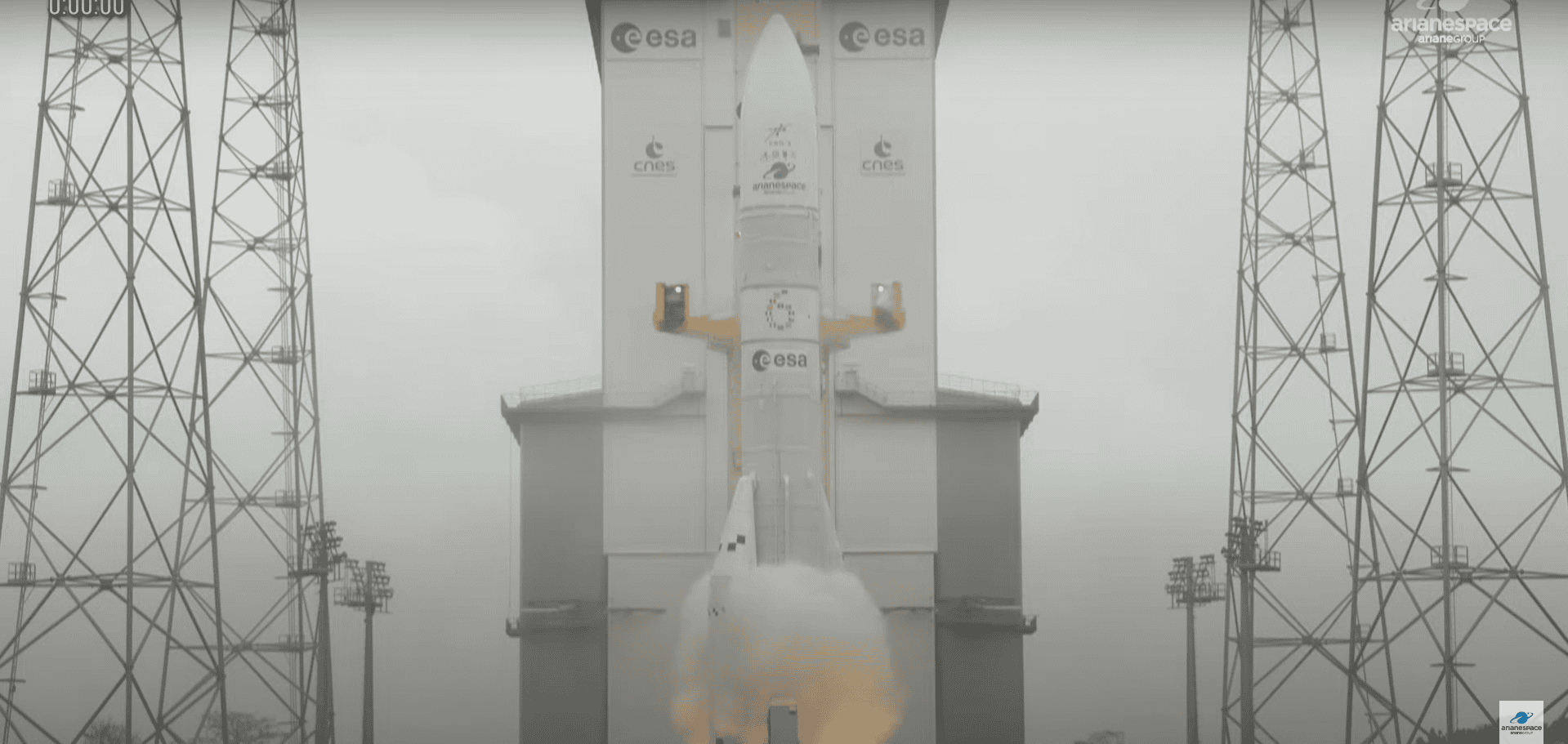
Further Ariane 6 flights are also scheduled to take place in the coming months. Among the payloads to be launched by this European rocket are the first second-generation satellites of the Galileo navigation constellation, the Sentinel-1D unit, and satellites from Amazon’s Kuiper constellation.


