












- ANALIZA
- WIADOMOŚCI
Managing consent: The FSB’s Second Service and the full cycle of repression

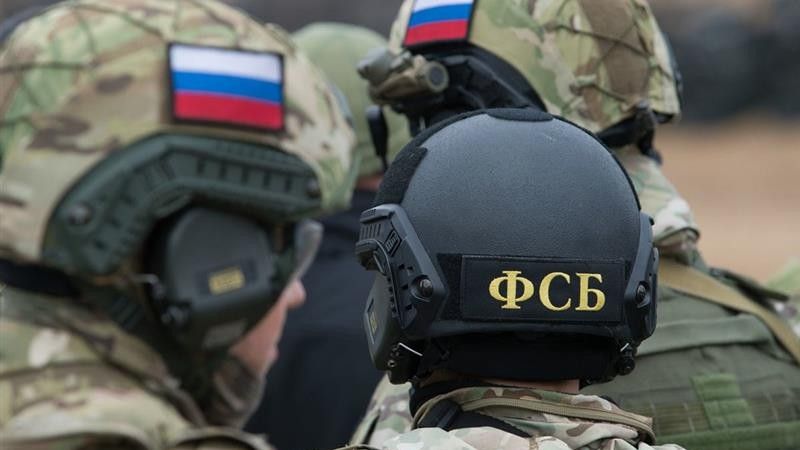
The FSB’s Second Service (division) is the core of the Russian security apparatus — an institution that, rather than protecting the state from external threats, polices society and eliminates any expression of dissent. Rooted in the traditions of the KGB, its contemporary power rests on a synthesis of counterintelligence, digital surveillance and political repression. Led for nearly two decades by General Aleksiej Siedow, it has become a pillar of a system where „security” is synonymous with loyalty to the Kremlin. From poisonings and provocations to influence operations abroad, the Second Service epitomizes the continuity of the Russian state in the Putin era.
Russia’s security apparatus has long been the backbone of state power, its remit extending well beyond a narrow concept of defence. Since the era of Ivan the Terrible, when the Oprichnina served to eliminate internal opponents rather than protect citizens, successive security organs — the tsarist Okhrana and later the Soviet secret services — operated on the same principle: state security equalled the preservation of the ruler’s authority. Rather than guaranteeing the rule of law, these institutions focused on information control, political prevention and the disruption of dissent. That model persisted after the Soviet collapse. Although the Federal Security Service (FSB) was formally established in 1995 to protect Russia from terrorism and espionage, in practice it inherited the personnel, methods and philosophy of the KGB.
As the Atlantic Council notes in the report „Lubyanka Federation,” the FSB did not become a modern service in the Western sense, but rather a continuation of a model in which the security apparatus serves to preserve the regime. Contemporary FSB uses the latest surveillance and data-analysis technologies for this purpose, but in its essence it has preserved old patterns of conduct. In this way a system has been created that combines counterintelligence, political police and an analytical center into a single organism managing social risk and resistance to the authorities.
Structure and functions of the FSB's Second Service
The central part of this system within the FSB is the so-called Second Service, i.e. the Service for the Protection of Constitutional Order and the Fight against Terrorism. Formally its objective is the protection of the constitutional order of the Russian Federation, but in practice this means supervising political life, monitoring society, and preventing any forms of independent activity. According to a Dossier Center report, the Second Service constitutes an internal political counterintelligence that analyzes social moods, infiltrates opposition circles and develops recommendations for the Kremlin administration.
Its structure includes several specialized departments. The Directorate for the Protection of Constitutional Order (UZKS) is responsible for observing social circles and analyzing potential political threats. The Department for Combating Terrorism and Political Extremism (UBTPE) and the Operational-Investigative Division (OID) handle operational and investigative activities, which often combine elements of prevention with repression. The Directorate for Combating International Terrorism (OCIT or UBMT), in turn, is responsible for foreign threads – from contacts with the Russian diaspora to influence operations and information activities. As a result the Second Service has become a formation combining features of the political police, counterintelligence service and propaganda apparatus – an institution that secures Putin’s power from within.
Centers and technical support
The Second Service operates in two main locations. The first is the historic FSB headquarters on the Lubyanka in Moscow (military unit no. 36391), where the central staff and operational support are located. The second is the modern analytical complex „Priboy” at Vernadsky Prospect 12, building 4. According to findings by The Insider and OSINT sources, „Priboy” is a center for data processing and digital analysis. It is there that information is collected from social network monitoring, media, communications systems and telemetry sensors.
As The Insider writes, „Priboy” is a symbol of the FSB’s transformation from a classic counterintelligence service into an institution based on data analysis. In one place traditional operational working methods are combined with modern surveillance technologies. Data from this center goes directly into the FSB’s central reports and the National Anti-Terrorism Center, forming the basis for political and propaganda decisions. Although Russia has never officially disclosed the function of the complex, independent sources indicate that the „digital heart” of the Second Service is located there.
General Aleksei Siedov — one of the longest-serving directors in the FSB
At the head of the FSB’s Second Service — since 2006 — stands General Alexey Syemionovich Siedov, who is one of the longest-serving directors within the entire structure of the Federal Security Service. His almost twenty-year tenure makes him not only one of the most experienced but also one of the most influential officials in contemporary Russia. In a system where staff rotation is a tool of political control, such a long period in office testifies to exceptional trust on the part of the highest state authorities, and above all Vladimir Putin.
Siedov, born in 1954 in Leningrad, graduated in 1977 from the Leningrad Institute of Aviation Instrumentation, and then worked for several years in the defence industry. In 1980 he began service in the KGB, in the operational-technical structures of the Leningrad directorate. After the collapse of the USSR he continued his career in the Ministry of Security and in the Federal Tax Service, where he led investigative and control divisions. From the late 1990s he held senior positions in the state’s economic structures, including in the Federal Drug Control Service.
In March 2006 he was appointed head of the FSB’s Service for the Protection of Constitutional Order and the Fight against Terrorism. Since that moment he has continuously led one of the most strategic units of the Russian security apparatus.
A twenty-year period in office is an anomaly even by FSB standards, where tenures of directors of individual services usually do not exceed a few years. Siedov’s stability in the post demonstrates his special position — he is perceived as a „man of the system,” a guarantor of loyalty to the Kremlin and a link between the old service nomenclature and the new, Putinist order.
His name appeared in independent media in autumn 2022, when Alexei Navalny’s team published an investigation into the wealth of Russian generals. According to The Insider and Meduza, Siedov and his family possess real estate assets valued at up to one billion rubles — including a villa in Srebrny Bor near Moscow, a house in Sestroretsk and apartments in Petersburg. Although formally some of these assets belong to the Russian Federation or to companies linked to the oligarch Vladimir Yevtushenkov, one of the owners of AFK Sistema — a company described by Russian media as the „portfolio” of the Solntsevo organized crime group — journalists point to numerous traces of indirect financial ties.
Aside from the wealth scandals, media sources note that Siedov’s „longevity” in office makes him one of the most important „architects” of the contemporary surveillance system in Russia. As RFE/RL emphasizes, his Second Service was crucial in developing practices of „political prophylaxis,” i.e. preventive actions against citizens deemed disloyal. In this sense Siedov has become a symbol of institutional continuity of repression — from the analog methods of the KGB to the digital surveillance tools of the 21st century.
He is not a media-facing general or a reformer. He is a manager of a system that he understands as a permanent, self-sustaining structure unfailingly subordinated to the interest of the state conceived as power. In this sense Alexey Siedov is not only one of the longest-serving directors in the FSB, but also one of the most representative men of the Putin era — an official whose career personifies the logic linked to the tradition of the Russian police state.
System of control: Prophylaxis and repression
The mechanism of the Second Service is based on combining analysis, prevention and psychological pressure. The UZKS Directorate monitors environments considered risky — from the opposition to nationalists — and conducts so-called preventive conversations, which in practice are a form of warning and pressure. According to Dossier Center and The Insider, UZKS reports go to the prosecutor’s office, courts and ministries, where they become the basis for decisions to add organizations to the lists of „foreign agents” or „undesirable organizations.”
In this way the Second Service co-creates a system of „managing consent” in society — shaping the boundaries of permissible criticism and defining who may participate in public life. As RFE/RL writes, formal power and security services are increasingly merging into one, creating a „parallel power” that effectively steers political processes outside the official parliament and government.
Counter-terrorism as a tool of control
The UBTPE and OID departments, responsible for combating terrorism, in theory protect the state from external threats. In practice they often serve political ends. As Dossier Center findings and accounts of former officers show, some operations have a provocative character: officers initiate actions that are later presented as foiled attacks. Such methods inflate success statistics but do not improve actual security.
The contrast between propaganda and reality was exposed in 2024 during the attack at Crocus City Hall near Moscow and a series of attacks in Dagestan. In the first case ISIS-K terrorists killed 149 people, despite the fact that — as Reuters revealed — the FSB had previously received warnings from the USA and Iran.
In Dagestan, where on June 23, 2024 temples and police posts were attacked, civilians and officers also died. As Al-Jazeera noted, the authorities« response was chaotic and the communications contradictory. In both cases the system failed where it was supposed to work, because its main goal remains control of citizens, not genuine prevention.
The FSB's Second Service and the systemic use of poisons
One of the most shocking and best documented areas of FSB activity, including the Second Service, is the use of poisons against political opponents and independent journalists. International investigative teams — Bellingcat, The Insider, Der Spiegel and CNN — have found that since the early 2010s a specialized toxicology group linked to the FSB’s Forensic Institute has been operating within the FSB structures, preparing and conducting operations using chemical agents of a combat nature, including Novichok derivatives.
According to Bellingcat’s investigation, analysis of telecommunications, aviation and travel data showed that a team of at least eight FSB officers tracked Alexei Navalny for nearly three years — in total during more than 30 trips, often on the same routes the oppositionist used. OSINT techniques were used to identify the officers — cross-referencing call records, passenger registers and internal FSB personnel data. Among the identified individuals were Oleg Tayakin, Konstantin Kudryavtsev, Alexei Aleksandrov and Ivan Osipov — all formally employed at the FSB Forensic Institute.
Toxicology operations of the FSB: evidence of a systemic character
The use of a nerve agent from the „Novichok” group in the Alexei Navalny case was officially confirmed by the Organisation for the Prohibition of Chemical Weapons (OPCW), which in an October 2020 statement reported the detection of substances from this family in samples of biological materials. Soon after, on December 14, 2020, Bellingcat, The Insider, Der Spiegel and CNN published a joint investigation showing that a team of at least eight FSB officers had tracked Navalny for three years, traveling on the same flight routes. In a follow-up publication The Insider and Der Spiegel confirmed that the FSB toxicology team operated from bases in Moscow and Tomsk — locations where Navalny had been shortly before the poisoning.
As CNN reported, analysis of telecommunications data and passenger registers proved their presence in the same locations as the oppositionist. The Washington Post, describing a conversation between Navalny and one of the FSB officers, emphasized the direct nature of the operation and the responsibility of state structures. Chemical-weapons expert Dr. Dan Kaszeta, author of the book Toxic: A History of Nerve Agents, notes that the production and operational use of Novichok-group agents „practically requires state facilities and procedures,” which rules out hypotheses of independent perpetrators.
In February 2021 Bellingcat and The Insider expanded the investigation to the case of Vladimir Kara-Murza. In the publication „Vladimir Kara-Murza Tailed by Members of FSB Squad Prior to Suspected Poisonings” it was established that the same FSB officers who participated in the operation against Navalny had followed Kara-Murza on trips preceding his two poisonings — in 2015 and 2017. Analysis of flight and telecommunications data showed that their phones activated in the same cell zones where the oppositionist was present, indicating a coordinated nature of the actions.
The third case — concerning writer Dmitry Bykov — was described in a Meduza and The Insider report of June 9, 2021. It was established that Bykov was tracked by the same FSB group in the weeks preceding his sudden illness in 2019. Passenger-register data showed that officers Tajakin and Aleksandrov traveled on the same plane on the Moscow–Novosibirsk route.
According to Meduza, in an updated report prepared with Dossier Center the list of officers linked to these operations was expanded to include also Second Service officers responsible for target reconnaissance and logistical oversight. Thus the Second Service played a coordinating role — providing surveillance, reporting and operational cover for toxicology specialists from the FSB Forensic Institute.
As RFE/RL summarizes, the FSB combines operational, toxicological and propaganda activities into a single system of repression — from physical elimination to control of the media narrative. Similar conclusions are reached by the Atlantic Council report „The Kremlin’s Weaponization of Fear,” which describes a strategy of „managing fear” — combining visible violence against known victims with a quiet, technical method of its execution. Such a form of repression is simultaneously a political message — a demonstration of the state’s omnipotence and the impunity of the apparatus.
As The Guardian points out, contemporary poison policy is a continuation of the Soviet „Laboratory No. 12” tradition — a KGB unit that developed toxins for the quiet liquidation of opponents. Today’s FSB Forensic Institute is its successor, operating in the realities of digital control and OSINT surveillance.
According to Meduza, the poisonings of Navalny, Kara-Murza and Bykov constitute a „pattern of psychological operations” — each of them was intended both as a warning to Russian society and as a test of the West’s limits of reaction. As The Insider noted, state media did not deny the facts but played with half-words and irony, amplifying the effect of fear. In this way poison becomes a language of power — a tool of symbolic communication that the state can act without constraints.
As a result, FSB toxicology operations form one of the pillars of modern Russian authoritarianism. Instead of mass repression, targeted violence is used — aimed precisely and spectacularly revealed to act as a deterrent. According to Dossier Center, it is no accident that the Navalny, Kara-Murza and Bykov cases converge in one place — in the FSB’s Second Service, where physical and narrative violence are intertwined in a single system of maintaining power.
The Second Service in the FSB's global network
The case of Aleksandr Ionov is one of the most telling examples of how Russian security services — including the FSB’s Second Service — conduct operations beyond the country’s borders, combining propaganda, intelligence and financial activities. As Radio Free Europe/Radio Liberty revealed, Ionov — a Russian activist and FSB intermediary — maintained regular contact with Second Service officers Aleksei Suchodolov and Yegor Popov.
According to RFE/RL and U.S. Department of Justice court filings, a secured copy of iCloud data contained dozens of pages of WhatsApp correspondence. These conversations show that Ionov acted as a liaison between the Second Service and political groups in the United States, passing them propaganda topics, media instructions and financial means.
In one conversation from February 2022, just after a failed attempt to seize the Hostomel airport near Kyiv, Ionov consulted with FSB handlers on a propaganda narrative about „heroic paratroopers” — a classic example of narrative management during a military setback.
This was the first case in history in which authentic correspondence between FSB officers and a foreign „asset” was included in U.S. court proceedings as evidence. According to RFE/RL, it constitutes unprecedented material confirming that Russian services conduct not only classic intelligence but also long-term political influence operations on the territory of other states.
Ionov’s case fits into a broader context of FSB activity beyond Russia’s borders. As Dossier Center stresses, the Second Service (UZKS/UBMT) is responsible for „soft-influence operations” — supervising the Russian diaspora, maintaining contacts with pro-Russian organizations in Europe and the U.S., and distributing funds for disinformation activities. Meanwhile the FSB’s Fifth Service, known for activity in the territory of the former USSR, runs its own influence operations — e.g. in Georgia, Moldova and Ukraine — often in coordination with the Second Service’s international division.
According to investigations by The Insider and analyses by the Atlantic Council think tank, the FSB operates on three overlapping levels:
- The Military Counterintelligence Department (DVKR) — conducts traditional espionage operations, collecting information and running agents;
- The Service for Operational Information and International Relations (Fifth Service) — is responsible for political and disinformation activities in the "near abroad";
- The Service for the Protection of Constitutional Order and the Fight against Terrorism (Second Service, UZKS/UBMT) — conducts psychological and media actions aimed at influencing public opinion in Western countries.
This shows that the FSB is not solely an internal structure but a network conducting parallel operations — from internal control of the opposition to intelligence operations beyond Russia’s borders.
Ionov, although only one of the „active intermediaries,” is material proof of the functioning of this global influence network. As RFE/RL notes, his case exposes the „dual communication system of the Kremlin” — the official, diplomatic one and the covert one conducted by the special services. In the latter the Second Service performs the role of „narrative coordinator,” managing the propaganda message that is intended to cement an image of Russia as a victim rather than an aggressor.
According to The Insider, Ionov’s links to the Second Service confirm that this division — alongside the Fifth Service and DVKR — participates in activities beyond the country’s borders. Each of these segments has different tools, but a common goal: maintaining a global influence network that ensures Russia an informational and propaganda advantage even under conditions of international isolation.
The Second Service after 2022 — the full cycle of repression
After the start of the invasion of Ukraine, the FSB, and in particular the Second Service, gained a new dimension of power. As RFE/RL emphasizes, it is the Second Service that conducts most cases concerning „political extremism” and „discrediting the army.” Agentura.ru revealed that the FSB is preparing to build its own detention centers and investigative facilities — independent from the Federal Penitentiary Service.
Reuters and The Moscow Times confirm that the adopted regulations allow the service to carry out the full repressive process — from arrest to isolation — without the participation of external institutions. This means a return to the Soviet model in which the secret services had full control over investigation, trial and prison. Contemporary FSB thus creates a parallel justice system based on loyalty rather than law. As Dossier Center comments, this is a „full repressive cycle” — from surveillance to physical elimination of a threat — operating within a single structure.
The FSB’s Second Service today is more than a part of the security apparatus — it is a pillar of the Russian model of governance. Its role goes beyond prosecuting crimes. It includes defining the boundaries of debate, shaping the narrative and controlling public opinion. As RFE/RL stresses, it is a „parallel power” operating outside the formal state institutions. It now constitutes the glue of the repressive system in Russia. In one place violence, surveillance and propaganda — the three pillars of maintaining power — come together.
If Russia in the future enters a period of political turbulence, it will be this structure that will decide on the direction and pace of change. As RFE/RL writes, the security forces already co-rule the state — not from parliamentary benches, but from behind the screens in „Priboy” and the offices on the Lubyanka. The Second Service is therefore an apparatus for maintaining order in the Russian sense, which does not protect citizens but the system itself.


