












- WIADOMOŚCI
- KOMENTARZ
Russia’s hybrid warfare and geoeconomics in the Southeast Europe

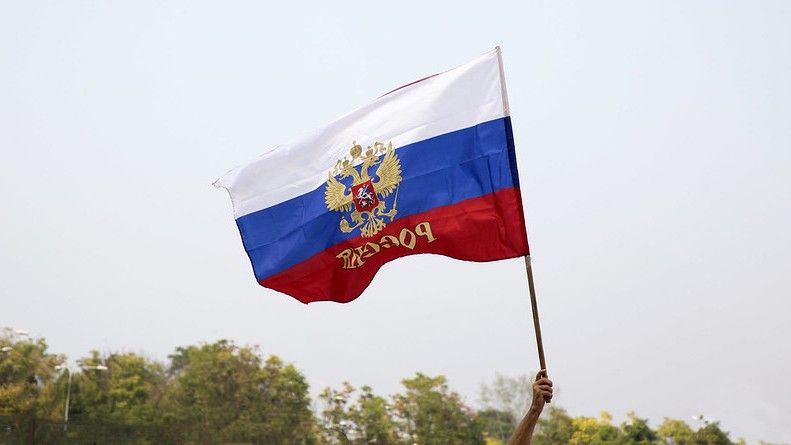
Serbia acts as a focal point for Russian influence. How does Moscow’s policy influence events in the Balkans?
Strategic starting point: The Western Balkans as a geopolitical area of tension
Southeast Europe - encompassing the Western Balkans, which includes Albania, Bosnia and Herzegovina, Kosovo, Montenegro, North Macedonia, and Serbia, as well as Croatia, Slovenia, Greece, Bulgaria, and Romania, represents a historic and geostrategic crossroads linking Europe, Asia, and the Middle East. With a population of approximately 60 million, the region serves as a critical buffer along the southeastern flank of the European Union and NATO and remains a focal point of external influence and strategic competition.
Mountains, rivers, ports, and transport routes create natural corridors that connect Central and Southern Europe and are crucial for trade and military logistics. Any delay in European integration opens up gaps that external powers are quick to exploit in order to shape political alliances and infrastructure projects in line with their own interests.
Serbia acts as a focal point for Russian influence. The government under President Aleksandar Vučić pursues a policy that combines nationalist narratives and regional destabilisation. Through Moscow’s direct support in Kosovo, the undermining of the Dayton Agreement in Bosnia, and its influence on Montenegro, states are being deliberately destabilised, putting Europe under pressure in the medium term.
Hybrid instruments — Moscow’s arsenal in detail
- Intelligence cooperation and political influence
Russian intelligence agencies such as the FSB and GRU work closely with Serbia’s intelligence agency, the BIA, on an „open-book” basis. This cooperation involves information exchange, joint operations to weaken state institutions, and targeted support for local actors seeking to join Serb-dominated areas. Supporting politicians like Milorad Dodik, President of Republika Srpska, fuels such annexationist aspirations in Bosnia and Herzegovina, frequently bringing the state to the brink of internal conflict and gradually undermining the Dayton Agreement.
At the same time, Serbia, supported by Russian intelligence services, is also continuously causing political tensions in Kosovo. Russian backing in the international Kosovo issue gives Belgrade political freedom of action and keeps the entire Western Balkans in a state of heightened geopolitical tension.
Since the start of the Russia-Ukraine war, around 300,000 Russians have moved to Serbia. It is assumed that this includes intelligence officers and economic experts who are further developing strategic concepts and regional influence projects.
- Disinformation and social polarisation
Targeted media campaigns, manipulated news networks, and the instrumentalization of nationalist narratives generate mistrust of EU and NATO structures. These information operations destabilise political decision-making processes and prepare the ground for hybrid interventions.
- Election manipulation and infiltration of political processes
In Montenegro, political processes demonstrate vulnerability: in addition to the coup allegations discussed in 2016, there were also reports of external influence in 2022. Pro-Serbian and pro-Russian forces sit in the Montenegrin parliament, which poses significant security risks due to the country’s NATO membership. Sensitive information could potentially be passed on to Russia, undermining the strategic stability of the alliance.
During the recent presidential election in Romania, a similar pattern emerged. Candidate Călin Georgescu reportedly received substantial indirect support from Russia-affiliated networks. The Romanian intelligence services uncovered that this support involved coordinated activity on social media as well as campaign funds whose origins could not be fully traced. On 6 December, the Constitutional Court of Romania annulled the election results due to significant irregularities.
- Militarisation as a deterrent and leverage
Serbia is engaged in intensive rearmament, incorporating both Russian and Western technologies. Particularly controversial: the KH 31 missiles, which Serbia has possessed since early 2025, were delivered despite an embargo and had to be transported through NATO and EU airspace. This combination of old Soviet technology and modern Western equipment creates operational flexibility and increases regional insecurity.
Geoeconomics: energy, refineries, and raw materials as instruments of power
- Energy and strategic corporate investments:
Russian companies continue to control key segments of the regional energy and infrastructure landscape. In Serbia, for instance, the national oil company NIS remains majority-owned by Gazprom. As of 9 October 2025, U.S. sanctions against NIS have officially entered into force - a development with far-reaching economic and political consequences. Energy prices are expected to rise sharply, with fuel costs at petrol stations already increasing. Industrial production, particularly in energy-intensive sectors, will face steep cost escalations.
While Romania and Bulgaria have largely diversified away from Russian oil and reduced their dependency through alternative import routes and refinery adjustments, investments from the United Arab Emirates in renewable energy, as well as from China, are helping these states become more independent from Russian oil. Serbia, by contrast, chose to maintain full reliance on Russian supplies - a decision now resulting in severe repercussions.
The sanctions strike at the core of President Vučić’s political system, which has been visibly under strain since December 2024. Mounting fiscal pressures, combined with the risk of social unrest driven by surging energy and consumer prices, could significantly destabilize the political and economic balance in Belgrade.
- Refineries and direct ownership:
In Bosnia and Herzegovina, the only two refineries are owned by Russian interests (Zarubezhneft subsidiaries). This control enables Russia to exert targeted influence over fuel supplies, prices, and thus economic stability, and to put political pressure on the country.
- Sanctions and military cooperation:
Serbia remains the only European country that has not aligned with EU or US sanctions against Russia. In the past, joint military exercises were held between Serbian and Russian forces, which strengthened operational cooperation and increased security risks across the region.
- Raw materials and infrastructure:
The Western Balkans have lithium (Jadar/Serbia), copper, bauxite, and rare earths. Influence over development, financing, and export creates long-term dependencies. Adriatic ports (Bar, Durrës, Vlorë) also enable logistical control. Russian and Chinese investments complement this strategy with economic leverage, often accompanied by non-transparent credit structures or strategic investments.

Conclusion
Russia’s hybrid warfare combines political destabilisation, military build-up, and geoeconomic pressure into an integrated strategic approach. Using Serbia as a hub, Moscow destabilises Bosnia and Herzegovina, influences Montenegro, keeps Kosovo in a state of tension, and affects the entire Southeastern European security architecture.
The combination of intelligence operations, disinformation, political influence, military cooperation, and control of critical infrastructure poses a significant challenge to the EU, NATO, and regional stability. Without decisive and coordinated European action, the Western Balkans risks remaining a geopolitical lever for external powers that could destabilise Europe in the medium term.
At present, there is no discernible unified European strategy. This opens the door for Russia and other external actors to exert control over the Western Balkans. Europe runs the risk of ceding control over the Western Balkans to others, both in terms of security policy and economically.
Author:Eduard Vasilj holds degrees in Political Science and International Law from the Goethe University of Frankfurt and in Political Science and Organisation from the University of Zagreb. Following his advisory work for governments, he transitioned into the private sector, serving for almost 20 years in executive and board positions within major multinational corporations across the German-speaking region and Southeast Europe. He advises governments, multinational corporations, and family offices on geopolitical risk - and geoeconomics — with a particular focus on East and Southeast Europe.


