












- ANALIZA
- KOMENTARZ
- WIADOMOŚCI
Nepal after the revolution and elections: Which way on the global stage?

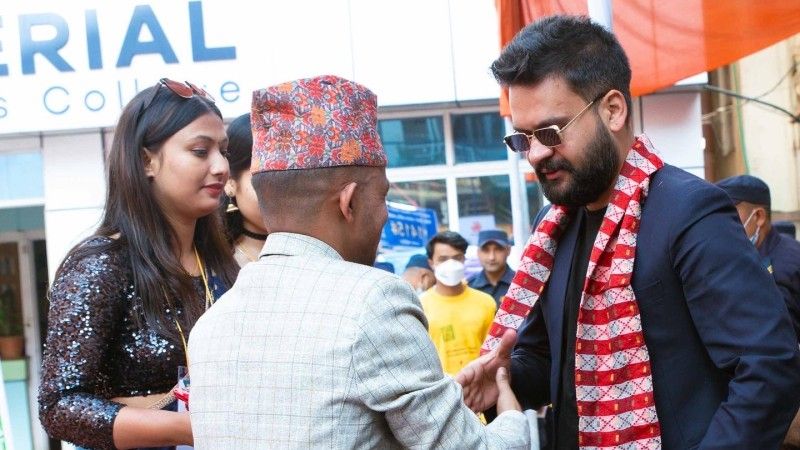
The landslide victory of Balendra Shah brought to a close a turbulent period that had gripped Nepal since last year. The country appears poised to pursue a slightly India-leaning policy.
In September 2025, Nepal dominated international headlines due to the extraordinary brutality of what came to be known as the “Gen Z Revolution”. The immediate trigger for the unrest was the government’s decision to block most social media platforms. The ruling elite, accustomed to the era of linear television, which in Nepal, as elsewhere, is watched primarily by the oldest generation, dramatically underestimated how deeply younger citizens relied on these platforms as their principal means of communication.
Yet the ban was merely the spark. The deeper causes ran far more profound—endemic corruption, entrenched nepotism, and a lack of prospects for the younger generation. The term “nepo kids” even entered public discourse, describing the children of well-connected families for whom career doors opened regardless of ability. At the same time, many Nepalis watched with growing frustration as their country lagged far behind neighboring China and India, while the limited benefits of economic growth flowed almost exclusively to a narrow elite.
See also 

The unrest turned violent. Numerous government buildings were set ablaze, and security forces responded with brutal repression. At least 76 people lost their lives. Ultimately, however, the government was forced to concede: the wave of public anger had grown too powerful to suppress.
In the aftermath, Nepal experimented with an extraordinary method of selecting a provisional leadership: a vote conducted on the online platform Discord. The process was won by Sushila Karki, a member of the elite but also one of the most outspoken critics of abuses of power. She formed an interim government that focused on compensating the families of those killed during the protests and preparing credible new elections. Order was restored, but expectations for profound political change remained high.

Those expectations were decisively expressed in the ballot box on 5 March. The Rastriya Swatantra Party (RSP), led by Balendra Shah, widely known as Balen, emerged as the clear victor. Shah himself had participated in the earlier Discord vote but stood little chance against Karki at the time. In the real elections, however, casting a vote for him became synonymous with voting for the revolution itself.
The mandate proved overwhelming. The RSP secured nearly 48 percent of the vote and 182 seats in the 275-member parliament, the second-best electoral result in Nepal’s history. Shah personally defeated former multiple-term prime minister KP Sharma Oli in his constituency, granting him an exceptionally strong mandate to govern and to deliver the reforms many citizens now demand.

The question now is what direction he will choose. Can Shah implement genuine reforms capable of placing Nepal on the path of rapid development, similar to the trajectories pursued for decades by its powerful neighbors? Or will he succumb to the familiar temptations of power: consolidating authority, cultivating a personality cult, and distributing only token benefits to the public? History offers many such cautionary examples.
For the moment, Nepal appears to possess a rare window of opportunity. The previous elite has been thoroughly discredited, public sentiment is unmistakable, and the country’s young society has demonstrated a willingness to make sacrifices for the sake of national prosperity. This was evident both during the revolution and in its aftermath, when the unrest did not spiral endlessly but instead gave way to the organization of credible parliamentary elections.
It is also worth noting that Shah is far more than the rapper he is sometimes portrayed as in international media. He is, perhaps above all, a seasoned politician. As mayor of Kathmandu, he governed a city of roughly two million people and did so with notable success. He is hardly an accidental figure on Nepal’s political stage.
The stakes extend beyond Nepal itself. Similar protests – driven by many of the same social frustrations – have erupted in several other countries. In neighboring Bangladesh, they ultimately resulted in the return to power of a party that had ruled for decades, leaving little fundamentally changed. In Madagascar, they culminated in the establishment of a military dictatorship. Should Shah succeed in reforming Nepal, it would represent perhaps the most positive resolution yet to such movements and could inspire others. Failure, by contrast, would place Nepal alongside less encouraging precedents – and the global wave of Gen Z protests might come to resemble the fate of the Arab Spring.
Another crucial question concerns Nepal’s position on the international stage. It is almost a cliché to note that the country sits geographically between the world’s two most populous states, China and India, leaving it, in practical terms, with only two strategic orientations: leaning toward Beijing or toward New Delhi. Previous governments, particularly that of KP Sharma Oli and his communist party, tended to favor a north-eastern orientation.

Yet China – despite its association with rapid economic growth – did little to transform Nepal’s economic trajectory, limiting itself largely to showcase investments and the promotion of Chinese language and culture.
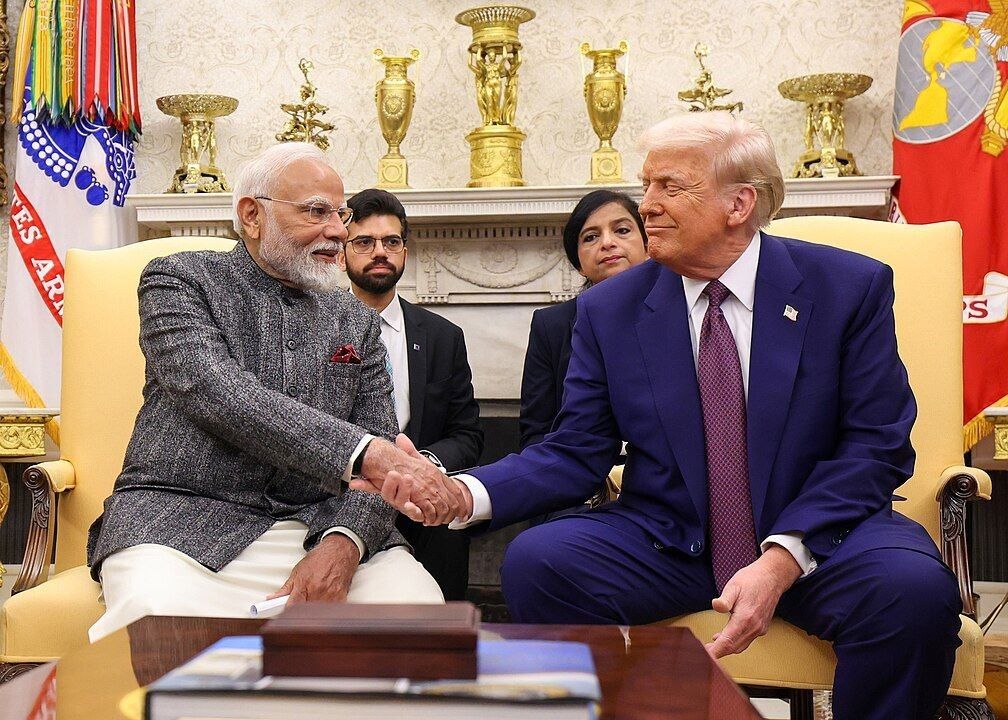
Balendra Shah has long sought to present himself as a pro-Nepal politician above all, one who balances external influences while emphasizing national independence. He has made both anti-Indian and anti-Chinese gestures. At the same time, his education at the prestigious Indian Institute of Technology in Bengaluru, along with the cultural codes surrounding him, bring him closer to India – and indirectly to the West.
From this perspective, Shah’s foreign policy may well emphasize “Nepal First” Publicly, he may demonstrate independence from New Delhi – he once even displayed a map of “Greater Nepal” containing territorial claims against India – while in practice maintaining a subtle tilt toward India and adopting the increasingly fashionable transactional approach in relations with China and other states.
See also

Ultimately, Nepal’s interests lie in achieving sustained economic success. In local terms, this means maintaining annual growth of 7–8 percent over an extended period, investing seriously in infrastructure, and avoiding unnecessary disputes with its neighbors.
With such a powerful electoral mandate, Balendra Shah now has a rare opportunity to pursue that agenda. Whether he will succeed, however, is a question that only time can answer.


