












- WIADOMOŚCI
Bundeswehr to bring abandoned bases back into service: Eight sites shortlisted

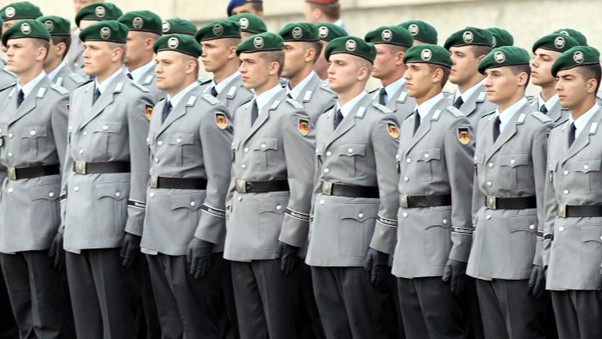
Photo. Wikimedia Commons
The German Ministry of Defence has identified eight former military facilities that could soon be brought back into service. The move is directly linked to plans to introduce the so-called New Military Service scheme (Neuer Wehrdienst) and the urgent need to expand the training infrastructure available to the German armed forces.
The decision represents another step in the Bundeswehr’s adaptation to the current security environment and its efforts to strengthen NATO’s eastern flank.
Why is Germany reactivating former garrisons?
The principal reason for bringing abandoned barracks back into service is the planned expansion of the armed forces. Europe’s changing security environment, requirements arising from NATO defence plans, and Germany’s growing operational and logistical needs—including those connected with Operational Plan Germany (Operationsplan Deutschland) and the concept of Germany as a key logistical hub (Drehscheibe Deutschland)—are generating enormous demand for personnel and equipment and, consequently, for adequate infrastructure.
To safeguard these requirements, the Ministry of Defence suspended the conversion of former military sites for civilian use in October 2025. At the time, 200 properties were placed under a conversion moratorium so that their potential military utility could be assessed. A further 27 locations were added to the list this year.

Primary purpose: Training for the recruits
From the extensive portfolio of available properties, eight sites have been selected because their location, surviving infrastructure and capacity make them particularly suitable for supporting the New Military Service programme. These facilities, many of which include adjacent former drill grounds and local training areas (Standortübungsplatz, or StOÜbPl), are intended primarily to serve as training centres. They are expected to provide the essential training capacity (Ausbildungskapazitäten) required to accommodate, instruct and prepare new recruits for military service effectively.
When will the garrisons resume operations?
A final decision on the formal reactivation of the eight bases has not yet been taken, but the process is now entering its next, and decisive, phase. Detailed consultations are beginning with municipal, regional and federal authorities. Their purpose is to reach a compromise and balance the Bundeswehr’s operational requirements against the interests of the municipalities in which the barracks are located.
The Ministry of Defence expects the evaluation of all military properties whose conversion has been suspended to be completed by the end of 2026. Only after that process and consultations with local authorities have concluded can final decisions be expected regarding the precise timetable for refurbishment work and the eventual return of military personnel to the selected sites.
The list published by the German Ministry of Defence includes the following facilities:
- Rantzau Barracks in Boostedt, Schleswig-Holstein;
- Hinrich Wilhelm Kopf Barracks in Cuxhaven, Lower Saxony;
- Kurpfalz Barracks in Speyer, Rhineland-Palatinate—formerly home to, among other units, the 464th Special Engineer Battalion;
- Unteroffizier Krüger Barracks and its associated training area in Kusel, Rhineland-Palatinate;
- Kanaal van Wessem Barracks in Soest, North Rhine-Westphalia;
- the former NATO Joint Headquarters and the former Wegberg military complex in Mönchengladbach, North Rhine-Westphalia;
- Graf Stauffenberg Barracks and its associated training area in Sigmaringen, Baden-Württemberg;
- Ray Barracks and the former US Ockstadt training area in Friedberg, Hesse.


