












- WYWIADY
- WIADOMOŚCI
Finland is preparing for the worst-case scenario [INTERVIEW, Part 1]

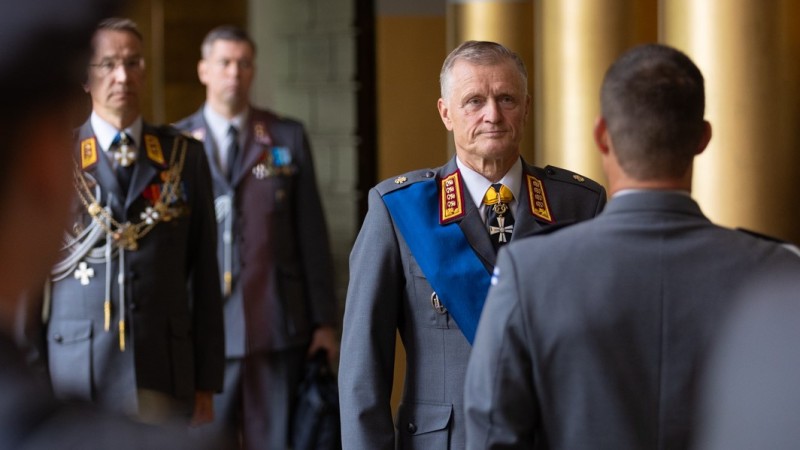
For decades, Finland has built its security model not on illusions, but on consistency: universal military training, large reserves, comprehensive national defence and a close relationship between the armed forces and society. Today, following Russia’s aggression against Ukraine and Finland’s accession to NATO, Finnish experience has become one of the most important reference points for countries on the Alliance’s eastern flank. In the first part of interview with Defence24, Gen. Timo Kivinen, former Commander of the Finnish Defence Forces, discusses how Finland views mobilisation, border defence and drone warfare. In the second part, conventional systems including F-35, artillery and air defence as well as defence cooperation with Poland will be discussed.
Defence24 (Jędrzej Graf): Across NATO’s eastern flank, there is currently an intense debate about what model of reserves and mobilisation frontline states should adopt. This discussion concerns Poland, the Baltic states and the Nordic countries, but also increasingly the wider European debate on defence. How does Finland view this issue? What is the philosophy behind building reserves in your defence system, and what is the main objective of this strategy?
Reserve General Timo Kivinen: First of all, it is important to look at history.
During the Cold War, many European countries maintained conscription systems. Later, however, as the strategic environment changed and the general perception emerged that Europe no longer faced the threat of a major interstate conflict, many of those countries abolished conscription or gradually allowed it to fade away. Finland chose a different path. We did not. In our case, the system based on conscription and reserves has very deep historical roots. It is not a temporary solution created under short-term pressure. It is part of Finnish strategic culture and has existed for a very long time.
For us, this system is the foundation of how national defence is organised.
Finland is a relatively small country in terms of population — around 5.5 million people — but at the same time territorially very large. In addition, we share more than 1,300 kilometres of border with Russia. Under such conditions there is simply no other rational way to generate sufficient wartime forces and reserves than through a system of broad training and mobilisation.
This is the essence of our strategic thinking: a frontline state cannot rely solely on a small professional army. If the threat is existential — if a country must be ready to defend its entire territory and sustain resistance over a prolonged period — then it needs the ability to generate a large number of properly trained soldiers.
That is precisely the role of the reserve system. The war in Ukraine has made this point even clearer. We see very clearly that countries located on the front line must possess not only modern equipment but also sufficiently large and well-prepared reserves. Without that, sustaining a prolonged defence effort becomes extremely difficult.
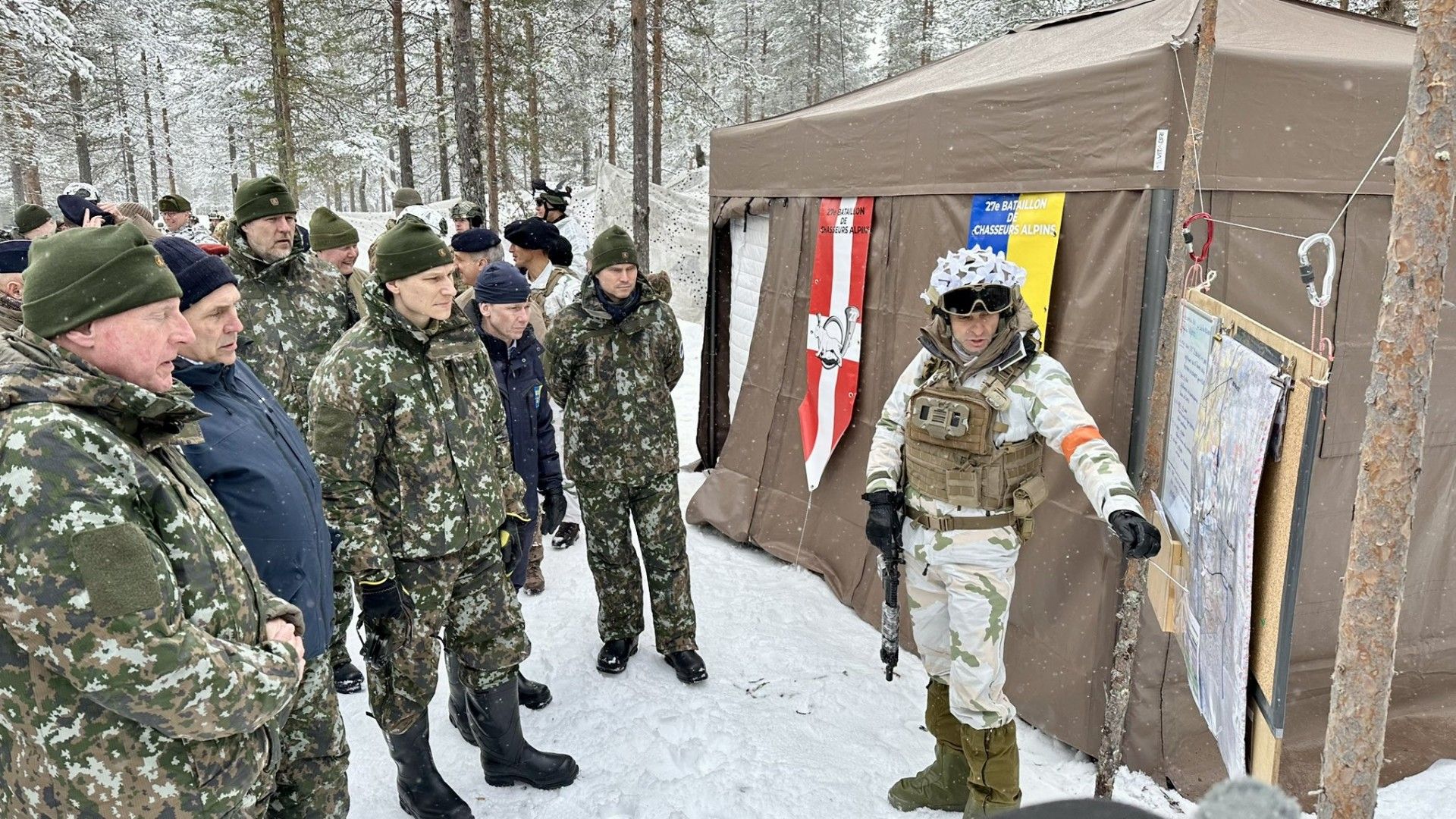
The debate about conscription and military service in Europe is far from uniform. Different countries are adopting different models. How does Finland categorise these approaches? What models do we currently see in Europe?
One could say that several main models exist. The first is universal conscription, which is the system used in Finland. Military service is mandatory for men who are fit for service, while for women it remains voluntary. What is crucial, however, is that this system enjoys strong social support. It is not perceived as an obligation imposed from above that is detached from society, but rather as part of a shared responsibility for national defence.
The second model is formally universal but highly selective and gender-neutral in practice. Norway and Sweden are examples of this approach. Legally, the obligation may apply to both men and women, but in reality only a portion of each age group is called up. In Norway, for example, around 15–17 percent of the cohort ultimately enters military service. This means that in practice the system functions largely through selection from among volunteers and the most suitable candidates.
The third model is what might be described as lottery-based conscription — a system in which service does not cover the entire cohort but is based on selecting individuals from specific groups or through randomised mechanisms. Lithuania provides an example of this approach.
Finally, there is the fully voluntary model, meaning a completely professional military without classical conscription. Here we arrive at the most important point: regardless of the model chosen, it must enjoy public support. This is absolutely fundamental.
Conscription will not function well if society does not accept it, understand it and consider it necessary. That is why I believe it is positive that a public debate on these issues is now taking place in Poland. Such debates are essential because without public understanding and support, such systems cannot function effectively. If a society and its political leadership are not prepared for full conscription, then intermediate solutions must be considered.
For example, systems similar to a national guard or part-time volunteer forces can be developed. Hybrid models are also possible. But the key objective remains the same: generating a sufficiently large and operationally useful reserve force.
In Finland this system has long been supported by society. It is part of our strategic DNA. For that reason, it does not represent a political or social controversy for us.

At the same time, the modern battlefield requires a high level of competence. War today is not only about numbers and mass mobilisation. How do you build competencies among reservists and society as a whole when many of those people are not professional soldiers?
This is a very important question because sometimes public debates create a false alternative. People often assume that there is a choice between a professional army with high levels of expertise and a mass reserve system that must inevitably be less capable.
In reality, it does not work that way. A well functioning cnscription system requires a well functioning general educational system.
In other words, the education system must prepare young people to learn quickly, work effectively in teams, absorb technical knowledge and operate in demanding environments that require discipline and initiative. In Finland this works well. Our education system produces young people who are capable of mastering new skills quickly, including military ones. It is also worth looking at Ukraine. There we see that individuals mobilised and trained under extremely difficult circumstances often learn very quickly — even when the training period is shorter than in peacetime conditions.
Why? Because they are defending their own country, their own cities, their own families and their own communities. Motivation plays an enormous role. When someone is defending their home, the learning process and commitment look very different from what we see in purely expeditionary operations.
At the same time it is important to emphasise that a system based on conscription and reserves is not designed primarily for deploying large expeditionary forces to distant theatres. It is not a model created with Afghanistan- or Middle East-type operations in mind. In Finland we maintain specific units that receive additional preparation for such missions. However, since Finland joined NATO this issue has gained new relevance because the Alliance’s capability targets also require us to maintain forces capable of operating beyond national territory.
As a result, a model is emerging in which some reservists undergo additional training and form a specialised category of personnel prepared for more demanding missions, including allied operations. This is not exactly the same as a national guard model. Rather, it is a specialised category of reservists who receive additional training and fill positions within units capable of operating abroad.
Naturally, the most advanced weapons systems require professional personnel and highly trained specialists. But even in those cases the reserve system can work effectively if, from the very beginning, planners consider what roles different categories of personnel will perform and how they should be trained. In Finland this is precisely how we approach capability development.
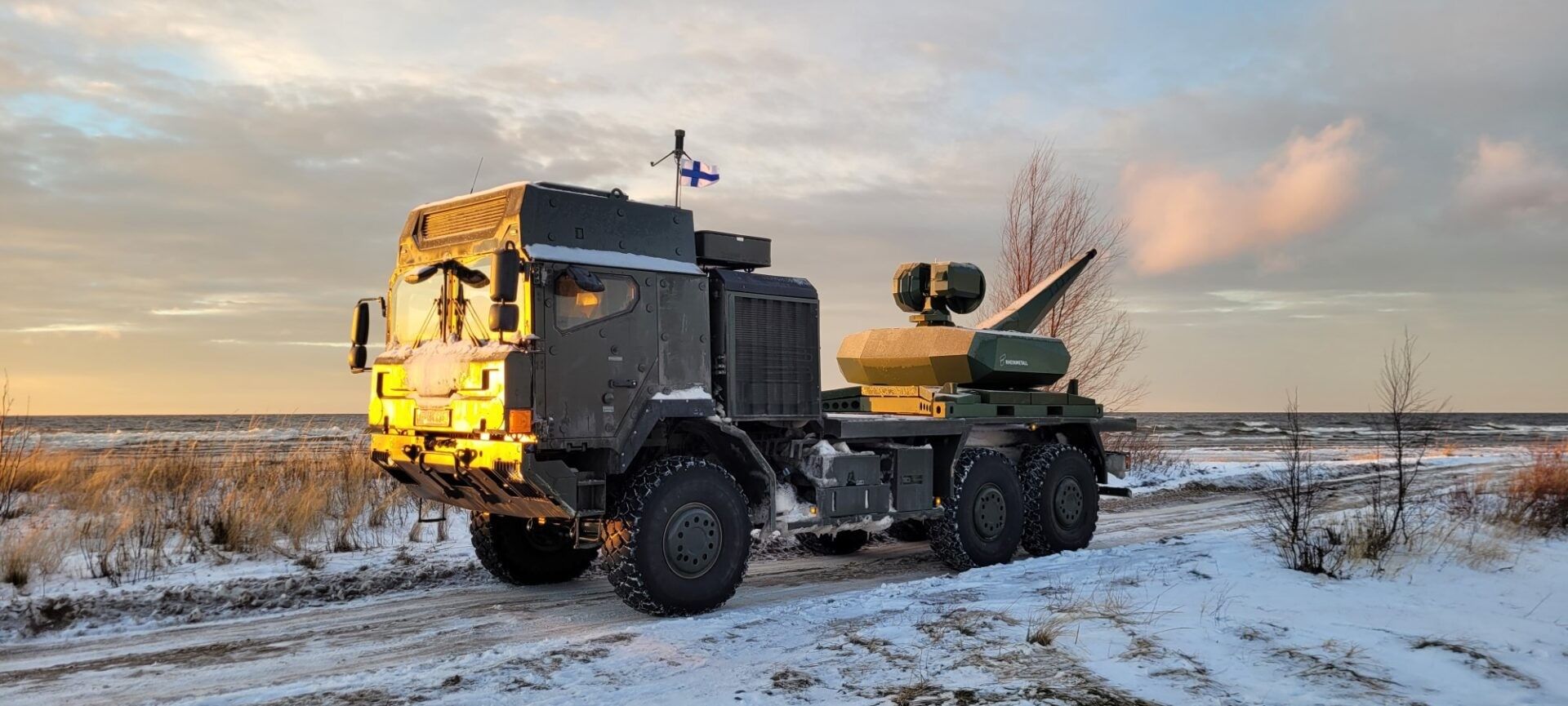
You mentioned public support and a broad national defence model. This leads us to the concept of total defence, or whole-of-society defence. Today one of the key challenges for such a system is the rise of drones and the transformation of the modern battlefield. Russia is using unmanned systems on a massive scale, including Shahed-type drones. How does Finland approach defence against drones within a comprehensive national defence framework?
I’m glad you raised this issue, because the concept of total defence — or what we often call comprehensive security — is very important in Finland. The armed forces are only one element of a broader national security system. That system also includes public administration, the economy, critical infrastructure, emergency services, the private sector and the resilience of society itself.
It is a very broad concept, and I will not go into all of its components here. But the key point is that from our perspective the military does not operate in isolation. It is part of a wider national system of resilience. When it comes to drones and the threats associated with them, this is now a challenge for all Western armed forces.
There are essentially two levels at which this issue must be addressed. The first level concerns existing capabilities. Countries already possess certain platforms, equipment, command systems and military structures. Therefore, the immediate question is how to adapt those existing capabilities to a battlefield environment that is heavily saturated with unmanned systems. This means integrating new detection tools, electronic warfare solutions and counter-drone capabilities into existing platforms and structures.
The second level concerns future procurement. When a country acquires new platforms or weapons systems, the situation is somewhat different, because those systems can be designed from the outset to operate in an environment where drones are a permanent feature of the battlefield.
But that requires industry to deliver the appropriate technological solutions. The war in Ukraine has also demonstrated something else. It is not only about hardware. Procedures, tactics, techniques and the way information is processed and shared are equally important. Modern warfare requires command systems and reconnaissance networks capable of processing large volumes of information very quickly — increasingly with the support of advanced data processing tools and artificial intelligence.
What becomes crucial in this context is shortening both the OODA loop — observe, orient, decide and act – and so called kill chain. If you are able to move through that decision cycle and employ your effectors faster than your adversary, you gain a decisive advantage and can operate proactively rather than reactively.
This will be one of the most important area for development for militaries in the coming years. Finland is working on it. Poland is working on it as well. And it is very good that we are able to learn from each other.
Another issue currently being debated across the region is the return of fortifications, barriers and defensive infrastructure along borders. Finland, like Poland, has decided to move away from the Ottawa Convention regarding anti-personnel mines. In Poland we are developing the Eastern Shield programme, and similar initiatives are underway in the Baltic states. How does Finland approach the defence of its border with Russia?
Finland has a very long border with Russia, so the protection and defence of that border has always been a central issue for us. We have our own national defence capabilities and plans that reflect our responsibility to defend our territory. I will not go into the operational details of those plans, but I can highlight several important elements.
First, the Finnish Border Guard plays a very significant role. In peacetime the Border Guard is not part of the Ministry of Defence but operates under the Ministry of the Interior. At the same time, however, it performs military tasks and functions as a multi-role security organisation. It receives military equipment funded through the defence budget, and its personnel are trained within the broader national defence system. As a result, the Border Guard effectively forms the first layer of defence in the land domain. This illustrates how the comprehensive defence concept functions in practice. Not all components of national defence are located within the formal structure of the armed forces. Other state institutions are integrated into the defence system as well.
The second element concerns infrastructure. Following the annexation of Crimea in 2014, Finland launched what might be described as a readiness fortification programme. This involves the construction of obstacles, defensive positions and supporting infrastructure designed to strengthen territorial defence. Finland’s geography — with its forests, lakes, rivers and varied terrain — provides certain natural defensive advantages. However, these advantages must be properly integrated into defence planning. These projects are carried out systematically. Every year additional infrastructure is constructed, often in cooperation with private construction companies. Most of this work takes place on state-owned land, but when necessary it can also involve privately owned land, of course based on legal agreements with landowners.
The third issue concerns anti-personnel mines. This topic has returned to the strategic debate in a very practical way. In Finland political decisions have already been made and the armed forces have begun acquiring new mine systems. These are part of a broader approach to building obstacles and strengthening border defence capabilities.

So we are not talking only about traditional fortifications, but also about sensor networks, surveillance systems and a broader architecture for border monitoring, correct?
Yes, absolutely. Modern border defence cannot rely solely on physical obstacles. It must also include sensors, surveillance systems, detection capabilities and a well-organised response chain. As I mentioned earlier, the Border Guard forms the first line of defence and operates its own sensor systems designed specifically for border monitoring.
At the same time the armed forces possess more advanced reconnaissance capabilities, including systems that allow us to observe developments deeper beyond the border. These capabilities include satellite-based observation as well as other reconnaissance tools.
Additionally, infrastructure has been developed to respond to hybrid threats, including situations involving the instrumentalisation of migration. In this sense the border security system is multi-layered. It includes physical barriers, surveillance technologies, specialised institutions responsible for border security and military capabilities that can be activated if the situation escalates.
Thank you for the conversation.
In the second part, conventional systems including F-35, artillery and air defence as well as defence cooperation with Poland will be discussed.


