- WIADOMOŚCI
The U.S. Navy undergoing repairs: Fleet less ready for action, costs rising

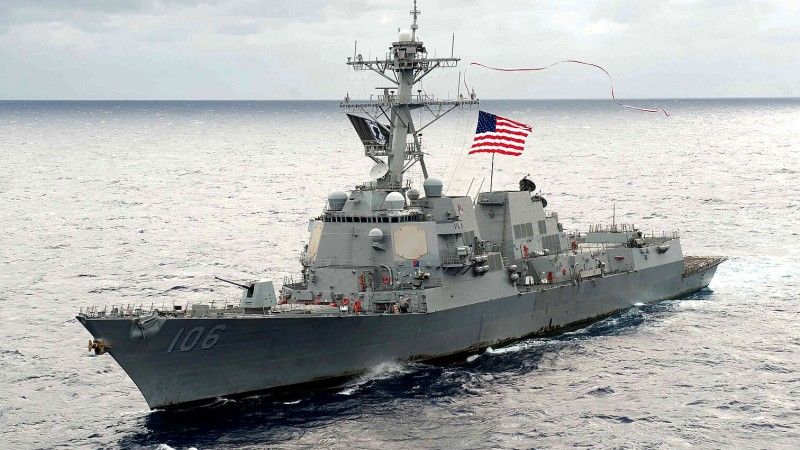
A government study has revealed that some U.S. Navy ships are spending increasingly long periods of time undergoing repairs, limiting the availability of the fleet. The Navy is extending the service life of older vessels while also setting ambitious combat readiness targets, with experts and Donald Trump pointing to the need to streamline processes and control costs.
The results of a December analysis by the U.S. Congressional Budget Office (CBO) showed that U.S. Navy destroyers spend up to nine years in repairs and maintenance—or about a quarter of their entire service life.
According to the same data, Arleigh Burke-class ships spend up to 27 percent more time on maintenance than planned over their 35- to 40-year service life.
For comparison, in 2012, the Navy predicted that repairs would take an average of about four years, or less than an eighth of the destroyers« lifetime.
Currently, with 73 vessels of this type in service, the operational availability of the fleet is significantly limited—sometimes only one-third of the ships are ready for action.
„If maintenance events often take longer than planned, the Navy has fewer ships that it can deploy — and thus, in effect, a smaller fleet,” the report said.
The lengthening of the repair period is influenced by the age of the vessels, unforeseen repairs, delays in official inspections and contract awards, and waiting for parts and materials. As a result, the average cost of maintaining a single destroyer in 2024 has risen to $28 million—three times more than in 2009.

Bold Plans
The Navy is trying to alleviate the problem by extending the service life of older ships. Former Secretary of the Navy Carlos Del Toro announced in October 2024 that 12 Arleigh Burke Flight I destroyers would be used longer than the anticipated 35 years.
„Extending these highly-capable, well-maintained destroyers will further bolster our numbers as new construction warships join the Fleet,” said Secretary Del Toro.
Admiral James Kilby, acting chief of naval operations, informed Congress during the summer that the U.S. Navy is focusing its efforts on China, considered its most important adversary, while setting an ambitious goal of 80 percent of the fleet—including ships, submarines, and aircraft—being ready for immediate combat use by January 1, 2027.
Reducing Obstacles
At the end of December, Donald Trump commented on delays and rising costs in the defense sector, including problems with the production and maintenance of warships. In his announcement of the new „Trump-class” battleships, he emphasized that the U.S. must ensure the security and efficiency of its defense industry.
He stressed that he wants to speed up and streamline the production of ships and military aircraft, such as the F-35, and announced measures against companies that exceed deadlines and budgets.
„We don’t want to have executives making $50 million a year, issuing big dividends to everybody, and also doing buybacks,” Trump said.
Shelby Oakley of the Government Accountability Office, during a spring hearing before the House Armed Services Committee, emphasized that the Navy’s budget and procurement processes do not use proven methods used in the commercial sector, which, as her office’s research has shown, could be effectively applied to shipbuilding programs.
Author: Tomasz Winiarski