












- WIADOMOŚCI
- WYWIADY
Korean Vice Minister on cooperation with Poland: from submarines to drones

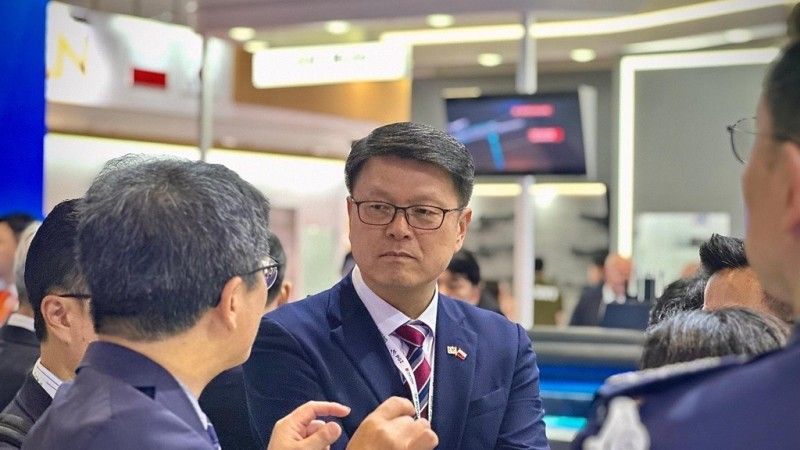
Photo. Defence24.pl
„Future cooperation between Korea and Poland is expected to expand into new areas, including submarines, wheeled armored vehicles, and ammunition. We also anticipate that the forms of cooperation will diversify to include technological cooperation, joint research and development, and local production” – said Hyunki Cho, Vice Minister of National Defense of the Republic of Korea.
Jakub Palowski: The Polish Orka submarine program is now entering a crucial phase. What are the key elements of Korea’s offer?
Hyunki Cho, Vice Minister of National Defense of the Republic of Korea: Korea has proven experience in exporting submarines abroad and is currently engaged in export negotiations with multiple countries. Korea is home to world-class shipbuilders, including Hanwha Ocean and HD Hyundai Heavy Industries. Should Korea be awarded the Polish submarine program, both companies will participate as a unified “one team” to ensure rapid delivery.
The 3,000-ton class submarine proposed by Korea for the Polish program was developed using indigenous technology. It is equipped with long-range, underwater-launched missiles: cruise missiles (SLCM – Submarine-Launched Cruise Missiles) and ballistic missiles (SLBM – Submarine-Launched Ballistic Missiles). It features an Air-Independent Propulsion (AIP) system, enabling underwater operations for more than three weeks. This submarine has already entered service with the Korean Armed Forces, and given that Korea is recognized as one of the countries that most extensively employs submarines as a strategic asset, its induction into service is itself a testament to its capabilities.
If Poland selects the Korean submarine, the Korean government is fully prepared to cooperate in strengthening maritime ties between our two countries to ensure rapid deployment and operational use of the submarine. Furthermore, to enhance the capabilities of Polish shipyards in submarine maintenance, repair, and overhaul (MRO), Hanwha Ocean plans to invest in Poland in cooperation with the Nauta Shipyard, which is affiliated with the Polish Armaments Group (PGZ). On this basis, Korea hopes to deepen the strategic partnership between our two nations and looks forward to expanding bilateral cooperation into new areas such as naval forces and the shipbuilding industry.
Recently, the Polish Ministry of National Defence signed a contract with Hyundai Rotem for the supply and production of K2PL tanks. What is the significance of this agreement?
During the August visit of our newly appointed Minister of National Defense, the second executive agreement under the K2 program was signed. This was an excellent opportunity to publicly demonstrate the strong cooperation between the defense industries of our two countries.
Given the current security threats facing Poland, this agreement should play a key role in minimizing capability gaps within the Polish Armed Forces and in rapidly strengthening deterrence. I also expect it will contribute to reinforcing NATO’s collective defense.
This agreement is not merely about the purchase of weapon systems; it signifies that Korea and Poland have taken a major step forward as strategic partners in the defense industry. Through this deal, Poland will be able to quickly secure advanced main battle tank capabilities, while Korea will strengthen its position as a reliable partner through timely delivery and the transfer of further logistical support capabilities.
Moreover, the agreement includes provisions for localization and technology transfer, which will enhance the competitiveness of the Polish defense industry. With local production, MRO, and other cooperative initiatives, companies from both countries will be able to jointly access the broader European market. Ultimately, this will serve as the foundation for developing Poland’s defense industry ecosystem and strengthening the Korea-Poland partnership in this field.

During the defense fair, a Polish-Korean joint venture was established between Hanwha Aerospace and WB Group to produce guided missiles. What potential do you see in this form of cooperation?
I hope this deepened partnership will be an important step toward expanding bilateral cooperation into many other areas.
This joint venture (JV) is the result of strengthening bilateral ties. Instead of a simple technology transfer, the third executive agreement concerning the Chunmoo system will be implemented in the form of a JV—a much more advanced model of cooperation in which both parties jointly make decisions and participate in production. This will serve as the foundation for a new model of bilateral cooperation.
The establishment of a local production system in Poland is expected to bring direct economic benefits, including job creation and strengthening industrial capacity. It will also be a key step toward making Poland a hub of the defense industry in Europe. At the same time, Korea will benefit from securing a stable overseas production facility and supply chain, making this a prime example of a win-win cooperation.
In which specific areas do you see opportunities for expanding Polish-Korean cooperation, considering the ongoing development both in industry and operational capabilities?
First and foremost, if our two countries expand cooperation into naval weapon systems such as submarines, this would lead to collaboration across all branches of the armed forces. Such an expansion, based on the link between security and defense industry cooperation, could ultimately lay the foundation for relations approaching a strategic alliance.
Furthermore, cooperation in advanced technology-based weapon systems, such as next-generation fighter aircraft, would provide valuable opportunities for both countries. In particular, if joint development or co-production of the Korean KF-21 fighter becomes a reality, it is expected to significantly accelerate the advancement of cutting-edge technologies and contribute to the growth of our defense industries.
And how do you see the overall future of Polish-Korean relations? What role could Polish exports to Korea and joint research projects play?
Future cooperation between Korea and Poland is set to expand into new areas, including submarines, wheeled armored vehicles, and ammunition. We also anticipate that forms of cooperation will diversify to include technological collaboration, joint research and development, and local production.
As past cases have shown, Korea takes a very open approach to mutually beneficial defense industry cooperation, especially when it involves localization and technology transfer. If Poland expresses interest in pursuing new forms of cooperation, I am confident that Korea will be ready at any time to engage in discussions to bring these ideas to fruition.
It is worth noting that in October 2024, Korea completed the induction of the Polish Warmate-1 loitering munition system, which is expected to play a significant role in strengthening Korea’s combat readiness. Throughout the entire acquisition process of the Warmate system, we were deeply impressed not only by the excellent performance of the Polish weapon system but also by the rapid delivery and flexibility demonstrated by the Polish defense industry.
Korea is actively seeking opportunities to strengthen its capabilities in unmanned systems, including the introduction of small anti-personnel and anti-armor loitering munitions. The Warmate program stands as the best example of cooperation between our countries, and I believe there is significant potential for further collaboration with Poland in the field of drone systems at any time.


