












- WIADOMOŚCI
Kubilius: Europe needs its own Space Shield

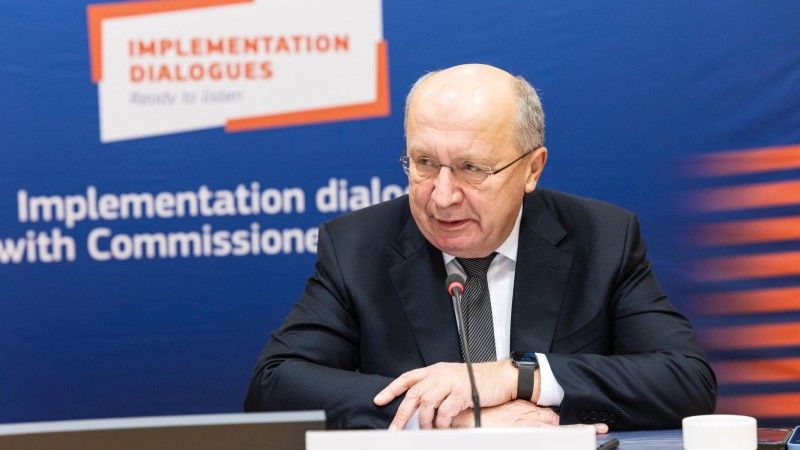
Photo. Andrius Kubilius via X
„Europe’s leadership in space is a strategic necessity.” – said Andrius Kubilius, EU Commissioner for Defence and Space, during the first Space Implementation Dialogue. Kubilius referred to defence, including the new EU project „Space defence shield”.
Implementation Dialogues are a series of high-level meetings during which participants identify challenges and opportunities for implementing European Union policies and programmes. On 5 November 2025, the first event was held on space – a key domain in modern armed conflicts and crisis response.
The opening speech was delivered by Andrius Kubilius, EU Commissioner for Defence and Space, who repeatedly referred to the need for joint action to promote autonomy and security, using available resources in orbit and the potential of European industry.
🇪🇺 Europe’s space sector is more than a strategic asset - it’s a community built together.
— Andrius Kubilius (@KubiliusA) November 5, 2025
As space is very important for security & defence, #EUDefence could contribute major resources for #EUSpace.
At the #ImplementationDialogue, we explored how to be part of this revolution. pic.twitter.com/ghDE6fMcpF
„The Defence Readiness Roadmap 2030, proposed last month by the Commission, and supported by the Council, laid out a clear vision: to ensure that Europe can respond rapidly and effectively to emerging threats, through stronger industrial cooperation, technological innovation and enhanced readiness.” - told Kubilius.
The Commissioner mentioned a relatively new European initiative called the „Space Defence Shield” or, as referred to in previous speeches and communications, the European Space Shield. The new initiative was first mentioned at the beginning of the year. At that time, it was assumed that the project would strengthen the EU’s space security in terms of faster access to information, analysis, decision-making and possible retaliation.
Andrius Kubilius has already announced consultations with Member States on „European space awareness for the purpose of monitoring threats, including military threats”.
Europe's Space Shield. What do we know?
The latest announcements, although still relatively sparse in content, point to the possible use of national and commercial space systems to complement the European Union’s current and future capabilities. It should be remembered that the Copernicus Earth observation programme, which helps Member States respond to natural disasters, has been running for years.
The European Commission is also working on a new EOGS (Earth Observation Governmental Service) system. The specific budget for this programme will be set out in the Multiannual Financial Framework, which will take into account EU spending ceilings for individual categories, starting in 2028 for at least five years. The combination of these capabilities is intended to ensure Europe’s autonomy and increase its security.
Andrius Kubilius also mentioned the need to increase the competitiveness of the European space industry, which is to be supported by the strategies and plans set out in the EU Space Act and billions of euros from the European Competitiveness Fund proposed in July 2025 (a total of around €409 billion). The fund is to be one of the pillars of the EU budget for 2028-2034.
No empty words. It's time for real action
According to Kubilius, the Implementation Dialogue „is not about repeating what we already know.” „It is about identifying how we can do better - how we can make Europe’s space policy not only visionary but also executable, efficient and future-proof.” - added the Commissioner.
The discussion focused on three main issues:
- the development of sovereign, competitive and independent satellites, launch capabilities and ground infrastructure;
- strengthening Europe's technological sovereignty and economic security;
- increasing access to and use of satellite data from the Copernicus and Galileo programmes and, in the future, from IRIS².
„The future of Europe’s space policy depends on our capacity to bridge the gap between policy ambition and implementation reality. This dialogue is a crucial step in that direction.” - the Commissioner concluded.


