












- WIADOMOŚCI
Norway boosts defence by $12bn to hit 3.5% of GDP for NATO

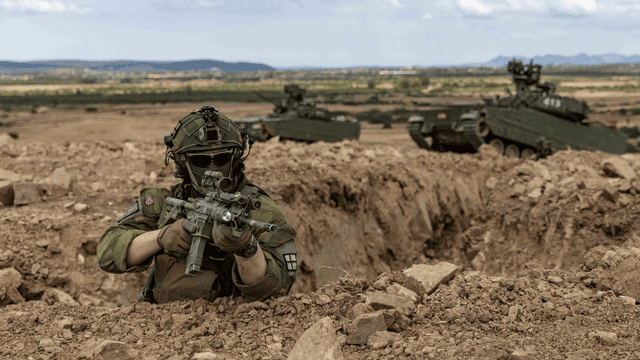
Norway is adding 115 billion crowns ($12bn) to defence spending through 2036, allowing it to reach NATO’s 3.5% of GDP target by 2035. The move comes amid the war in Ukraine and pressure from the US.
Norway has announced a further increase in defence spending, allocating an additional 115 billion crowns (around $12bn) through 2036. The government said on Friday that the new funds would enable the country to meet its NATO commitment of spending 3.5% of GDP on defence by 2035. The extra money comes on top of a previously unveiled long‑term plan worth 1.62 trillion crowns ($167bn) for the years 2025–2036.
Prime Minister Jonas Gahr Støre told a press conference that the boost goes hand in hand with careful priority‑setting.
– We are allocating a significant increase in resources to the long‑term plan, while also carefully weighing the priorities needed to rapidly strengthen Norway’s defence capabilities – he said.
Norway acts as NATO’s watchdog over the vast North Atlantic area used by Russia’s northern fleet. It is one of the few European countries that can finance higher defence spending without taking on debt, thanks to its $2 trillion sovereign wealth fund – the largest in the world. The government also stressed that support for Ukraine would be provided on top of the spending counted towards the 3.5% of GDP target.
New vessels, delayed long‑range systems
As part of its military build‑up, Oslo has confirmed orders for six submarines from Germany’s TKMS and at least five frigates from Britain’s BAE Systems. It is also planning to acquire long‑range rockets and artillery systems from South Korea’s Hanwha Aerospace. The first submarine is due for delivery in 2029, while the first two frigates are expected in 2030 and 2032 respectively.
At the same time, Norway has decided to postpone decisions on some long‑range capabilities, including maritime surveillance drones and anti‑ballistic air defence systems. Prime Minister Støre said the delay is due to lessons learned from the war in Ukraine, where current air defence systems struggle to counter certain types of Russian missiles.
– We need to see how we can answer that best – he added.
Defence Minister Tore Sandvik pointed to the importance of a coordinated Nordic approach when acquiring such systems – something that is currently lacking. The head of the armed forces, Eirik Kristoffersen, noted that in the case of drones, the postponement is driven not only by prohibitive costs but also by the fast pace of technological development, which may soon make newer solutions more relevant.


