












- WIADOMOŚCI
- ANALIZA
Nuclear weapons as a new pillar of state security?

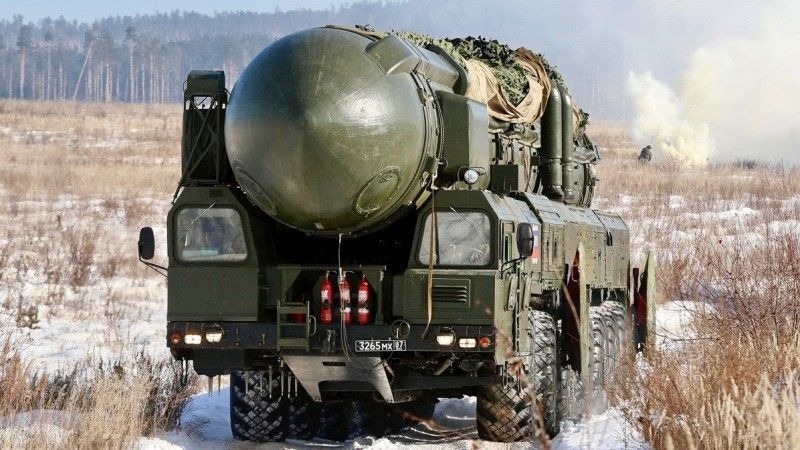
Photo. mil.ru
The crisis of the contemporary global security architecture raises questions about how states can effectively protect their citizens today. Have we reached a point where real defense against a potential adversary can be provided only by nuclear weapons?
The crisis of American leadership, the unstable stance of U.S. President Donald Trump, and documents that will soon see the light of day and present a new U.S. approach to engagement in various regions of the world (the National Security Strategy and the „Global Posture Review” prepared by Pentagon deputy Elbridge Colby) mean that Washington’s existing allies may start to wonder to what extent the security guarantees previously provided by the Americans remain binding. This, in turn, means that those who until recently regarded such a scenario as science fiction are increasingly beginning to consider acquiring nuclear weapons.
Japan and Korea interested?
In the context of nuclear proliferation, potential candidates could be the United States« Asian allies — South Korea and Japan. In the former case, this stems from Pyongyang’s increasingly confrontational policy and the deepening military cooperation between Kim Jong Un’s regime and Vladimir Putin’s Russia. This is also reflected in public sentiment, which is increasingly leaning toward support for a domestic nuclear arsenal. And although a South Korean version of such weapons does not appear likely for now — among other reasons because of the April 2024 agreement in which Seoul and Washington agreed that „in the event of a nuclear attack by North Korea there will be immediate bilateral consultations between the presidents, followed by a prompt, decisive and overwhelming response using the full force of the alliance, including U.S. nuclear weapons” — the increasingly frequent public discussion of the topic is hardly groundless.

Photo. Airman 1st Class Jazmin Smith, USAF
Interestingly, similar debates have recently emerged in the public forum in Japan. „In a region surrounded by nuclear-armed powers and struggling with escalating tensions over Taiwan and the Korean Peninsula, the question is no longer whether Japan should consider possessing nuclear weapons, but whether it can afford not to,” we recently read in the Japan Times. The article also reported that high-level talks are already underway that indicate growing understanding for softening the 1967 „Three Non-Nuclear Principles,” which state „not to produce, not to possess, and not to allow the introduction of nuclear weapons into Japanese territory” (it is worth noting that unlike in South Korea, public support in Japan for developing a domestic nuclear arsenal is relatively low).
A growing number of the willing
Given the above circumstances and media reports, we decided to ask an expert for his view on the prospects for nuclear proliferation. According to Artur Kacprzyk, an analyst on nuclear deterrence at the Polish Institute of International Affairs, the probability that additional countries will attempt to acquire such weapons is indeed growing, although this is not a foregone conclusion.
„For now, allies are trying to maintain the closest possible relations with the U.S. while at the same time strengthening their conventional forces. Attempts to acquire nuclear weapons would involve various risks and challenges, even for states with significant civilian-military capacity to develop such a capability (Japan and South Korea). They must take into account the danger that the U.S. would further limit support for a state attempting to acquire nuclear weapons, and that, together with other countries, it would impose sanctions,” noted Artur Kacprzyk, who also drew attention to another important issue — a state that began an official path toward acquiring nuclear weapons „would have to reckon with the risk of preemptive strikes by an adversary aimed at stopping nuclear programs.”

Photo. French Ministry of Defence
According to the expert, the potential problems are far greater. Paradoxically — despite advancing technological development — creating one’s own nuclear weapon may be more difficult than before. „Over the decades knowledge related to the development and production of nuclear weapons has undoubtedly spread. But the capabilities to detect such programs and to strike their elements (including missile systems or in cyberspace) have also increased. Moreover, especially after most countries in the world signed the Treaty on the Non-Proliferation of Nuclear Weapons (NPT) in 1970, legal regimes that make it harder to obtain materials and equipment that could be used to produce nuclear warheads have been gradually strengthened,” said Artur Kacprzyk.
There remains the question of deterrence effectiveness. Should nuclear weapons really be seen as a 100-percent safeguard against external attacks? It turns out not necessarily.
„Acquiring nuclear weapons substantially increases the credibility of deterrence, but by itself does not guarantee its effectiveness; much depends on what exactly is meant to be deterred and with what capabilities. Nuclear deterrence has so far proven effective in protecting the states covered by it from the use of nuclear weapons and large-scale conventional aggression. It has often, however, failed to prevent smaller attacks or other hostile actions. In such cases a nuclear response would be far too disproportionate and frequently carry a high risk of escalation for the defending state,” the PISM expert told us, citing the example of the India–Pakistan conflict, which — certainly smaller than before the nuclear tests in 1999, but still — essentially continues to this day.
Finally, one must not forget the importance of the size of the arsenal itself. „It should be large enough that part of it could survive enemy strikes and still be capable of penetrating an opponent’s defenses and inflicting serious damage… Simply acquiring a small number of nuclear warheads may therefore not be sufficient for effective deterrence, especially if we are talking about an adversary with as large an offensive and defensive potential as Russia,” added Artur Kacprzyk.
What about the NATO Member States?
We began with the United States and Asia, but it is also worth looking closer to home at NATO. It should be noted that changes have also occurred within the North Atlantic Alliance in recent years. One example is NATO’s new Strategic Concept adopted in 2022, which shifted the Alliance’s main task from collective defense to collective defense and deterrence. The latter element is particularly important here because it includes the possibility of deterrence not only by conventional means but also by nuclear weapons. It is worth recalling that the United States currently provides NATO’s nuclear umbrella, although ideas for certain changes in this area increasingly appear in the media.
„Despite uncertainty about the future of transatlantic ties, European NATO countries will try to maintain the best possible relations with the U.S., while simultaneously increasing their conventional capabilities and seeking greater protection from the nuclear arsenals of France and the United Kingdom. These arsenals are much smaller and less credible in protecting allies than the American capability, but they can also help deter Russia,” the analyst from the PISM Polish Institute of International Affairs summarized.

Photo. US Navy
Nuclear weapons globally
Finally, a few interesting numbers about nuclear weapons possession. According to the latest SIPRI (Stockholm International Peace Research Institute) report, „the era of reductions in the world’s nuclear arsenals, which lasted since the end of the Cold War, is coming to an end,” and nine nuclear-armed states (the United States, Russia, the United Kingdom, France, China, India, Pakistan, North Korea and Israel) are leaning toward increasing their nuclear arsenals. Currently (January 2025) the world stockpile of nuclear weapons is 12,241 warheads (9,614 of which were in military stockpiles for potential use). Of the world’s 193 UN members, 178 have ratified the Comprehensive Nuclear-Test-Ban Treaty (CTBT).


