












- WIADOMOŚCI
Estonia and South Korea expand defense industry ties

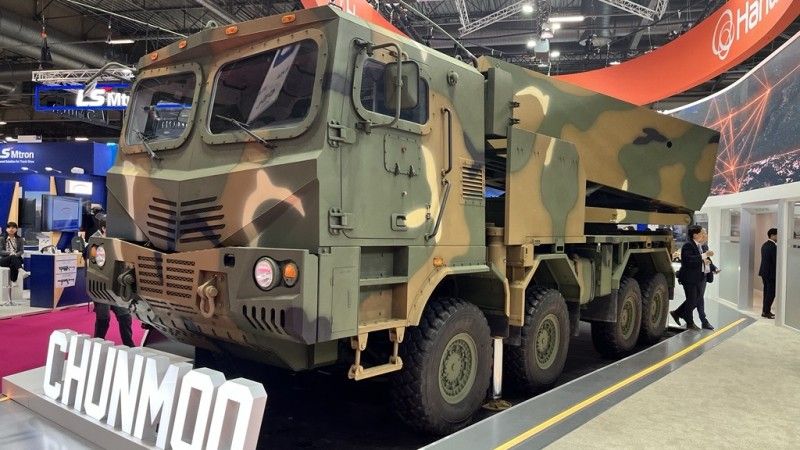
South Korea’s defense industry is expanding in Europe. A major Hanwha Aerospace investment in Estonia highlights Seoul’s strategy of combining arms exports with industrial partnerships.
South Korea’s defense industry continues to expand its presence in Europe, and Estonia is emerging as one of its newest important partners. Hanwha Aerospace has just announced a major direct investment package worth nearly €100 million aimed at strengthening Estonia’s defense industry.
From Arms Sales to Industrial Partnerships
The announcement follows Estonia’s recent procurement of South Korean systems. Just before the end of 2025, Tallinn signed a contract worth nearly €290 million with Hanwha Aerospace to acquire at least six K239 Chunmoo multiple rocket launchers together with different types of rockets. Earlier, Estonia had already received six K9 Thunder self-propelled howitzers from the same company.
Crucially, these agreements have not been limited to equipment purchases. One of the conditions of the K239 contract was the development of deeper industrial cooperation. Technology transfer and the creation of new local capabilities were key priorities for the Estonian government.

A central component of the new investment involves approximately €25 million allocated for establishing a 40 mm ammunition production facility in Estonia. The plant, which will be operated in cooperation with a local partner, is expected to produce more than 300,000 rounds annually. However, the decision regarding the location of the plant has not yet been made and is the subject of discussions between the Estonian government and Hanwha.
If the facility actually opens, it would strengthen Estonia’s ability to secure ammunition supplies domestically – an issue that has become increasingly important for European countries since Russia’s full-scale invasion of Ukraine in 2022 exposed critical shortages in ammunition production across the continent.
Another key project is the creation of a dedicated competence center for maintenance and repair operations. Hanwha Aerospace plans to invest roughly €23 million into this facility, enabling Estonia to service and repair its Chunmoo rocket systems and K9 howitzers domestically.

South Korea's Expanding Role in European Defense
Estonia’s partnership with Hanwha Aerospace should be viewed in the wider context of South Korea’s growing role as a defense supplier in Europe. Over the past few years, Seoul has emerged as a major partner for NATO countries seeking to modernize their militaries rapidly.
Poland has become the centerpiece of this expansion. Since 2022, Warsaw has signed massive contracts with South Korean firms for K2 Black Panther tanks, K9 Thunder howitzers, K239 Chunmoo rocket systems, and FA-50 light combat aircraft.

Other European states have followed. Norway ordered additional K9 howitzers in 2025, while Romania has also signed agreements with Hanwha Aerospace for the same artillery system. Estonia’s acquisition of Chunmoo launchers and continued cooperation with Korean defense companies therefore reflects a broader pattern of Korean technology becoming embedded across European armed forces.
Implications
For South Korea, the Estonian partnership represents another step in its transformation into a global defense exporter. While the Korean defense industry originally focused primarily on domestic requirements and regional markets, it is increasingly competing in Europe, the Middle East, and beyond.
For Europe, the partnership illustrates how the continent’s defense landscape is changing. Faced with growing security threats and industrial bottlenecks, European states are diversifying their defense partnerships beyond traditional European and American suppliers.

The Hanwha-Estonia cooperation demonstrates that this relationship can evolve beyond simple procurement. If the planned investments materialize, Estonia may become the next regional center for maintaining and supporting Korean-made defense systems – and this would further anchor South Korea’s presence in Europe’s security architecture.


