












- KOMENTARZ
- WAŻNE
- WIADOMOŚCI
€100 million Korean investment in Estonia’s defence industry

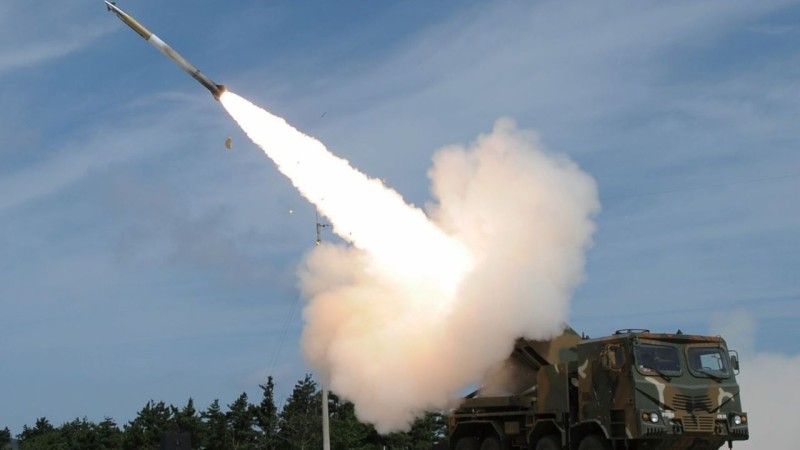
Photo. Hanwha Aerospace UK
South Korean defence giant Hanwha Aerospace will invest nearly €100 million in Estonia, strengthening the Baltic state’s defence industry and technological sovereignty. The move reflects a broader strategic convergence between Tallinn and Seoul driven by security concerns after Russia’s invasion of Ukraine.
Estonia has announced that Hanwha Aerospace will launch a major investment programme aimed at strengthening the country’s defence industry and building regional capabilities for territorial defence systems. The direct investment is expected to reach nearly €100 million, while the broader package – including research, industrial cooperation and economic impact – may reach up to €260 million.
The announcement comes shortly after Estonia signed a contract worth nearly €290 million to acquire at least six K239 Chunmoo multiple rocket launchers along with several types of rockets. At the same time, the South Korean company has already delivered additional K9 Thunder self-propelled howitzers to the Estonian armed forces, expanding the country’s long-range artillery capabilities.
One of the key elements of the investment will be the creation of a new 40 mm ammunition production facility. The project is expected to cost approximately €25 million and could produce more than 300,000 rounds annually. The plant will operate in cooperation with Estonian industry and is designed to reduce dependence on external suppliers.
Another major component will be the establishment of a defence technology competence centre responsible for maintenance, repair and overhaul (MRO) of advanced weapon systems. With an investment estimated at €23 million, the centre will allow Estonia to independently service Chunmoo launchers and K9 artillery systems while potentially supporting future armoured platforms as well.
Several Estonian technology and defence companies are already involved in cooperation with Hanwha Aerospace, including Nortal, Sensus Q, Frankenburg Technologies, Marduk Technologies and Milrem. The project therefore combines industrial investment with the transfer of technological know-how, which Tallinn has long identified as a priority in defence procurement.
The growing partnership between Estonia and South Korea reflects a broader geopolitical dynamic. Estonia shares a 300-kilometre border with Russia and has historically experienced occupation both under the Russian Empire and the Soviet Union. Since the full-scale invasion of Ukraine in 2022, Tallinn has accelerated defence spending and sought advanced military technologies capable of strengthening deterrence.
For South Korea, cooperation with Estonia also opens the door to deeper engagement in European defence markets. Korean systems such as the K9 howitzer and Chunmoo rocket launchers have already attracted significant interest across NATO’s eastern flank, including in Poland, where the Chunmoo platform is integrated into national artillery modernisation programmes.
As Natalia Matiaszczyk, an expert on South Korea, points out: ”For South Korea, the Estonian partnership represents another step in its transformation into a global defense exporter. While the Korean defense industry originally focused primarily on domestic requirements and regional markets, it is increasingly competing in Europe, the Middle East, and beyond.”
Diplomatic relations between Tallinn and Seoul have also intensified in recent years. Estonia’s ambassador to South Korea, Tanel Sepp, has openly emphasised that the war in Ukraine highlighted how fragile sovereignty can be. According to him, both countries share a similar strategic outlook: security requires strong armed forces equipped with modern systems.
In practice, the Estonian-Korean partnership is evolving beyond simple arms purchases. Industrial cooperation, technology transfer and local production are becoming central elements of defence agreements, allowing smaller states such as Estonia to build greater resilience while reducing reliance on external supply chains.
The investment therefore illustrates a wider shift within European defence policy. As security risks increase along NATO’s eastern flank, countries such as Estonia are not only buying weapons but also developing domestic defence ecosystems capable of supporting long-term deterrence.


