












- WYWIADY
Poland's road to the atomic bomb: “5–10 Years to a warhead” [Interview]

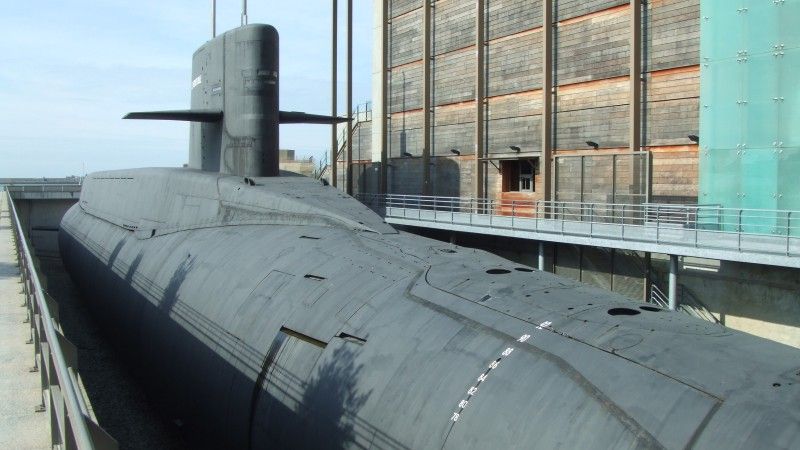
Photo. Hugh Llewelyn from Keynsham, UK/Wikimedia Commons
„5–10 years to the first warhead, tens of billions of złoty for infrastructure, and the risk of a preemptive Russian strike.” Dr. Aleksander Olech talks with Artur Kacprzyk (Polish Institute of International Affairs (PISM)) about the technical and political realities of a Polish nuclear program.
Is there a chance that Poland could acquire nuclear weapons, a nuclear umbrella, or will it instead look to Sweden, which is developing its own capabilities? Read on.
Aleksander Olech (AO): Suppose Polish authorities decide to acquire their own nuclear weapons. What legal and international constraints would practically bind us?
An attempt by Poland to develop nuclear weapons would be very risky. We would either have to withdraw from the 1968 Treaty on the Non-Proliferation of Nuclear Weapons (NPT) or violate it, the latter would almost certainly be detected, especially since under the NPT the International Atomic Energy Agency (IAEA) monitors civilian nuclear programs, including through inspections. Under the NPT only five states may possess nuclear weapons: the United States, the USSR/Russia, France, China, and the United Kingdom. The treaty obliges them to facilitate the peaceful use of atomic energy for others.
Revealing work on a Polish nuclear weapon would increase the danger of a Russian attack because Russia would want to thwart such a program. We would be vulnerable, and even more so because we would also come under pressure from the United States and at least some other allies to stop the program. They would fear being drawn into a conflict with Russia, and support for the NPT is part of NATO and EU policy. They could threaten to withdraw forces from Poland or even to abandon alliance commitments. Sanctions would also be a risk. I don’t think they would be as crippling as those imposed on North Korea, since we are much more integrated into the global, especially European, economy. But the potential consequences would still be significant. For example, the United States might suspend arms sales and maintenance support, or its participation in building Poland’s first nuclear power plant.
Unlike the United Kingdom and France, we would not have the luxury of developing nuclear weapons under the protection of the United States. The Americans tolerated the nuclearisation of those countries but later actively discouraged West Germany and South Korea from doing the same. Not only because they assumed that the more states possessed nuclear weapons, the greater the risk of their use. The Soviet reaction to West German leaders« interest in acquiring nuclear weapons was a signal to the Americans that a proliferating ally could drag them into a war. The American „nuclear umbrella” and forward military presence are meant to help prevent proliferation — both by enhancing allies« security and by serving as a bargaining chip in relations with them.
Of course, Poland’s situation and that of other NATO members would change fundamentally if the United States withdrew that umbrella. Then the risk of Russian aggression would rise dramatically anyway, making an attempt to obtain our own nuclear weapons comparatively more attractive. It would also be easier to pursue such a course together with others, the more states and nuclear facilities Russia would have to attack, the harder it would be for the Russians. Joint development and financing could also significantly accelerate a program.
AO: Does Poland, considering current knowledge, experience, economic potential and human capital, have realistic capabilities to develop its own nuclear weapons?
AK: Poland does not have such capabilities now. It has the potential to develop them, though it would be difficult, time-consuming, and costly.
Countries smaller or less developed than Poland have managed to acquire nuclear weapons, but we would face different difficulties than they did. Today we cannot count on the same kinds of help or tolerance. North Korea benefited from the protection and assistance of China, which helped deter US intervention and mitigate the effects of sanctions. China also supplied key components and technology to Pakistan, and France provided substantial early help to Israel. United States maintained economic and military assistance to Pakistan and Israel because at that time it had more important interests in relations with those countries than non-proliferation. Israel was (and is) important for the United States« influence in the Middle East, and Pakistan for supplying the Afghans fighting the Soviet Union. Moreover, neither Israel nor Pakistan were (and are) formal allies of the United States, henceforth the Americans were not obligated to defend them, so they did not have to fear being drawn into a war over proliferation. Besides, none of those states was directly threatened by an adversary capable of carrying out a nuclear attack on the United States. The Americans did not press South Africa too hard either, because it was seen as a partner useful in containing communism in Africa.
As for the costs for Poland, precise forecasts are difficult, even ignoring the impact of a possible international reaction. We would probably have to spend tens of billions of zlotys to develop the first nuclear devices. Estimated and adjusted to today’s prices, it cost the United States over 100 billion zlotys, and France a little under 100 billion zlotys. An aid to our research would be that knowledge on this topic is now greater and more widespread. Nevertheless, investments in suitable infrastructure, materials, and personnel would still be necessary. And additional funds would be required to build further warheads, their delivery systems, and then to maintain and modernize the arsenal. France, possessing about 300 warheads, now spends 20–25 billion zlotys a year on its nuclear forces. In light of Poland’s roughly 200 billion zloty annual defense spending, we are not talking about unimaginable sums, but still large ones, especially since that budget is already stretched. Another matter is that such expenditures would be very difficult to hide.
It is even harder to estimate how much time a nuclear program would take from a technical point of view. I would risk and state that that Poland could produce the first devices within 5-10 years. But we would need more time to refine and expand that arsenal so as to be able to credibly threaten to use it against Russia. Probably at least a dozen years. At the moment the Iranian nuclear program was detected in 2002, it had already lasted 13 years, and the Iranians were apparently close to constructing a primitive device for a test explosion. But they were still working on producing materials for a much larger number of warheads and miniaturizing those devices for mounting on missiles, even though earlier they had received help from Pakistan on these matters. In turn, France and South Africa built their first devices in about ten years from the start of work on fissile material, although they did not have to hide them. Possessing much larger resources, the United States and the Soviet Union built the first, albeit very large, bombs in 3 and 4 years respectively.
AO: What preparations would our country have to make technically, infrastructurally and militarily in order even to contemplate building its own nuclear arsenal?
AK: There are a number of steps whose completion would facilitate the acquisition of nuclear weapons. Starting with thorough planning, not only the process of building warheads and acquiring the necessary materials, but also the structure of nuclear forces and the strategy for their use.
The most difficult for us would be establishing production of fissile materials for use in fuel for civilian reactors. Having such infrastructure would provide the possibility of using it to build nuclear weapons if such a decision were taken. That would not eliminate the threat of a preemptive strike, but it would shorten the period of elevated risk. This means either uranium enrichment or recovering plutonium from spent reactor fuel. The first is done by Germany, and Japan both reprocesses and enriches. This has long made those countries so-called threshold states.
However, states today are much more cautious in selling the most sensitive nuclear technologies and materials, especially since safer solutions are widely available. For example, Poland buys low-enriched nuclear fuel abroad for the research reactor in Świerk and is due to buy it for our future power plants. Such fuel cannot be used directly to build a nuclear warhead, and the possibilities of recovering plutonium from it are also greatly limited. A better solution would therefore most likely be to resume uranium mining in Poland (although the Soviets exploited the best deposits) and to enrich it domestically. But considering the costs of enrichment (or reprocessing) and the planned scale of our nuclear energy sector, it would probably be hard to justify economically. One could argue that domestic production of nuclear fuel materials would provide greater stability of supply, despite potential disruptions such as the recent expulsion of French firms from uranium mines in Niger.
A civilian justification for uranium enrichment (or plutonium reprocessing) would be important so as not to arouse suspicion of work on nuclear weapons or international pressure. And perhaps it would be possible to obtain ready and advanced technology from abroad. And even if we developed it ourselves, fuel production would probably still require some cooperation with foreign reactor manufacturers. In any case, building appropriate infrastructure for civil purposes can be justified only along with the development of Polish nuclear energy: the first reactors are to start operating in the mid-2030s. Another option is secretly conducting laboratory research on obtaining fissile materials, which South Korea did. This would be harder to detect and perhaps not as alarming to other states as covert or non-civil industrial-scale work. Experiments can make it easier to build larger infrastructure in the event of a proliferation attempt, but it would still require additional time.
Much more attainable, though by no means easy, would be acquiring missiles to potentially carry nuclear warheads. Poland is already planning to purchase missiles with a range of 1–3 thousand km and conventional warheads, capable of striking targets deep within Russia. However, to be able to integrate nuclear warheads onto such missiles, we would have to produce those missiles ourselves or at least do so in cooperation with a partner supporting our nuclear ambitions. It is also worth emphasizing that although the possibility of striking even a single nuclear warhead at Moscow or Saint Petersburg could significantly strengthen deterrence, its high credibility would require much larger forces. Large enough that Russia could not count on destroying them all on the ground or in flight.
Many other problematic issues would also require deep consideration. For example, designing a command-and-control system for nuclear forces that would be resilient to a large and rapid nuclear attack, and determining a site where Poland could carry out a test nuclear explosion.
AO: Do the Nordic countries actually have (or could develop) their own nuclear capabilities? If so — at what level and in what timeframe?
AK: Sweden could acquire nuclear weapons much faster than we could, but not as quickly as is sometimes suggested. The Swedes once worked on it, and in the mid-1960s it was assessed that they were two years, or even half a year, away from building the first devices. They did not do it for various reasons: from strong pacifist sentiments in society, through high costs and the military’s preference to invest in conventional forces, to signals from the Americans that they would support Sweden in the event of a Soviet attack, even though it was not a NATO member.
In any case, today Sweden no longer has the same infrastructure and resources, so it cannot simply restart a nuclear program from the state of 50-60 years ago. Plutonium was removed from the country, and new nuclear power plants are poorly suited to its production. The Swedes would probably have to start enriching uranium, the resumption of whose mining they are currently planning. A major facilitation would be that in the past they conducted a series of studies not only on building an explosive device but also on reducing its size for use in a missile. And the Swedish industry has considerable competence in producing cruise missiles, especially as a co-producer of the Taurus.
One can therefore speculate that the Swedes would be able to create the first missiles with nuclear warheads within a few years. Especially if the other Nordic countries supported such a program financially and involved their scientists. Furthermore, Norway and Finland also have uranium deposits on their territory (whereas Denmark has them only in Greenland, where extraction is difficult). Perhaps the Nordic states would also be open to cooperation with others, including us or Ukraine, which has a large civilian nuclear program and is developing increasingly better missiles.
However, it currently seems that the Nordic countries« response to doubts about the credibility of the United States will be greater reliance on France and the United Kingdom and their nuclear deterrence. This is indicated by recent statements from those in government, for example the Prime Minister of Sweden or experts from those countries. Even for Sweden or a group of Nordic states, acquiring nuclear weapons would still be a dangerous and difficult process.
AO: So what should Poland’s goals be in the future?
AK: Summing it up, in my opinion an attempt by Poland to acquire nuclear weapons would currently be too risky, and even if it succeeded, it would not quickly give us security. It is better now to focus on strengthening conventional forces and cooperation with allies, while at the same time taking steps that would shorten the time to a possible acquisition of nuclear weapons in the future if our security environment deteriorates further. Becoming such a „threshold state” would be much more difficult today than it was in the past.
In terms of conventional forces, it must be emphasized again how important it would be for Poland to acquire missiles with a range of over 1,000 km and ultimately to produce them domestically. Not only for defense and strikes on military targets deep in Russia, but also for retaliation, e.g., against critical infrastructure. Such capabilities will not replace nuclear deterrence, but they can significantly raise the costs for Russia of a potential conflict, and even of using nuclear weapons. Having a large arsenal of conventional missiles would also facilitate a possible development of nuclear capabilities. All these considerations seem to guide South Korea’s enormous investments in such armaments.
While allied deterrence, especially nuclear, will always raise doubts to some extent, it can fundamentally strengthen our security, and it already does. This is evidenced by the fact that Russia has not attacked us openly over the last four years, despite our key role in supporting Ukraine — the war that Russia describes as „existential.” Despite transatlantic tensions and a reduced contribution to European security, the United States remain in NATO and maintain a large military presence in Poland. This creates an exceptional risk of escalation for Russia should it decide on aggression.
At the same time, the scenario of the United States withdrawing from Europe in the longer term is not unimaginable. Although I consider it unlikely, such a possibility justifies considering alternatives. What is needed now, however, is a better complement to American deterrence. In addition to strengthening our conventional capabilities, this could be achieved by increasing France’s role in nuclear deterrence in Europe. Although the French arsenal is much smaller than the American one, any clash between nuclear states will have some potential to escalate. Soon we will hear what ideas President Emmanuel Macron has for more forcefully communicating this to Russia.
Aleksander Olech: Thank you for this conversation.
Artur Kacprzyk is an analyst of the International Security program at the Polish Institute of International Affairs (PISM).


