


- ANALIZA
- WIADOMOŚCI
What was discussed during the EU leaders’ summit? Key takeaways

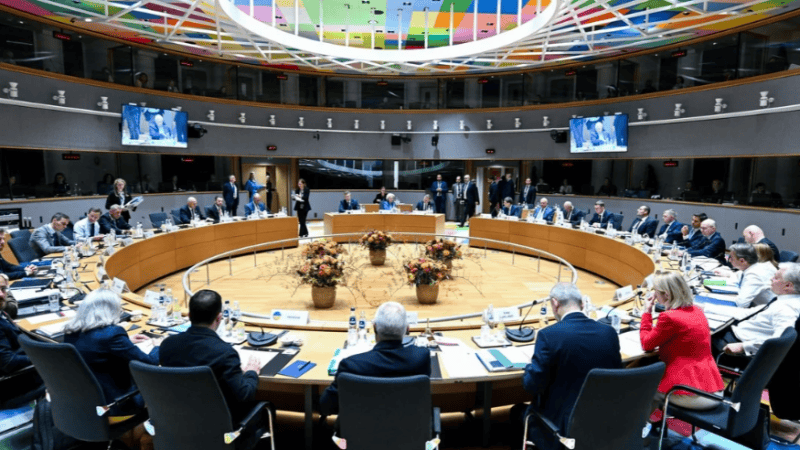
Photo. @EUCouncil / X.com
On Thursday and Friday, EU leaders gathered in Brussels to discuss key issues related to European finances, security, energy, migration, and trade. What were the main outcomes of the summit?
EU Budget
The first day of the summit focused on the budget, more specifically on discussions surrounding the Multiannual Financial Framework (MFF). Two blocs dominated the debate: net contributors advocating a more frugal approach and supporters of increased spending.
No consensus on the EU budget was reached. A proposal put forward by Ireland, which currently holds the Presidency of the Council, to cut €141 billion from the overall budget was rejected.
The initiative now lies with Antonio Costa, President of the European Council, who is expected to present a revised budget proposal before the special summit scheduled for 26 November.

Migration
The summit was marked by tensions between migration hard-liners, such as Denmark, Poland, and Italy, and countries favouring a less restrictive approach, including Spain and France. Negotiations focused on revising the summit conclusions to include a commitment to avoiding “measures that could create incentives for illegal migration.”
Prior to the formal discussions, Giorgia Meloni, Mette Frederiksen, and Rob Jetten gathered 17 EU leaders for an informal breakfast focused on migration policy. The meeting highlighted increasing backing for emergency measures that could enable member states to suspend asylum applications in exceptional circumstances.
Although tensions between Italy and Spain eased after Italy’s temporary border controls expired on Thursday evening, migration remained one of the most controversial issues discussed during the summit.

China
As expected, the issue of the EU’s trade deficit with China featured prominently in the discussions. To address the imbalance, leaders urged the European Commission to develop a new toolbox of trade defence instruments, including quotas, safeguards, and tariffs, aimed at protecting the chemicals and machinery sectors from Chinese competition.
Despite the recent introduction of quotas on hybrid vehicles, policymakers stressed that additional measures are needed in other strategic industries to shield European manufacturers from what they regard as unfair competition.
Energy
Energy discussions largely focused on the future of ETS2. The Visegrád Group (V4) and Italy, citing persistently high energy prices, called for a delay in the implementation of the bloc’s second phase of carbon pricing. However, their proposal was ultimately rejected.
Ukraine
Amid recent tensions between the United States and Ukraine, stemming from Donald Trump’s decision to ease sanctions on Russian oil, his calls for elections in Ukraine, the diesel deal, and accusations regarding attacks on Russian energy infrastructure, EU leaders sought to demonstrate a firmer and more united stance.
As a result, European leaders reaffirmed their commitment to maintaining sanctions on Russia for as long as its full-scale invasion continues. During his address, President Volodymyr Zelensky called for an additional €70 billion in financial and military support next year to help Ukraine counter Russia’s escalation.
The request may create additional budgetary concerns, as last year’s €90 billion support package was initially expected to cover both 2026 and 2027. Nevertheless, the European Commission is expected to present proposals in the coming months on how to address Kyiv’s financial needs.
During the summit, Zelensky also raised the issue of immobilised Russian assets, which continues to divide EU member states and remains a source of political disagreement, particularly within Belgium.
It is also worth noting that on Friday, the European Commission and Ukraine launched a joint task force aimed at accelerating the accession process. The move came shortly after Hungary gave the green light to open two additional negotiating clusters, namely “Internal Market” and “Competitiveness and Inclusive Growth.” The remaining two clusters are now expected to be opened before the end of the year.
Conclusion
To sum up, the summit ended without an agreement on the EU budget and exposed continuing divisions over migration and energy policy. At the same time, leaders reaffirmed their support for Ukraine and signalled a willingness to strengthen trade defence measures against China. Overall, the summit showed that while EU leaders remain divided on several key issues, they will have to continue looking for compromises during the next gathering.


