












- WIADOMOŚCI
Chaos and control in the US

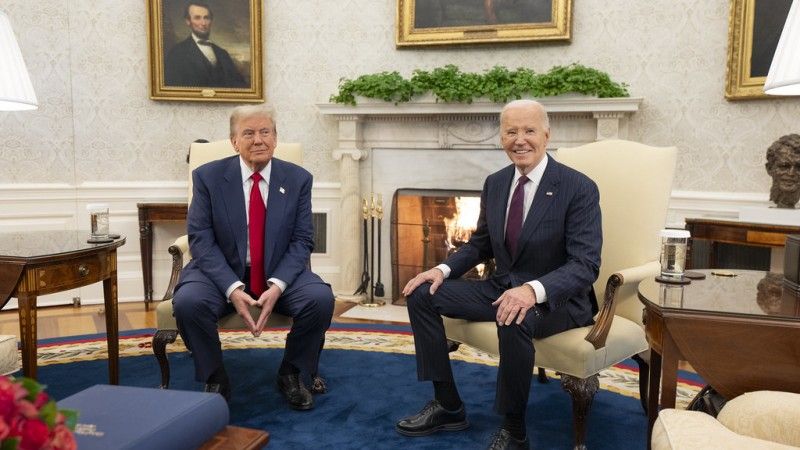
Chaos and control: prof. Kenneth Cosgrove on Trump, Biden, and the future of American politics
Magdalena Górnicka-Partyka: Let’s start by comparing the two most recent administrations. What are the key differences between Donald Trump’s and Joe Biden’s presidencies?
Prof. Kenneth Cosgrove: Trump’s presidency is pure chaos. Biden’s goal was to reestablish a sense of normalcy - so that people wouldn’t have to pay attention to politics all the time and could trust the government to function properly. Trump doesn’t operate that way. His administration feels like a reality TV show, with distinct characters running agencies, while he plays the senior figure in the background - almost like the old TV show Fantasy Island. In contrast, Biden was barely visible, partly because he was not naturally good at that aspect of the job. His team built a corporate-style communications structure. His press secretary, often underrated, did an impressive job given the difficult task of defending Biden’s performance.
And when you compare Trump’s first and second terms, what stands out most?
The people around him. In his first term, it was a standard Republican administration. Those figures are gone now - replaced by Trump loyalists who never tell him »no.« The current administration reflects what insiders from his first term warned about: there are no guardrails anymore. Now, everyone can see what he’s really like.
Would you say Trump is more »real« this time, or is he still performing for political effect?
He understands the system better now. Last time, he depended on others. Today, he follows whatever idea pops into his head. Trump has always been authentic - what you see is largely the real person. He knows how to get attention, using extreme language to keep people focused on him. The difference now is that there are no checks around him, so we see more of it than before.
Ten months into his second term, is Trump fulfilling his promises?
He’s making the same mistake the Biden team made - assuming they won with a mandate. Both barely won, and both misread public sentiment. Trump’s hardcore loyalists love what he’s doing, but swing voters don’t. He’s overshot public opinion while pleasing his base. Voters thought he’d fix inflation, secure the border, and restore America’s global respect. Instead, we’ve seen broad tariffs, ambiguity on Ukraine, and heavy-handed immigration enforcement - moves that thrill his base but alienate moderates.
If Biden had stayed in the race, could he have beaten Trump?
Probably not. Biden might have lost by even more. His June debate against Trump was disastrous - he failed to convince voters he could still do the job. Trump, on the other hand, had his best debate performance ever: disciplined, calm, even empathetic. It made him look better. The Democrats« decision to switch candidates to Kamala Harris was understandable but flawed - they sent her into the championship game without any prior season training.
Why does Trump remain so fixated on Joe Biden, even after he won the election?
His real obsession is with Barack Obama - he envies his legacy, even his Nobel Prize. But blaming Biden serves a purpose: it gives Trump someone credible to hold responsible for current problems and reminds voters of what they didn’t like before. It’s a way of saying, »You might not love me, but remember how bad it was before.«
How would you assess Biden’s presidency now?
It’s debatable. Inflation was too high, the southern border too loose, and COVID policies inconsistent. The Inflation Reduction Act didn’t reduce inflation - it was a green energy bill. Biden defined the economy by job numbers, while voters cared about prices. His foreign policy, though, was strong - especially on Ukraine and NATO - but domestic discontent overshadowed that.
Do you think Americans simply grew tired of Democratic presidents?
Partly. Trump represents a biblical archetype - the sinner who repents and now exposes others« sins. His message that »the game is rigged« resonates because, since the 2008 financial crisis, many Americans felt the system wasn’t fair. He and Bernie Sanders actually share that populist appeal: both say the system is designed to disadvantage average people.
Has Trump permanently changed the presidency?
In some ways, yes. Technology and direct communication have transformed politics. Trump mastered direct-to-consumer engagement. Future leaders will need to do the same. We’re now in a visual, social media age - politicians who master that technology will dominate. Trump ran his campaigns like startups - experimenting constantly, firing people quickly, and testing messages in real time.
And what about the Democratic Party - what must it do to recover?
It must redefine its product. After losing, parties must ask: What do we stand for, and who can we sell that to? Democrats can’t just be the party of coastal professionals. They need to appeal again to working- and middle-class voters. Historically, Trump’s populism resembles 1980s Democratic economics - pro-union, protectionist, nationalist. Democrats need to rediscover how to win those constituencies.
How do you think Trump’s approach will affect the balance of power in Washington?
Eventually, Congress will push back. His expansive use of executive power - deploying troops domestically, overriding local jurisdictions - is unprecedented. There are genuine constitutional and taxation issues at stake. If the opposition wins Congress, impeachment could be real this time. Historically, American institutions tend to rebalance after such overreach, though it takes time.
Finally, how do you think history will remember Biden and Trump?
Biden will be remembered as a lifelong public servant - part of the Democratic tradition of working for ordinary people - but not as a great president. Like Jimmy Carter, he’ll be respected more as a person than as a leader. Trump, meanwhile, will remain one of the most consequential and controversial presidents in U.S. history - his impact on governance, policy, and political culture will be debated for decades.
Kenneth Cosgrove is a Professor of Political Science and Legal Studies at Suffolk University in Boston. His research explores how political leaders and institutions shape public perception in modern democracies. A leading expert in political marketing, communication, and branding, he analyzes how politicians craft narratives and images that resonate with voters and redefine power structures. Cosgrove is the author of the acclaimed book „Donald Trump and the Branding of the American Presidency: The President of Segments”, offering a sharp and insightful perspective on the intersection of politics, media, and identity in contemporary America.


