- WIADOMOŚCI
- KOMENTARZ
- ANALIZA
Who’s left to restrain Kim? Power consolidation and escalation risk in North Korea

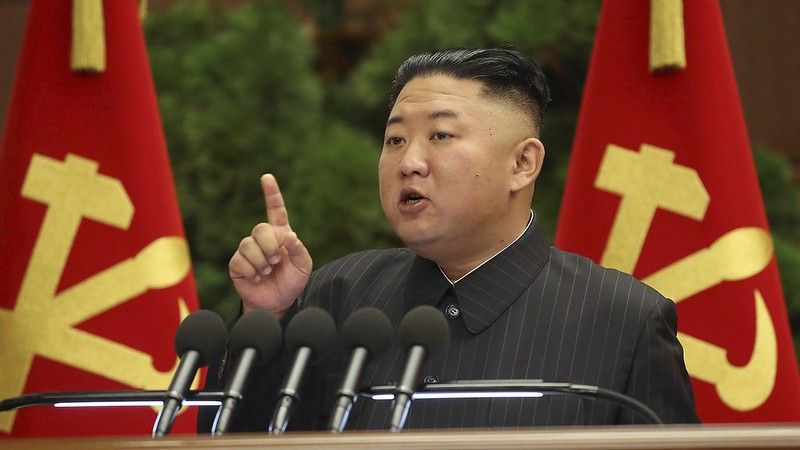
The Ninth Workers’ Party Congress in North Korea has concluded after a rare five-year-long conclave. Kim Jong Un has been re-elected as party general secretary in a unanimous vote. Well, this is not exactly a surprise in a country where dissident voices are supposed to be non-existent in the first place. What you need to know about this, however, is this: in his re-election, Kim Jong Un not only consolidated his power but also sent a message to the US: it will not be the other way around in complying with his demands.
The Purge Nobody's Talking About
Choe Ryong Hae, a decades-long senior official and confidant of Kim Jong Un, was not named to the Ninth Central Committee. Neither was Ri Pyong Chol, the former vice chairman of the Central Military Commission and mastermind behind the North Korean missile program. In North Korea, not making the Central Committee doesn’t mean not making a Cabinet. It means being thrown away.
More than half the members of the Central Committee have been replaced. This looks at first glance like a generational turnover. In fact, it is the opposite. Kim has been systematically removing people who have independent support bases and replacing them with younger technocrats who have no support base other than his patronage. The message is unmistakable: Kim trusts no one, needs no one, and is busy eliminating anyone who could possibly function independently of him.
His sister, Kim Yo Jong, has been promoted to the Politburo and department directorial ranks. The message is quite simple: in Kim’s North Korea, it is not ability and revolutionary credentials that get you promoted, but your loyalty and your ties by blood.

The Nuclear Flex That Wasn't Really About Nukes
Kim unveiled rows of nuclear-capable rocket launchers days before the congress opened, claiming that if deployed, “no force would be able to expect God’s protection.” The theatrics were genuine. The weapons displays were real. But this was not primarily about signaling military capability to Washington. The American intelligence community already knows North Korea’s weapons program status. This was about signaling to his own population and to potential rivals that he controls the military apparatus.
What is notable is what Kim did not do. He did not issue direct threats to the United States. He did not escalate rhetoric toward South Korea in his opening remarks. Instead, his message to the US was: “If you recognize our nuclear status, we can coexist.” That is not compromise. That is an ultimatum dressed in conditional language.
The Security Implication Washington Should Worry About
Here is what matters for regional security: Kim has just consolidated power among officials most likely to advocate moderation and surrounded himself with loyalists. This is precisely the wrong moment for Washington to believe that negotiation is imminent. In North Korean terms, Kim has just eliminated the people who might have counseled restraint or suggested making concessions. The regime has removed its own internal voices of pragmatism.
Meanwhile, Kim has positioned North Korea as a nation willing to wait for American diplomacy to come to him on his terms. South Korea is explicitly branded “most hostile enemy.” Pyongyang claims the right to “initiate arbitrary action.” if Seoul misbehaves. This is not diplomatic restraint. It is a regime that has just consolidated power, eliminated potential internal opposition, and is now free to act without internal constraint.
According to the American Enterprise Institute, it is expected that North Korea will unveil new ballistic missile systems and hypersonic glide vehicles in the near future. This could include submarine-launched systems, which are considered destabilizing in terms of regional deterrence.
See also 

What It Really Means
This was not a congress about opening to the world. It was not a sign of weakness or willingness to negotiate from anything less than maximum strength. It was a consolidation of personal dictatorship masquerading as generational renewal, conducted by a regime that has just eliminated the officials most likely to suggest compromise. Kim has handed himself a clean slate and removed the internal checks on his authority. He is now free to pursue whatever confrontational posture he chooses.
For Seoul and Washington, that is not good news. For Moscow, which has North Korean troops fighting in Ukraine and access to North Korean munitions supplies, this suggests a dependable partner for years to come. The real question is not what Kim will do with Trump. The question is what he will do with South Korea now that he has eliminated anyone around him who might advocate caution.