- ANALIZA
- WIADOMOŚCI
Poland bets everything on SAFE

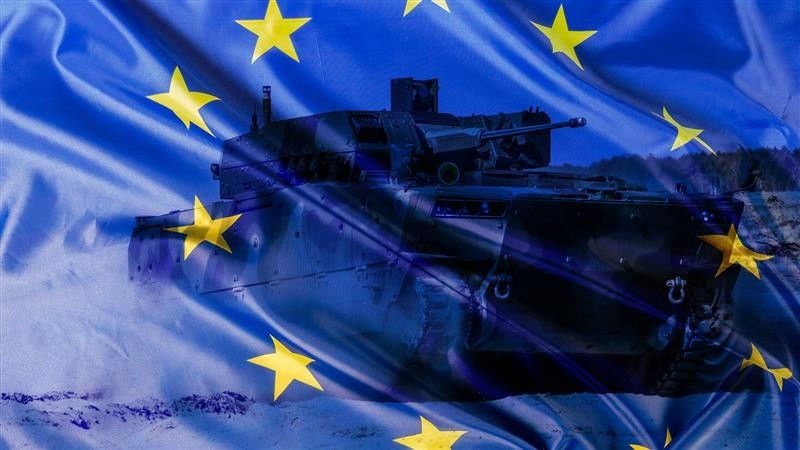
Poland has placed a very serious bet on SAFE. This is not simply another line of European financing or another political slogan about rearmament. Warsaw is trying to use EU loans to accelerate the modernisation of the Polish Armed Forces, strengthen national industry and turn Poland into one of the most important conventional military powers in Europe. The money will be repaid for decades, but the equipment, factories, ammunition reserves and production lines may shape Poland’s position for a generation.
Poland is the largest beneficiary of SAFE, with up to €43.7 billion available in low-interest loans by 2030. The first €6.5 billion has already reached the account at Bank Gospodarstwa Krajowego, and the government immediately launched a wave of contracts with domestic companies. This is politically important, because for months SAFE was presented by some as a mechanism that would mainly support German or French industry. The first Polish contracts show a different direction. Warsaw wants the money to flow primarily to Polish factories, Polish engineers, Polish workers and Polish military needs.
The scale is unusually large. More than 50 contracts are expected, with the total value of signed agreements reaching around €23,6 billion. This is not one procurement programme, but a whole package covering artillery, ammunition, armoured vehicles, drones, command systems, reconnaissance, engineering equipment, satellite communications, logistics and battlefield support. Poland is not only buying platforms. It is also trying to build a complete land warfare ecosystem.
The most visible part is the Stalowa Wola package, worth up to around €14,2 billion. It includes 146 Borsuk infantry fighting vehicles, 96 Krab self-propelled howitzers, more than 1,000 support vehicles for Homar-K multiple rocket launchers, vehicles for six K9PL artillery battalions, additional Baobab-K mine-laying vehicles, eight Rak company fire modules, 64 M120K Rak mortars on Rosomak chassis, several dozen Waran vehicles and an annex linked to Rosomak vehicles with ZSSW-30 turrets. This is a huge order for Huta Stalowa Wola and its industrial base. It gives production certainty, employment and the possibility to scale output before 2030.

Ammunition is perhaps even more important than vehicles. Poland signed a contract worth more than €3,2 billion net for several hundred thousand 155 mm artillery rounds. This is one of the most important decisions for Polish security, because the war in Ukraine has shown that artillery without ammunition is only a parade capability. The contract involves PGZ-Amunicja, Dezamet, Mesko, Nitro-Chem, Gamrat and Belma. It should not only fill warehouses, but also strengthen the national production chain for a calibre that has become central to modern European war.
SAFE is also being used to strengthen engineering and defensive capabilities. Contracts worth more than €330,5 million cover Jarzębina-S controlled explosive charge systems, SPPŁW side-attack charges, TM anti-tank mines, ZN fuzes and ISM cassettes with MN-123 mines for Baobab-K vehicles. These systems matter especially in the context of the Eastern Shield programme. In a war against Russia, obstacles, mining, controlled demolition, anti-armour barriers and prepared defensive zones are not secondary assets. They decide how quickly an enemy can move and how much time Poland can gain.
The Rosomak contracts show another layer of this modernisation. Poland ordered 30 medical evacuation vehicles on Rosomak chassis for more than €118 million, with deliveries by the end of 2028. These vehicles will support K2GF and K2PL tank battalions and will be able to evacuate wounded soldiers directly from the battlefield while providing initial medical support. Another contract, worth around €94,5 million, covers command vehicles on the same platform for K2 tank battalions, with deliveries planned for 2026–2029. This is important because Poland is finally buying the systems that make heavy units functional: command, medical support, communications and survivability.

The logistics part is less spectacular, but it is decisive. The Armament Agency signed agreements for 24 Kleszcz light armoured reconnaissance vehicles, a large number of Jelcz 4x4 and 6x6 trucks, around 160 Traszka low-loader sets for transporting tracked vehicles above 60 tonnes, and around 150–157 medium satellite communication terminals. These are the systems that allow an army to move, communicate, transport heavy equipment and maintain tempo. Without trucks, trailers, satellite links and reconnaissance vehicles, even the best tanks and artillery remain limited.
The drone dimension may become one of the most important parts of SAFE. Polish companies, especially WB Group, are receiving contracts for systems such as FlyEye, Warmate and Gladius. The figures are significant: 190 FlyEye reconnaissance sets, which means around 760 air platforms; more than 400 Warmate loitering munition sets, potentially around 4,000 strike drones; and 12 Gladius battery fire modules worth more than €2,1 billion. This is not symbolic. Poland is building one of the largest unmanned systems portfolios in Europe, based largely on domestic technology.
Cyber and cryptography are another important parts of the programme. The first SAFE contracts included agreements with Polish companies from the cryptography and cybersecurity sector, worth around €708,5 million, for the needs of the Cyber Defence Forces. This matters because modern war is not only artillery, drones and armour. It is also encryption, secure communications, cyber resilience, data protection and the ability to operate under electronic and cyber pressure. Poland is right to connect SAFE with military cyber capability.

The industrial effect may be greater than the immediate military effect. The government estimates that almost 90% of SAFE funds may go to Polish companies, and that nearly 12,000 firms could benefit directly or indirectly. This includes not only large state-owned defence companies, but also private firms, subcontractors, electronics producers, software companies, metalworks, vehicle manufacturers and regional supply chains. If this works, SAFE will not only arm the Polish military. It will also expand the Polish defence-industrial base.
There is also an export dimension. Polish systems such as Piorun, FlyEye, Warmate, Gladius, Baobab, SAN counter-drone solutions and possibly Kormoran-related technologies are already attracting foreign interest. Sweden, Slovakia, Latvia, Lithuania, Spain and Canada have been mentioned in discussions around cooperation. If SAFE helps Poland scale production, Warsaw may move from being mainly a buyer of foreign weapons to becoming a serious exporter of selected modern systems. This is one of the biggest potential gains.
The risk is delivery. Contracts are one thing. Production is another. Most of this equipment has to be delivered by 2030, which means that companies must rapidly expand production lines, hire workers, secure components, train engineers, maintain quality and avoid bottlenecks. Poland must not create a short boom followed by industrial exhaustion. The new capacity must survive after the first wave of SAFE contracts ends.

The second risk is coordination. So many contracts signed so quickly will require strong supervision from the Ministry of National Defence, the Armament Agency, the armed forces and the industry itself. The Polish state has often been good at announcing ambitious plans, but less effective at synchronising procurement, training, infrastructure and logistics. SAFE will test the whole system. It will show whether Poland can convert money into actual combat power.
SAFE is therefore neither a trap nor a miracle. It is a tool. If Poland uses it badly, it will be another enormous debt-financed procurement wave. If Poland uses it well, it may be the strongest impulse for the Polish defence industry in decades. The loans will be repaid for many years. The military and industrial effects may stay much longer.
Poland is trying to build forces that can dominate the conventional balance on NATO’s eastern flank. That means artillery, ammunition, drones, armour, engineering systems, logistics, communications and cyber capabilities in quantities that matter. SAFE gives Warsaw the money and the political framework to accelerate this process. The difficult part starts now: delivery, production, training and integration. If Poland manages that, the Polish Armed Forces will not only grow. They will also become one of the main military pillars of Europe.