- WIADOMOŚCI
- WYWIADY
Taiwan strategist: Push for deeper ties with Poland [INTERVIEW]

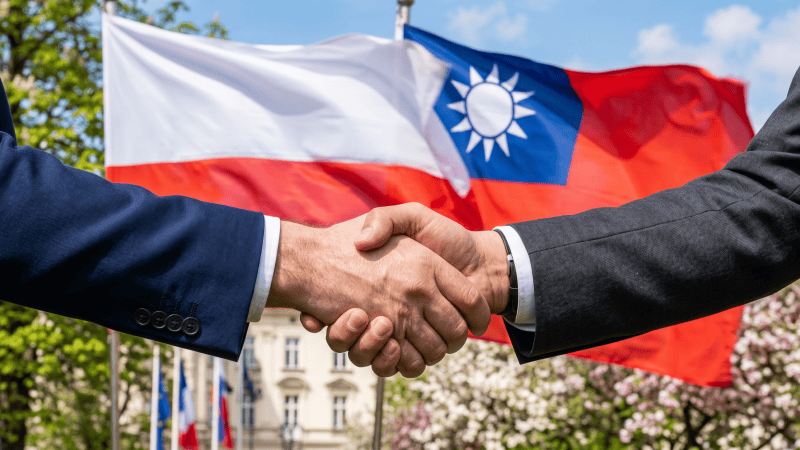
Paying tribute to Washington — or building real capability?
Antoni Łukasik: Poland and Taiwan seem to share a similar starting position: heavy reliance on American arms and a similar faith in the methodology of warfare those arms represent. There is a popular belief in Poland that the more we spend on NATO commitments and American hardware, the more influence we win in Washington. Is buying expensive American equipment really just paying tribute to a senior ally — especially given how cheap Shahed-type drones outperformed costly Patriot interceptors in the US fight against Iran?
Bryce C. Barros: To answer that, I want to back up a little. Across the board, the Trump administration has called on all US allies and partners to increase spending to 5% of GDP. Secretary of Defense Hegseth spoke at the Shangri-La Dialogue in late May and essentially asked the same thing of US Asian allies — South Korea, the Philippines, Australia, New Zealand — that he asked of Europeans: get your spending up to 5%. But the logic behind the argument was different.
For Europeans, the message was essentially about cost-sharing. For Asian allies, the argument was that they need to increase spending so they can partner more effectively with the United States. If you look at what the US is doing across the Indo-Pacific — building up bases in the Philippines, expanding defence infrastructure in Australia’s Northern Territory, conducting more exercises across the region — you can see where some of that logic comes from.
That said, it does not mean that a place like Poland or Taiwan is insulated from US domestic concerns. In Taiwan, there remains real concern about the durability of US support. US policy on Taiwan has been deliberately ambiguous for decades, and with the Trump administration, it is very hard to discern where things are heading. For Poland, the situation is different. Poland has been invaded many times over the centuries, and things like the legacy of the Partitions, the Warsaw Uprising and Operation Barbarossa have left a deep scar on Polish society. So it is genuinely hard to say whether defence funding alone translates into respect in Washington.
It also depends heavily on who you talk to. Some people in President Trump’s orbit view Poland as a model ally — much like they view South Korea — because Poland has significantly increased its defence budget and continues to buy American arms while also diversifying toward South Korea and others. In some circles, that buys goodwill. In others, it remains to be seen. The recent reversal of the planned 5,000-troop deployment to Poland is a good illustration of how quickly those calculations can shift.
Taiwan is also trying to figure out its own angle with Washington. The Economist recently published a strong piece on how Taiwan’s semiconductor industry can produce more leverage than its arms purchases — I cannot speak to Taiwan’s actual strategy for dealing with Washington on that, but I largely agree with the thesis. Another way Taiwan is building influence is by investing specifically in its capacity to produce dual-use technologies, knowing that the ecosystems around those technologies — the companies and actors involved — can be used for co-production with American firms. There has been a lot of movement in that direction over the past couple of years, led by companies like Anduril, Kratos, Shield AI, and AeroVironment. But all of those are American neo-primes. That is not the same as having a Polish equivalent of PGZ.

Fighter jets versus drones. What Poland can learn from Taiwan’s T-Dome
Ukrainians recently succeeded spectacularly in damaging a refinery in the Moscow region using drones. A few months earlier, NATO jets were scrambled to intercept Russian drones that had entered Polish airspace. Is using fighter jets to shoot down drones still a valid approach — or have dedicated, coherent counter-drone measures become mandatory in modern warfare? And in that context, what is Taiwan’s T-Dome concept, and what lessons from it should Poland take away?
There is a lot in that question, so let me try to break it down. T-Dome is a concept announced by President Lai last year, and its entire purpose is to be comprehensive — and I want to emphasise: a concept — a system-of-systems approach to Taiwan’s air defence. Taiwan already has one of the most sophisticated air defence networks in the world. That is not a secret. You can look up what systems they are fielding: everything from PAC-3 to their own indigenous Tiangong-3 and various other platforms currently in development.
One lesson T-Dome could offer Poland is the importance of investing in domestic R&D to develop its own systems. Taiwan is largely dependent on PAC-3 for high-end threats like ballistic missiles, and those batteries have been a central feature of Taiwan’s defence posture for several years. But its indigenous systems are an increasingly significant part of the picture too, and that is worth thinking about for Poland.
If you look at what T-Dome covers, it operates across layers: PAC-3 and Tiangong-3 for ballistic and larger missiles, different capabilities for lower-end threats, and ongoing development for counter-drone systems. Poland could benefit from thinking in exactly the same layered way.
On the specific question of jets versus drones: the economics of that depends entirely on what type of projectile you are using to take out the drone, and what kind of drone it is. Using expensive missiles against something like a Shahed simply does not make sense economically. What does make sense are some of the improvised but effective tactics coming out of Ukraine — including prop plane pilots shooting at drones with shotguns out of the cockpit, or using attack helicopters. In Taiwan’s case, that would most likely mean Apaches or Cobras. Interceptor drones are also increasingly being used for exactly this role.
Poland has spent a great deal on defence. That is not a bad thing. But making sure that money goes to the right areas is critical — not just for the Polish taxpayer, but to maximise protection per unit of spending. In air defence, it has traditionally been described as a bullet hitting a bullet. But now the equation also has to account for cost-effectiveness: the cheaper your counter-drone system relative to your adversary’s attack drone, the more sustainable your defensive posture becomes. If it costs you more to shoot down a drone than it costs your adversary to build one, you are losing on a long enough timeline.
For Poland looking at T-Dome, the key takeaway is the system-of-systems architecture — how sophisticated the overall network is, and what kinds of non-traditional platforms Taiwan is incorporating into it. It is also worth noting that Poland, unlike Taiwan, has the benefit of NATO air policing missions — aircraft from Portugal, the Netherlands, Canada and others patrolling the eastern flank. Taiwan has no such luxury. The self-sufficiency embedded in the T-Dome concept is therefore particularly relevant for Poland if US support ever becomes less reliable.

Poland buys 60% of Taiwan’s drone exports — desperation or strategy?
Poland now accounts for around 60% of Taiwan’s drone exports — a tenfold increase compared to last year. The two countries recently signed a formal deal to build a non-China drone supply chain together. Is this because the Taiwanese are simply that good at producing drones, or is Poland so motivated to buy drones that it will take whatever is available?
I do not think Poland is desperate for drones. What Poland and other like-minded countries are desperate for are non-Chinese supply chains — supply chains that are not vulnerable to Beijing using its position as a chokepoint for electronics components. Taiwan is a big part of that answer.
Even though Taiwanese drones are not as cheap as Chinese-made alternatives, the price point among like-minded countries is the most affordable available. Your average engineer or manufacturer in Taiwan earns less than their counterpart in South Korea or Japan, which keeps costs competitive. And Taiwanese components are genuinely good.
According to research from the Taiwanese think tank DSET, a large share of the drones going to Poland and Czechia are most likely being transferred onward to Ukraine. Czechia has surpassed Poland in purchasing volume from Taiwan. But some of those systems are staying in Poland and Czechia for their own use, and there is growing appetite for deeper collaboration. Foreign Minister Lin’s recent visit to Warsaw and his speech at the GLOBSEC Forum are indicators of that.
So: Taiwanese production is affordable and capable. Is it unique? Only in the sense that it largely excludes Chinese components. Poland is not desperate. Poland is desperate for supply chains that China cannot hold hostage. And that is not just Poland — that is virtually every like-minded democracy right now.
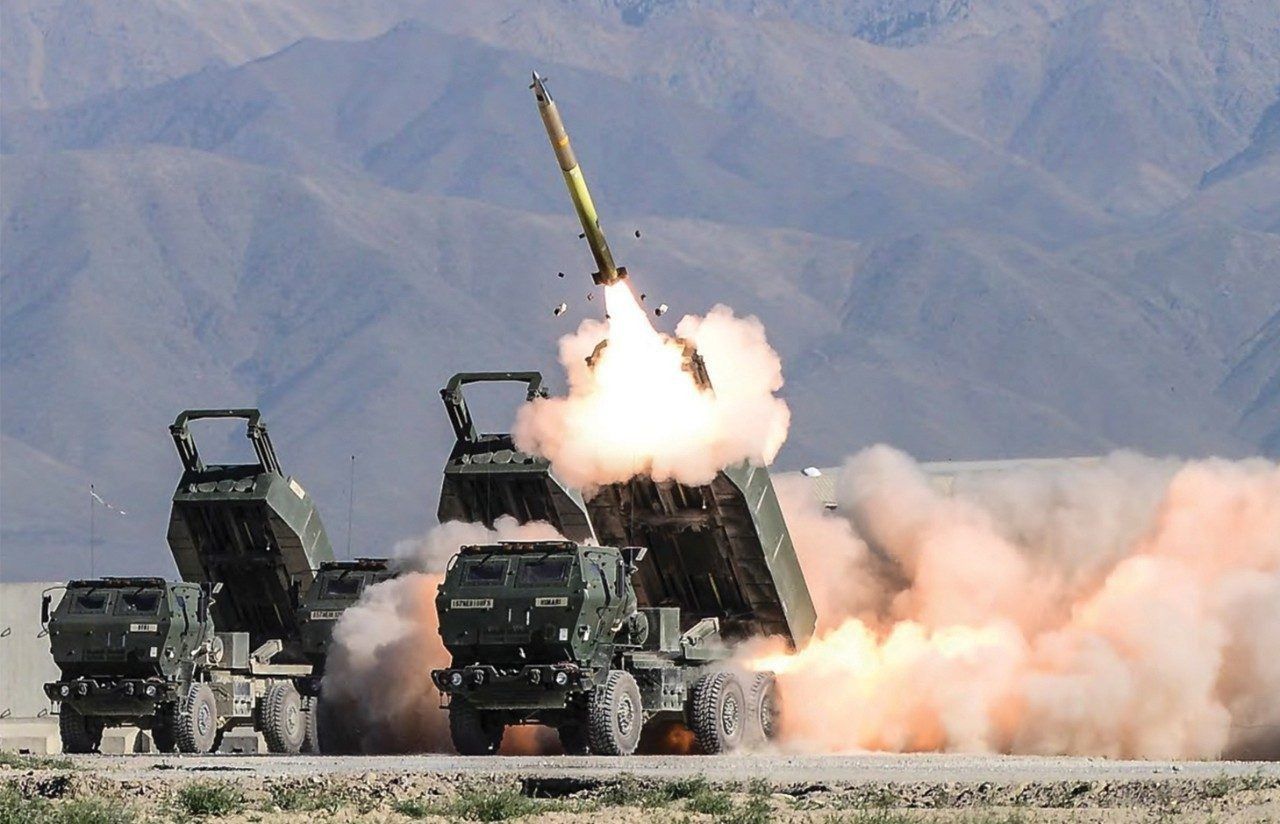
Can the world actually decouple from Chinese drone components?
The war in Ukraine is technically powered on both sides by Chinese electronic drone components — flight controllers, batteries, chips. Given how deeply embedded China is in the global supply chain, is real independence from Chinese components actually achievable, or is it more of a political aspiration than an industrial reality?
The biggest chokepoint for true independence from Chinese components is not even the components themselves — it is the things that make the components, which are critical minerals. The Trump administration is trying to address that through what I understand to be a critical minerals initiative, pulling in partners like Canada, Australia, and Taiwan to accelerate raw mineral extraction and processing. I am not aware of whether Poland has signed on to it, but Taiwan’s involvement has been publicised.
Whether real independence is achievable in five to ten years depends entirely on how quickly like-minded countries can scale up their processing capabilities. That is genuinely hard, because a lot of mineral processing involves conditions — toxicity, labour standards — that do not meet what is normal in the West. China has been willing to bear that cost, which is considerably easier to impose in an authoritarian state.
Among specific drone components, batteries are probably the hardest to substitute. Finding alternatives — from Taiwan, South Korea, or European producers — is going to be a major challenge going forward. South Korea already has strong battery production capacity, which is relevant here.
So: achievable in principle, but dependent on processing capacity that does not yet exist at the required scale. It is more than a political aspiration, but it is not a five-year project either.

Which middle powers are getting defence innovation right?
In your recent research comparing Canada and Taiwan, you’ve argued that middle powers should not simply copy the Pentagon’s institutional model. Which countries do you see actually executing a proactive, independent defence innovation strategy well — and what specifically should Poland and Taiwan borrow from them?
The reason to look beyond the US model is not that the United States cannot do defence innovation — it is that the US economy and its defence industrial base are so large, and still so dominated by major primes that the model simply does not transfer to smaller countries. Those major primes are also the ones supplying most of Poland’s defence industrial base, which is part of why looking at smaller countries is more instructive.
The places that come to mind for me are Singapore, Sweden, South Korea, and Israel. Singapore has been integrating advanced dual-use technologies into its military for decades. If you go back and watch the Singapore Armed Forces Day Parade or the National Day Parade, you will see that clearly — for decades the Singaporeans have been very deliberate about displaying advanced dual-use capabilities. Sweden is another strong example: it has maintained a serious domestic industrial base for a long time, partly out of historical necessity. South Korea is very capable. Israel is strong across multiple areas.
The honest caveat is that none of these countries are truly independent either. They are all still dependent on components from elsewhere. If you look under the hood at the systems any of these countries produce, you will find that supply chain reality. But moving as close as possible to independence in assembly and core systems is a meaningful goal, even if full independence is a theoretical endpoint.
Poland also has structural advantages that many of these countries do not. Access to NATO DIANA, the NATO Innovation Fund, the EU SAFE programme, and presumably the Defence Security and Resilience Bank being hosted in Canada — which 35 countries are reportedly in negotiations over. I would be surprised if Poland is not among them. That is a significant support structure that most middle powers do not have access to.
See also 

Open-source warfare and the blurring of civilian and military sectors
Ukrainian developers are now publishing drone software on GitHub. Does this represent a fundamental shift — is defence technology becoming less confidential and more open-source? And do you agree that drone technology is dissolving the traditional boundary between civilian and military sectors? The Polish think tank Strategy & Future has proposed a concept called the Adaptive Swarm, arguing that military hierarchy and procurement procedures still rooted in 18th-century Prussian structures are an obstacle to real innovation in dual-use technologies. Do you agree with that diagnosis?
Yes, and the Ukrainians are really demonstrating where that change is happening. Take what they have done with what is essentially a trophy awards platform — opening up captured Russian weapon systems for review and potential licensing by like-minded countries and startups. It has an element of promoting Ukraine, but that does not make it any less useful or significant.
A lot of this is becoming genuinely decentralised. It is becoming less focused on large primes. The Ukrainian drone software is all open-source, available on GitHub, and is being iterated on continuously. It also sidesteps US ITAR restrictions because it is not touching US-origin technology. That is significant.
High-end defence procurement is not going to disappear, and it should not. You still need large platforms. But as dual-use technologies improve, you are going to see more and more capabilities that were once exclusive to major defence programmes migrate toward commercial or semi-commercial development, driven by simple cost-benefit logic. That trend is already underway.
On the specific argument about Prussian-era procurement structures being an obstacle — it is a genuinely interesting framing. You can make almost the same argument about Taiwan, whose government as the Republic of China, a successor to the Qing dynasty, carries a significant bureaucratic legacy. Taiwan’s military staff system, for instance, is deeply influenced by the Wehrmacht structure from the early 1930s period of collaboration, and it has not been reformed as thoroughly as might be warranted.
It is important to be careful here. The Ukrainians can move fast and break things because they are in an existential environment. That impetus does not exist in the same way in Poland or Taiwan, which are not currently in a hot war — even if you account for the grey zone and the broader strategic pressure both face. It is not necessarily responsible to dismantle all oversight and guardrails in a peacetime environment.
What you can and should do is remove specific red tape, accelerate timelines, and create legal frameworks that allow dual-use startups to participate in defence procurement without having to route through major primes. Moving faster within ethical and legal boundaries is absolutely possible. Moving fast and breaking everything is not the right model for countries that are not yet at war. That is an important distinction.

Who becomes Europe’s dominant defence supplier?
Who do you think becomes the dominant supplier and standard-setter for European defence over the next decade? The United States, simply because nobody can realistically replace it? France, pushing its sovereignty-first model? Faster-moving states like the Baltics? Or could Ukraine end up shaping how Europe rearms, precisely because it is the only party with genuine recent combat experience?
The US will remain a predominant supplier — perhaps not the dominant one as years go by — simply given its capacity to produce large, heavy platforms at scale. But the country I would watch most closely as a potential challenger is South Korea.
South Koreans are very good at what they produce. They specialise in heavy platforms designed for land warfare across mountainous terrain — which is a product of the Korean Peninsula’s geography. That makes their platforms somewhat less naturally suited to the plains of Poland, and I think that is part of why South Korea has had mixed results in Poland specifically.
But if the Lee administration continues investing in the defence industrial base at roughly the pace of the Yoon administration before it, South Korea has a real opportunity to displace the United States in some of the platform categories that have historically been US-dominated within NATO and EU markets. Their platforms are capable and more affordable. Poland has learned the hard way that rushing into South Korean contracts without careful negotiation can create complications. Still, Poland has also done things right: co-production of the K2 main battle tank, other weapon systems manufactured in Poland, a growing number of South Koreans living in Poland and integrating into Polish society, and daily flights between Warsaw and Seoul. That trajectory is real.
As for Ukraine shaping European rearmament — I think that is already happening, not in the sense of Ukraine becoming a conventional arms supplier, but in the sense that Ukrainian battlefield experience is actively influencing procurement decisions, doctrine, and what European militaries think they actually need. That is a form of strategic influence that does not require formal supply chains. Whether that evolves into something more formalised — licensing agreements, co-production, technology transfers — is the next question to watch.

Twenty seconds in an elevator with Donald Tusk
If you were stuck in an elevator with Prime Minister Tusk for twenty seconds, what would you tell him?
Push the relationship with Taiwan as hard as you can. It is only mutually beneficial for Poland.
Poland stands to gain a great deal from that relationship in terms of dual-use technologies and supply chain resilience. But the Taiwanese can also learn from Poland — from its experience with reserve mobilisation, standing up territorial defence forces, and the broader process of deconstructing national biases toward Prussian-era military thinking. Poland is closer in size to Taiwan and in economic profile than the United States is. That makes it a genuinely instructive model for Taiwan to study, alongside its American and other partnerships.
The message to Taiwan would essentially be: we are talking to the Americans, we are talking to other partners, and that is valuable — but Poland is closer to our size, their economy is closer to ours, and they are really trying to modernise and ramp up their defence spending. There is something useful there. The relationship between Poland and Taiwan is in its early stages but genuinely promising. Do not let it stall.
About the author: Antoni Łukasik is a freelance foreign correspondent and a doctoral researcher at the University of Warsaw, as well as a scholarship recipient at National Taiwan University, where he conducts research on global narratives and international relations. He holds degrees in Philosophy and Global Governance.