












- WIADOMOŚCI
- ANALIZA
Taiwan at the heart of the China–Japan Crisis

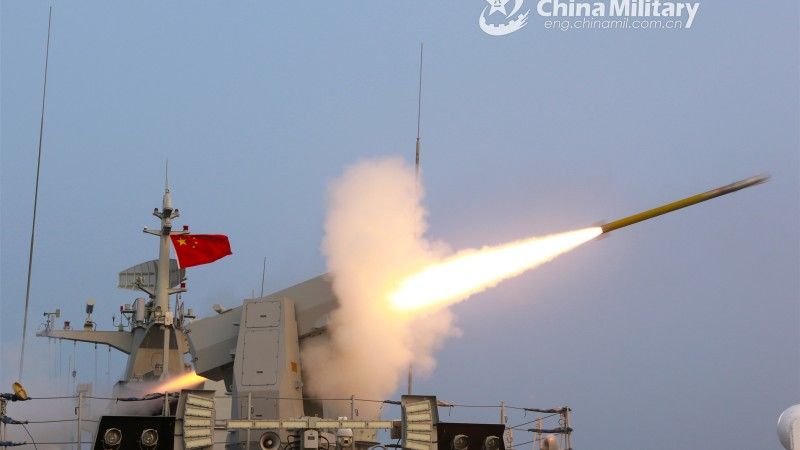
Photo. Wang Guangjie/eng.chinamil.com.cn
The past weeks have seen a significant deterioration in relations along the Beijing–Tokyo line. Largely responsible for this state of affairs is… Taiwan.
The repercussions of the recent remarks by Japan’s prime minister Sanae Takaichi have not ended. A few weeks ago she stated that any possible use of force by China in the Taiwan Strait could realistically threaten her country’s security, which in turn would justify the possible use of Japanese armed forces to defend against Beijing.
In response to those words, on Thursday, November 13 a spokesman for the Chinese Ministry of Foreign Affairs called on the Japanese prime minister to immediately retract her statements about Tokyo’s possible involvement in a military intervention in the Taiwan Strait. As reported on Nikkei Asia’s website, the PRC foreign ministry spokesman expected the Japanese authorities to „immediately cease interfering in China’s internal affairs” and warned of possible consequences that could befall Tokyo.
Rising tensions in the region
The matter continues. China’s demand was met with a Japanese refusal. Prime Minister Takaichi repeatedly reaffirmed her position publicly, saying her approach to regional security remains unchanged. So far unchanged is also the stance of the Chinese foreign ministry, which does not accept Japan’s point of view and is striking back at its Asian neighbour in various ways (including economically), while at the same time announcing further consequences.
Recent meetings between delegations of the two countries did not help to ease the dispute. According to the Kyodo news agency, talks between high-ranking Japanese and Chinese officials that took place in Beijing did not lead to an agreement.
„Japan should immediately correct its wrongful actions and take practical steps to fulfill its obligations to China,” said a spokeswoman for the Chinese foreign ministry on Friday. Several hours later, Japanese Defence Minister Shinjiro Koizumi visited military bases in Okinawa, and media reports emerged about Japan’s plans to deploy missiles on Yonaguni Island (located a short distance from Taiwan — ed.). Chinese authorities again officially protested, calling Tokyo’s idea „a deliberate move that increases tensions in the region” on Monday, November 24.
Will the dispute drag on?
The current situation perfectly illustrates the growing dispute between the Asian giants. At this moment none of the parties described (at least officially) is trying to yield to the adversary. It is certainly worth watching how relations between Beijing and Tokyo will develop further, taking into account the government of the new prime minister (in an interview with Defence24.pl Dr. Oskar Pietrewicz of the Polish Institute of International Affairs called her „a hawk” in policy toward China) and the apparent final break by China with Deng Xiaoping’s „hide your strength, bide your time” doctrine, which was recently discussed by Jakub Jakóbowski, an expert at the Centre for Eastern Studies, on Twitter/X.


