












- ANALIZA
- KOMENTARZ
- WIADOMOŚCI
No cobalt, no jets: the strategic reality behind NATO’s materials list

Aluminum, Beryllium, Cobalt, Gallium, Germanium, Graphite, Lithium, Manganese, Platinum, Rare Earth Elements, Titanium, Tungsten. Uninspiring names, perhaps, but each one is an ingredient in the cocktail that keeps modern weapons systems going, and each one is a potential weak point for the Western military alliance that would rather not discuss them.
They are not just any raw materials. They are the materials of modern warfare. Without them, modern military forces do not gradually revert to previous technologies. They cease to function at all.
The materials that keep weapons alive
Graphite is used in submarines for an entirely different purpose: woven into the hulls and structures of the submarine to minimize acoustic signatures, making them quieter and harder to detect by enemy sonar systems. NATO, through this publication, effectively admitted that modern stealth technology for naval vessels is based on a single mineral extracted from the earth.
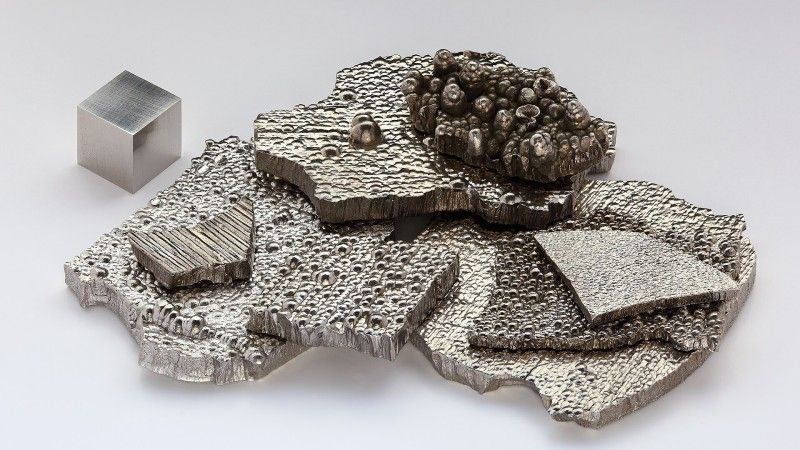
Cobalt does something equally vital: it keeps engines running when they should be dead. The jet engines used in modern fighter aircraft run at temperatures that would vaporize almost all metals. Cobalt-based superalloys can handle this incredible heat without flinching, allowing those engines to run. Without cobalt, your air force is one of slow, cold, and ineffective aircraft.
Lithium is powering something less visible but just as vital: the move towards electric military technologies. Drones need improved battery life. Directed energy weapons require reliable power sources. Contemporary command centers require uninterrupted power sources. The more advanced military technologies are, the more autonomous they are, the more they require lithium.
See also 

Rare Earth Elements are the invisible skeleton of advanced military technologies. Hidden within the electronics of a cutting-edge military fighter plane, within the electronics of a sophisticated military radar system, within the electronics of a military communications system, are kilograms of Rare Earth Elements. Hidden within the electronics of a sophisticated military missile are Rare Earth Elements that form part of the missile’s guidance systems. The seventeen Rare Earth Elements are extracted from the Earth at specific points on the planet.
Then there’s tungsten, which does something rather more mundane, yet by comparison, equally impressive: it just doesn’t melt. Tungsten is dense and hard enough that it can penetrate armor that would stop other materials. Armor-piercing rounds rely on it, as do some specialized electronic devices. What makes tungsten noteworthy, however, isn’t anything it does it’s that nothing else can replace it.
Gallium and Germanium are both semiconductor materials, the basis upon which the microchips and other electronic devices that allow militaries to observe, communicate, and attack at a distance are built. As militaries become more reliant upon the speed and agility that microchip-based defense systems allow, the reliance upon these materials grows.
Aluminium is the basis upon which airpower itself is built. It’s not the strongest material, but the balance it strikes between weight, which must be sufficient for the aircraft to be able to generate the lift needed for flight, and hardness, sufficient for the forces that flight and combat impose, makes it uniquely irreplaceable.
See also

What this actually means
The realization, however, is not about the materials. It is about what they symbolize, i.e., the total dependence of modern military power on materials that are geographically concentrated and often in the hands of potential enemies.
A country can have the best engineers, the most advanced manufacturing capabilities, the most brilliant military strategists, and still have its military capabilities severely impaired by the lack of access to certain materials. Military power is no longer determined by the country with the most advanced manufacturing capabilities. It is determined by the country with the most secure access to the raw materials that go into its manufacturing capabilities.
China has the largest share of the processing of rare earth materials. Russia has the largest share of the processing of nickel. The Democratic Republic of Congo has a near monopoly on the processing of cobalt.

The uncomfortable part NATO isn't addressing
Hidden away in the list of NATO supplies is the unspoken reality that the alliance cannot wage high-intensity military action over time without either possessing vast pre-positioned stockpiles of these materials or having access to functioning global supply chains.
In all the scenarios NATO actually prepares for, neither condition exists. Supply chains fail. Shipping routes are shut. Processing facilities become military targets. The cobalt does not flow. The rare earths do not make it to the factories. The graphite does not make it to the submarines.
This is why the list is important. The list isn’t really a supply chain optimization document. The list is an implicit recognition that the timeline of modern warfare is invisible, measured not just in terms of ammo and gas, but in terms of the availability of materials needed for making ammo and gas. The problem with fighting a long enough war is that you run out not of factories or people, but of raw materials needed for continued production.
The uncomfortable truth that the list reveals is that a long enough and intense enough war will very quickly reveal that problem. NATO might win the early years of a high-intensity war based on existing supplies and production capabilities. The problem is that, beyond that, it becomes harder and harder to ensure that supplies from all over the world are constantly flowing in.


