- WIADOMOŚCI
Pressure is mounting. Will the Americans intervene in Cuba?

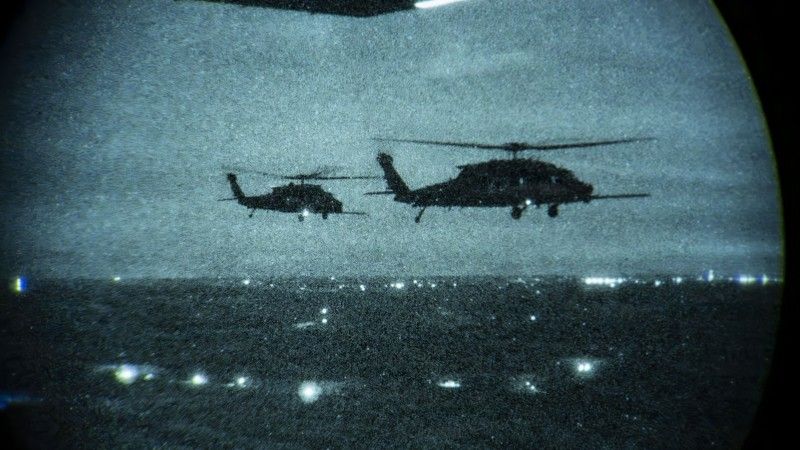
Photo. U.S. Air Force/Airman 1st Class Isabel Tanner
Operation Epic Fury has disappeared from the front pages of news outlets. Peace negotiations are underway in Islamabad. Meanwhile, American media are beginning to speculate about another intervention in the Caribbean. This time, Cuba has found itself in the sights of Donald Trump’s administration. Could there soon be an attempt to overthrow Cuba’s communists?
The Absolute Resolve operation, carried out in early January 2026, marked a certain turning point in the Trump administration’s actions. The special operation, which lasted only a few hours, ended in complete success. Delta Force commandos captured Venezuelan leader Nicolás Maduro, accused of supporting the narcotics trade, and removed him before the eyes of the world aboard the amphibious assault ship USS Iwo Jima. After a brief stay at the U.S. base in Guantanamo Bay, Cuba, Maduro and his wife were transported to the federal courthouse in New York. Could a similar fate await Cuba’s communists? For several days, U.S. media have been increasingly focused on what such an operation might look like. Media leaks suggest that military planning has begun.
Cuban drones
Speculation about a possible U.S. operation in the Caribbean intensified after Axios disclosed intelligence concerning 300 drones that Cuban authorities allegedly purchased from Iran and Russia. According to a source cited by Axios, U.S. intelligence reports suggest that the Cubans are considering using the acquired drones to attack the Guantanamo base in Cuba. Florida could also fall within the drones« range; Key West is located just 90 miles north of Havana. This information appears to provide a convenient pretext for increasing diplomatic pressure, as well as for developing contingency plans aimed at neutralizing this hypothetical threat.
Cuban Foreign Minister Bruno Rodríguez stated that the United States is creating a pretext for possible military aggression. He also stressed that Cuba is ready to resist. Cuban President Miguel Díaz-Canel, in turn, assured that his country poses no threat to anyone and has no intention of attacking anyone. He also warned that any U.S. intervention would lead to a massacre on the island and would have unpredictable consequences for the entire region.
Tensions between the United States and Cuba sharpened after the Americans arrested Nicolás Maduro. The United States effectively took control of Venezuelan oil exports, on which Cuba had depended. At the end of 2025, Cuba, with a population of 10 million, was receiving around 35,000 barrels of oil per day from Venezuela, accounting for 60–70 percent of its supplies. The blockade of deliveries of this raw material deepened the energy crisis, manifested in power outages lasting up to 20 hours in some districts of Havana. Economic pressure coincided with Donald Trump’s allusions to taking over Cuba and overthrowing the communists who have ruled there since 1959.
Castro indicted
Historians estimate that since Fidel Castro seized power in 1959, the communist regime has taken the lives of more than 15,000 Cubans and imprisoned nearly 100,000 in prisons and camps. Pascal Fontaine, co-author of The Black Book of Communism, believes that in the 1960s alone, between 7,000 and 10,000 people were executed by firing squad. Over time, the repression eased, and power passed into the hands of Raúl Castro, the dictator’s younger brother, who served as First Secretary of the Communist Party of Cuba until 2021.
On May 20, 2026, the now 94-year-old Raúl Castro was indicted by federal prosecutors in Miami. The former Cuban leader is accused of participating in a conspiracy to kill American citizens. The charges concern the downing of two Cessna Skymaster aircraft with four people on board. The incident occurred in 1996. The Cuban side maintained that the aircraft, belonging to the humanitarian organization Brothers to the Rescue, had violated Cuban airspace. In response, a Cuban MiG-29 shot down both civilian aircraft.
It is worth remembering that the operation in Venezuela was preceded by Nicolás Maduro being charged with supporting the narcotics trade. Similarly, Panama’s dictator Manuel Noriega was charged with drug trafficking before the U.S. intervention in 1989, and was later sentenced to 40 years in prison. Raúl Castro’s significance today is largely symbolic, but the indictment provides a convenient tool for delegitimizing the communist authorities. On May 21, Secretary of State Marco Rubio addressed Cubans directly in a five-minute video message delivered in Spanish, offering a new opening in relations with the United States. He emphasized that the shortages in Cuba are caused by the communists who hold power and control the economy. They, he said, are also the obstacle to freedom and to improving the living conditions of Cubans.
The Havana channel
When it was already clear that Raúl Castro would be indicted by US prosecutors, CIA Director John Ratcliffe traveled to Havana. It was the first visit of this kind since 1953. Ratcliffe met with representatives of the Cuban authorities: Raúl Guillermo Rodríguez Castro, an influential colonel in Cuba’s Interior Ministry and Raúl Castro’s grandson; Interior Minister Álvarez Casas; and the head of Cuban intelligence.
Officially, law-enforcement cooperation was discussed. It may be assumed that meetings of this type form part of a diplomatic-intelligence game aimed at bringing about a change of power. The CIA played a significant role in preparations to remove Nicolás Maduro from office, and Ratcliffe was one of the first U.S. officials to appear in Caracas after Operation Absolute Resolve.
In this context, it should not be forgotten that the first US-Cuban clash already took place in January. During the operation in Venezuela, 32 Cubans were killed. Some of them formed part of Nicolás Maduro’s close protection detail and died in combat with Delta Force.
Military solutions?
Will the United States go as far as direct military intervention in Cuba? At present, there are no visible signs of a concentration of forces around Cuba, although CNN reports an intensification of intelligence operations. It is worth remembering that Florida is home to the largest U.S. Air Force base, Eglin AFB. Cuba is located so close that a prolonged concentration of naval forces is not necessary.
Cuban forces number around 50,000 soldiers and 40,000 reservists. Paramilitary formations, as in Venezuela, for example, are numerous on paper but do not represent a real force. Most of the equipment is obsolete. The British IISS estimates that only eight combat aircraft remain operational. Air defence consists of partially modernized S-125 systems. However, operations in Venezuela and Iran have shown that even modern Russian-made air-defence systems do not pose a major threat to fifth-generation aircraft.
Any military option would probably resemble U.S. actions in Venezuela, with the difference that Cuba’s leadership is more decentralized. It appears, however, that the United States is seeking a peaceful change of power in Havana by offering the possibility of humanitarian assistance. It cannot be ruled out that any intervention would be carried out as a combination of military pressure, special operations, and a humanitarian mission, while the United States would try to avoid the direct use of force.