- WIADOMOŚCI
- ANALIZA
Trump, Putin and Xi make no breakthrough on Ukraine. Russian leader defends the Yalta agreements
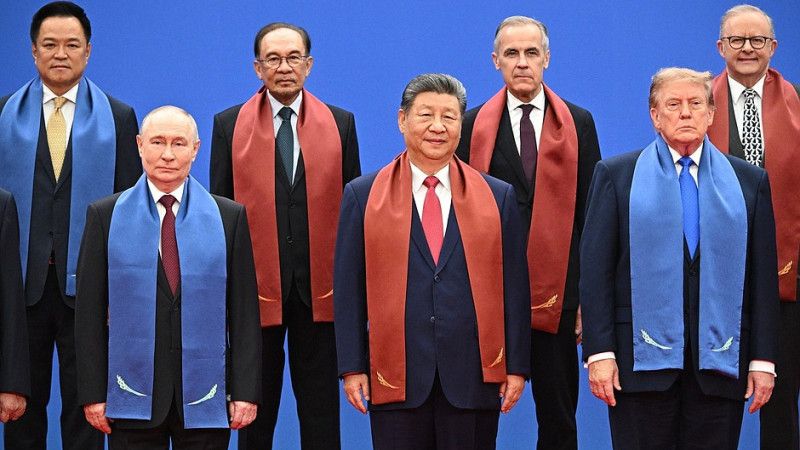
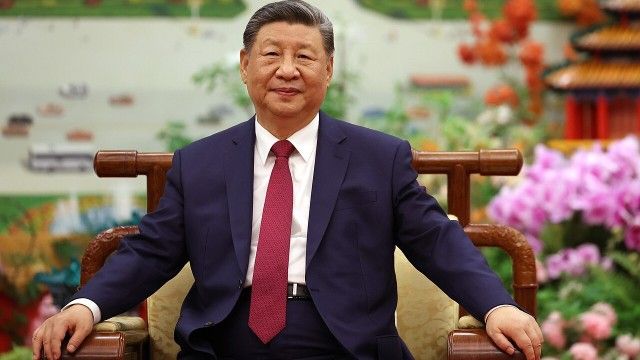
Donald Trump, Vladimir Putin and Xi Jinping announced a joint peace declaration after around 90 minutes of talks in Shenzhen, China. However, the meeting did not produce an agreement on ending Russian aggression against Ukraine. Putin accused Kyiv and Europe of being unwilling to compromise, threatened a response to attacks on the Crimean Bridge and defended the agreements reached at the Yalta Conference. Meanwhile, Russian drones were striking Kyiv.
The summit between the leaders of the United States, Russia and China ended with the adoption of a document described as a joint peace declaration. It stated that “a nuclear war cannot be won and must never be fought”. The leaders also pledged to increase the production of refined petroleum products.

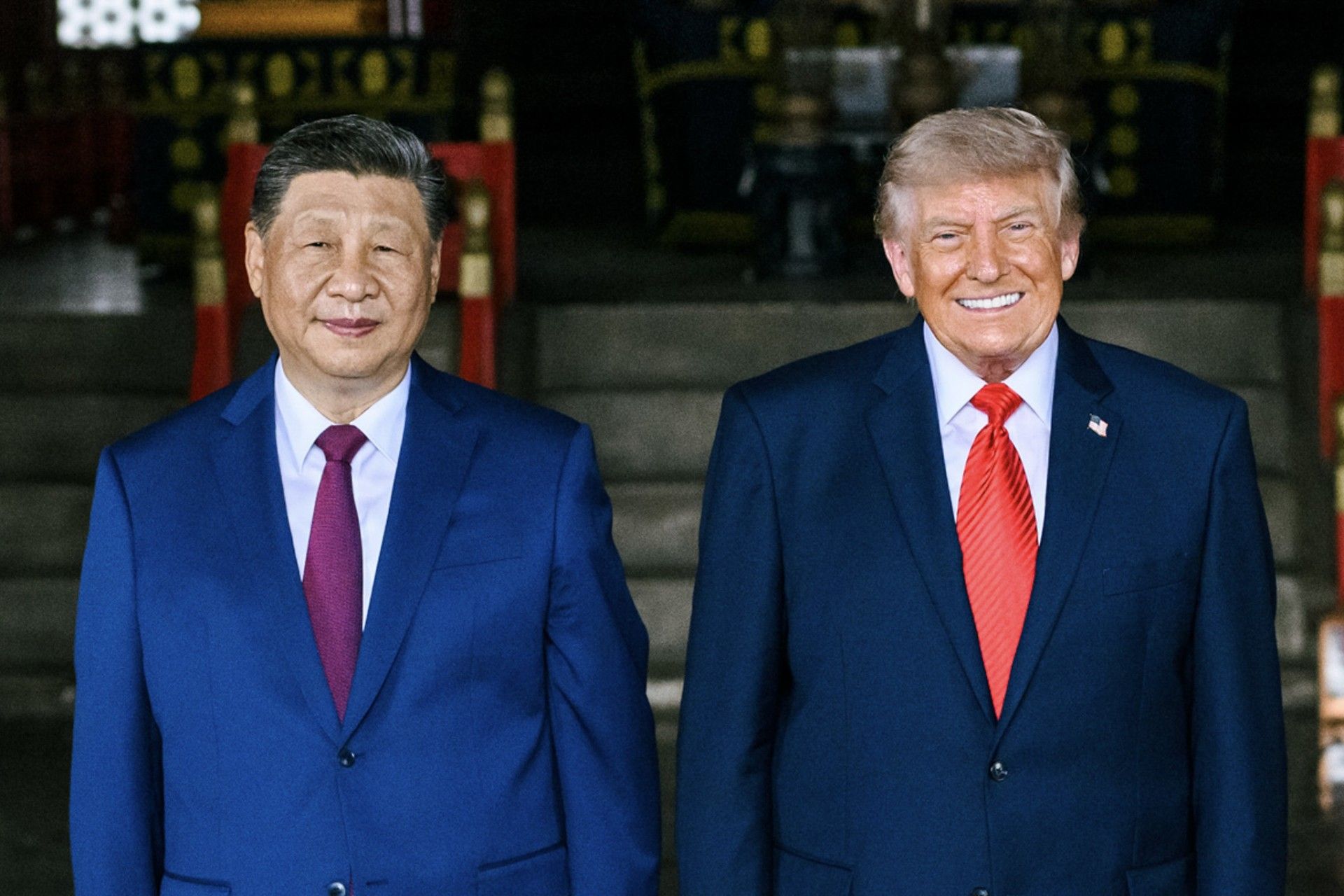
The trilateral talks were preceded by separate meetings between Trump and Putin, and between Trump and Xi. The US president spoke of his good relationship with the Russian leader and called him a friend. After meeting the president of the People’s Republic of China, he said that both the United States and China wanted the war in Ukraine to end. At a later press conference, Putin described the summit as “an important chapter in the history of diplomacy”. He claimed that the three countries had reached a mutual understanding on several key issues.
At the press conference, Putin was asked whether the talks in Shenzhen marked the creation of a new forum for discussing global security, heralded a new international order, or were merely a photo opportunity. The Russian leader responded with a wry question, asking whether Trump had prompted the journalist to ask it. He then insisted that the meeting had been serious in nature and had provided an opportunity to discuss important international issues.
On ending the war, Putin once again shifted responsibility onto Ukraine. He claimed that Kyiv should decide to end the conflict and agree to compromises. He also accused Europe of being unwilling to make concessions. Challenging the portrayal of Russia as the aggressor, he cited Ukrainian strikes on Russian energy infrastructure and the Crimean Bridge. Putin described the crossing over the Kerch Strait as “an exclusively civilian facility”. However, the bridge is also an important transport route used to supply Russian forces. Following the latest Ukrainian strikes, the Russian leader threatened a response that would be “much more painful”.
“What was wrong with Yalta?”
One of the most significant moments of the press conference was Putin’s response to comparisons between the Shenzhen summit and the 1945 Yalta Conference. At that time, the leaders of the United States, Great Britain and the Soviet Union made decisions about the post-war order. The Russian leader did not reject the comparison itself.
See also 
“What was wrong with Yalta? What was so bad about it?” he asked.
Putin argued that victory over Nazism had been sealed at Yalta. He then invoked the Kremlin’s narrative about fighting “neo-Nazism”, saying that such a victory should also be formally confirmed.
“I would have nothing against it – in fact, I would consider it right – to seal victory over neo-Nazism as well,” he said.
He also argued that the Yalta Conference had created the conditions for the establishment of the United Nations. According to him, the agreements reached there helped prevent another global conflict for eight decades, despite numerous regional wars. Putin also addressed suggestions that the leaders of the three countries had met in China to divide up the world. He denied that such a division had taken place at Yalta itself.
“No one divided up the world at Yalta. They simply recognised the realities that had emerged after the Second World War,” he said.
Another topic at the press conference was the involvement of European countries in negotiations to end the war. Putin confirmed that the Trump administration was insisting that Europe be included in the talks. He also acknowledged that the negotiations would inevitably touch on broader issues of European security, which would be pointless to discuss without the Europeans. According to Putin, the Kremlin first wants to establish what Europe could contribute to the talks.

Criticism of the summit and questions about sanctions
The meeting between Trump, Putin and Xi drew criticism from some Western politicians. Former British Foreign Secretary Jeremy Hunt called it “a summit that should never have taken place” and a gift to the Russian leader. Hunt also said that Trump’s stance confirmed the United States was abandoning its role as leader of the free world. He accused the US president of putting the pursuit of media success ahead of other commitments.
The former head of British diplomacy also linked Trump’s interest in an agreement to fuel prices in the United States. He said the president was keen to bring them down after his party suffered heavy losses in the congressional elections. According to Hunt, easing sanctions on Russia could be one possible element of the talks, although he noted that it was unclear what concessions Trump would be willing to offer.
US lawmakers also expressed reservations about the talks. Republican Senator Rick Scott, a member of the Senate Armed Services Committee, said before the summit that he trusted neither Xi nor Putin. “Do I trust Xi or Putin? No, they’re a bunch of liars,” he said. Scott added that he was glad Trump was making diplomatic efforts, but did not believe the meeting would produce positive results.
Senate Democratic Leader Chuck Schumer, in turn, accused Xi and Putin of manipulating the US president. Nine Democratic members of the Senate Foreign Relations Committee signed a letter warning that the security of the United States must not be traded for photo opportunities or personal image benefits.