












- WIADOMOŚCI
Taiwan simulates defence against Chinese naval attack

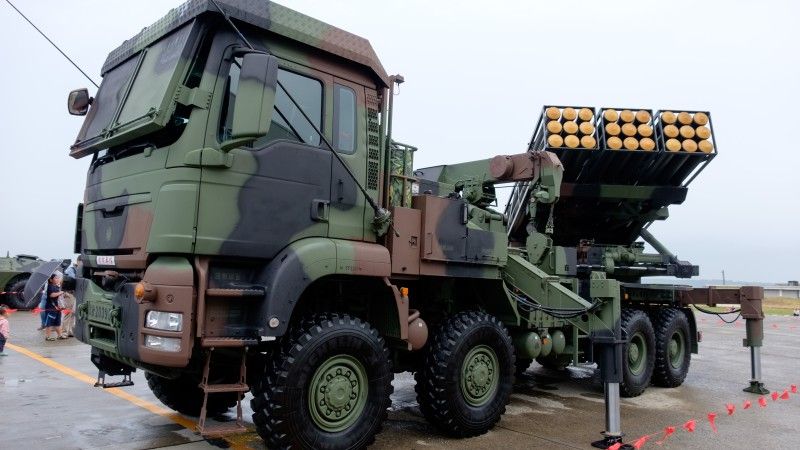
Photo. 玄史生/Wikipedia
The Taiwanese military conducted a simulation of an amphibious assault on the island’s west coast. As part of the maneuvers, missile systems were used for the first time in seven years.
The simulation was carried out along a 20-kilometer stretch of the southern bank of the Dajia River near Taichung. It is the third most populous city on the island, with over 2 million inhabitants. The drills utilised anti-tank missiles, artillery, mortars, as well as indigenous Thunderbolt-2000 mobile rocket launchers and American M109A2 Paladin and M110A2 self-propelled howitzers.
The exercises simulated the repulsion of a naval invasion. The forecast of a potential attack was developed based on reports and analyses from the Pentagon and the Washington-based think tank CSIS (Center for Strategic and International Studies), among others. The scenario envisions an attempted landing by Chinese troops across the Taiwan Strait onto the beaches of Taiwan’s west coast. As noted by Liao Neng-cheng, a representative of the Taiwanese missile forces quoted by Reuters, the exercises were intended to reflect dynamic, „realistic combat conditions” with relatively short preparation time.

The maneuvers were primarily intended to demonstrate readiness for a potential invasion to China. Chiu Chui-cheng, head of the Mainland Affairs Council (MAC), emphasised in an interview with Reuters that Taiwan „will use strength and deterrence to prevent the Chinese communists from forcibly changing the status quo.”
Since its inception, Taiwan has been considered a breakaway province by China. Beijing does not rule out taking control of the island by force and is constantly developing its navy, among other things, for this purpose. Taiwan receives unofficial support from many Western nations, primarily the United States. Officially, however, its statehood is not recognized by the majority of UN members.


