












- WIADOMOŚCI
- WYWIADY
How Taiwan plans to deter China [INTERVIEW]

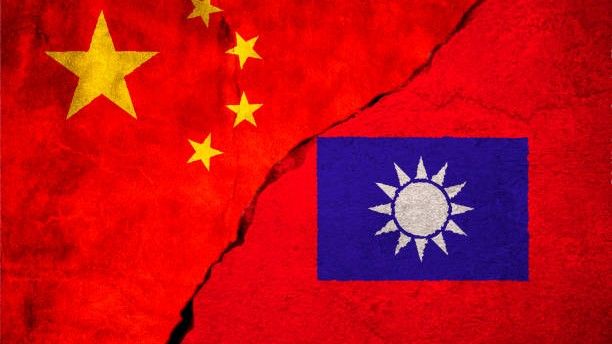
Euro-Atlantic and Indo-Pacific security are now deeply interconnected, Taiwan’s Deputy Foreign Minister Dr François Chihchung Wu told Dr Aleksander Olech, highlighting new opportunities for joint cooperation across the defence industry, cybersecurity, and critical infrastructure in the face of a shared Sino-Russian threat.
Dr Aleksander Olech: In recent years, we have observed growing tensions in the Indo-Pacific region. From Taiwan’s perspective, what are currently the most significant security challenges in the region?
Deputy Minister of Foreign Affairs Dr François Chihchung WU: For Taiwan, the foremost security challenge in the Indo-Pacific is the continued expansion of authoritarianism. Through ongoing naval and aerial incursions, large-scale military exercises, and the systematic implementation of gray-zone tactics, China is attempting to break through the first island chain. Recent assessments by the Office of the President and the Ministry of National Defense indicate that these aggressive actions aim to unilaterally alter the status quo across the Taiwan Strait. More broadly, they pose a severe threat to regional stability and the balance of power.
The waters of the Indo-Pacific, particularly the Taiwan Strait, are vital to international commerce. Approximately half of all commercial cargo transits the strait. Furthermore, Taiwan produces 90 percent of the world’s high-end semiconductors. Any military escalation or blockade in the region would instantly jeopardize supply chains and inflict catastrophic damage on the global economy.
Beyond conventional military posturing, the region is facing acute threats in new domains of warfare. The increasing deployment of uncrewed aerial vehicles (drones) and other advanced tactical systems is changing regional security dynamics. Meanwhile, ongoing cyberattacks and state-sponsored cognitive warfare are intentional moves to manipulate information, exploit the openness of democratic societies, and weaken civil resilience.
How does Taipei assess the current trajectory of strategic competition between the United States and China? Do you see it primarily as a stabilizing factor for regional deterrence or as a source of additional uncertainty?
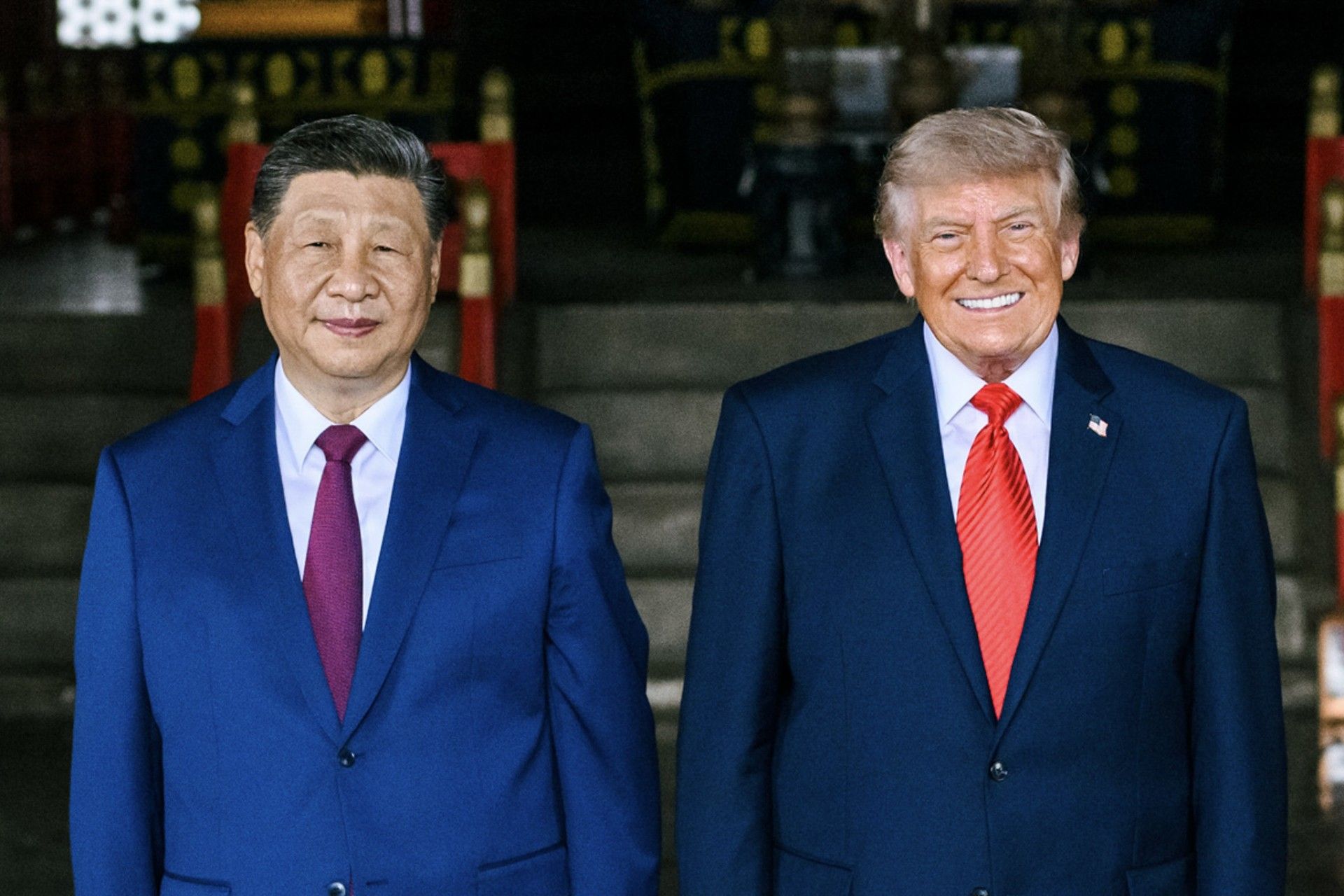
Over the past year, the United States has addressed China from a position of strength. It has also repeatedly emphasized its commitment to preserving peace and stability across the Taiwan Strait. Senior US officials have publicly stated on multiple occasions that the United States will not sacrifice its long-term support for Taiwan to advance trade negotiations with China. For instance, President Donald Trump stated unequivocally that „Taiwan is Taiwan.” Secretary of State Marco Rubio has pledged that the US will not use Taiwan as a bargaining chip in negotiations with China.
Steadfast US backing of Taiwan has not only included strong statements but also concrete actions. Among the steps the United States has taken are two separate announcements of arms sales—with the value of the second round exceeding US$11.1 billion—as well as the signing into law of the Taiwan Assurance Implementation Act and the National Defense Authorization Act for Fiscal Year 2026, which incorporate several pro-Taiwan initiatives. Finally, the latest National Security Strategy and the 2026 Annual Threat Assessment of the US Intelligence Community both highlight that maintaining peace and stability across the Taiwan Strait is vital to regional security and intrinsically linked to global economic prosperity and the stability of technology supply chains.
The global security environment has become increasingly interconnected. How does Taiwan view Russia’s role in the broader strategic landscape, particularly in the context of its cooperation with China and the war in Ukraine?
The continued enhancement of cooperation between Russia and China since the outbreak of the Russia-Ukraine war has become a major variable affecting security in the Indo-Pacific region and globally. It constitutes an unprecedented challenge to the post-World War II international order.
China is utilizing the Russia-Ukraine war to further its economic and diplomatic cooperation with Russia. A closer alliance could help both nations better weather international sanctions while providing China with experience useful in its preparations for an invasion of Taiwan.
The Russia-Ukraine war serves as a reminder that Taiwan must enhance its social resilience and asymmetric warfare capabilities. Taiwan is drawing lessons from Ukraine’s experience as it develops drones and leverages its advantages in the manufacture of semiconductors to create a credible deterrent.
Many European countries are becoming more engaged in Indo-Pacific security discussions. What opportunities do you see for deeper cooperation between Taiwan and Europe in the field of security and defense?
As NATO Secretary General Mark Rutte has emphasized, the security of the Euro-Atlantic and Indo-Pacific is interconnected. It has become more apparent to the international community in recent years that peace and stability across the Taiwan Strait are a matter of global concern. Located at the heart of the first island chain, Taiwan plays a key role in maintaining regional stability. And against the backdrop of authoritarian expansionism, Taiwan sees significant opportunities for expanding cooperation with Europe in a number of areas.
Cooperation could occur in the defense industry, particularly the development of trusted drone supply chains. Taiwan is promoting a non-red drone ecosystem and welcomes closer collaboration with European partners. This could include Taiwan’s participation in initiatives like an EU trusted drone label that would jointly strengthen secure and resilient supply networks.
Concerning submarine cable security and critical infrastructure resilience, Taiwan proposed the RISK Management Initiative on International Undersea Cables. It will continue to promote exchanges with European partners via the Global Cooperation and Training Framework as well as think-tank partnerships to enhance the security of communications and other infrastructures.
By establishing the Whole-of-Society Defense Resilience Committee and holding urban resilience exercises across the nation, Taiwan is enhancing its preparedness for contingencies and is eager to exchange best practices with EU member states.
And among the gray-zone tactics China and other authoritarian states are employing are foreign information manipulation and interference (FIMI), cyberattacks, cognitive warfare, and lawfare. Taiwan stands ready to share its experience and collaborate with European partners to address these threats.
See also 

Poland has significantly increased its defense investments and plays an important role on NATO’s eastern flank. Do you see potential areas where Taiwan and Poland could strengthen cooperation, whether in strategic dialogue, technology, or defense-related industries?
Poland has bolstered its security posture by investing heavily in its defense industry in recent years. Its 2025 military budget was around 4.5 percent of GDP—the highest among NATO members. Foreign Minister Lin Chia-lung delivered a keynote speech at the Warsaw Security Forum in September 2025, at which he emphasized that Taiwan’s technological prowess could be leveraged to create trustworthy supply chains. He noted that enhanced cooperation between Taiwan and Europe would further Europe’s objectives of derisking, reindustrialization, and rearming, thus complementing Poland’s security strategy.
Taiwan and Poland share the values of democracy, freedom, and the rule of law. Both nations stand on the front lines against authoritarian threats. There is considerable potential for greater bilateral cooperation in areas such as semiconductors and drone resilience, cybersecurity, and countering FIMI. Collaboration can be extended to include the hardening of critical infrastructure such as submarine cables and 5G networks.
Closer ties would greatly benefit both Taiwan and Poland and contribute to the stability and prosperity of the global democratic alliance.
Taiwan has been steadily modernizing its defenses in recent years. What are the key priorities for the development of Taiwan’s security and defense capabilities in the coming decade?
Taiwan remains committed to its own defense. On November 25, 2025, President Lai Ching-te announced Taiwan’s largest-ever defense bill: a NT$1.25 trillion (approximately US$40 billion) special budget for enhancing defense resilience and asymmetric capabilities to cover the years 2026 through 2033. Taiwan’s defense spending will exceed 3 percent of GDP in 2026 as defined by NATO standards and reach 5 percent by 2030. Taiwan’s priority is to enhance mobile, precision, and lethal asymmetric capabilities. The budget provides a fiscal foundation for building a credible deterrent over the coming decade.
President Lai has outlined three pillars for building Taiwan’s defenses. The first is to accelerate construction of the T-Dome—a layered, highly responsive air defense system designed to intercept missiles, rockets, drones, and aircraft. The second is to integrate artificial intelligence and unmanned platforms to create an intelligent, decentralized defense architecture that maximizes asymmetric deterrence. The third consists of expanding the domestic defense industrial base in partnership with like-minded countries.
The special budget will pay for the procurement of air and missile defense systems, precision artillery, long-range precision-strike missiles, unmanned systems and counter-drone capabilities, AI-assisted C5ISR systems, as well as other equipment jointly developed by Taiwan and the United States. By integrating advanced uncrewed systems, anti-ship and anti-air missile defense networks, and resilient command and control systems, Taiwan is constructing a combat-ready force capable of countering military coercion and safeguarding national sovereignty.
The MND’s 2025 National Defense Report, released in October 2025, featured the theme „Agile and Resilient ROC Armed Forces Resolutely Defend Our Nation.” As the report details, the nation is adopting a strategy of denial based on asymmetric warfare, in which whole-of-society defense resilience and strengthened civil-military coordination play a major role. Acting through the Whole-of-Society Defense Resilience Committee, Taiwan is hardening nine categories of critical infrastructure and institutionalizing its annual urban resilience exercises. Such efforts also position Taiwan as a trustworthy security partner contributing to Indo-Pacific stability.
Taiwan remains dedicated to values-based diplomacy and is reinforcing its security partnerships with the United States and other like-minded democracies worldwide. Through regular security dialogues, expanded joint training exercises, and enhanced intelligence sharing, Taiwan seeks to bolster the global democratic alliance. While demonstrating unwavering resolve, Taiwan will continue to work with international partners to maintain the status quo across the Taiwan Strait and ensure a free, open, and prosperous Indo-Pacific region.

Finally, how does Taiwan balance strengthening its deterrence capabilities with maintaining stability and avoiding escalation in the Taiwan Strait?
Taiwan’s core strategy is anchored in the principle that peace can be maintained through strength. This approach focuses on making the operational and economic costs of aggression unacceptably high. By establishing a highly credible deterrent, Taiwan aims to prevent military adventurism without engaging in a conventional arms race that could destabilize the region.
Taiwan adheres to a stable, pragmatic, and principled approach to cross-strait relations to mitigate the risk of escalation. Taiwan has consistently worked to maintain the status quo across the Taiwan Strait and has pledged to neither yield nor provoke. The government maintains an open door to constructive dialogue and exchanges with Beijing based on the fundamental principles of parity and mutual dignity and works to manage risks and prevent miscalculation.
President Lai has stated that while democracy and freedom are nonnegotiable, Taiwan will continue to press for cross-strait dialogue to resolve differences as it maintains the status quo. He has further remarked that Taiwan should not rely on the likelihood of the enemy not coming; instead, it should strengthen its readiness to face any possible threats.
With this in mind, Taiwan continues to further security cooperation with the United States, Japan, and European partners to craft a lattice-like strategic architecture, substituting collective deterrence for unilateral escalation and anchoring peace across the Taiwan Strait in the responsible exercise of strength.


