












- WIADOMOŚCI
Estonia tests NATO reinforcement

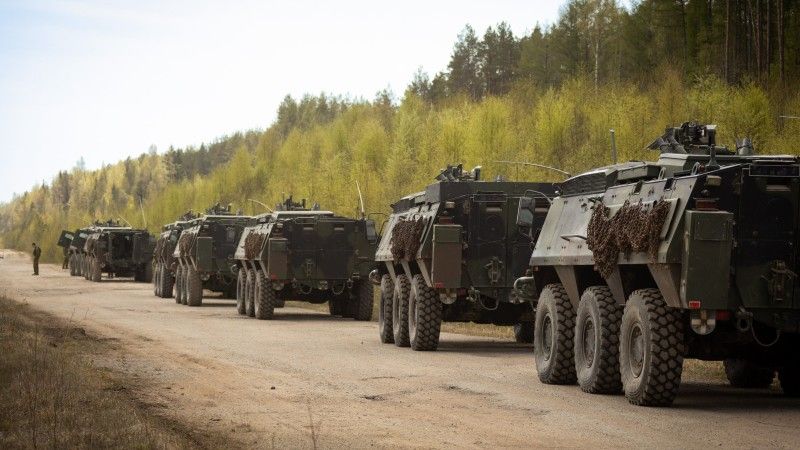
Photo. @MoD_Estonia/X.com
Spring Storm 2026 is not only Estonia’s largest exercise of the year, but also a test of how quickly the state, reservists and allies can prepare for conventional defence. The scale is important: nearly 1,000 reservists have already arrived, while at the peak the exercise will involve over 12,000 troops.
Estonia is using Spring Storm 2026 to test the planning and execution of defensive operations together with NATO allies. The exercise involves the Estonian Division, 1st and 2nd Infantry Brigades, the Defence League, Cyber Command, Air Force and Navy, as well as forces from allied and partner states. This is important because Estonia does not treat defence as a purely national task. Its model is based on rapid mobilisation, allied reinforcement and the ability to integrate external forces into national command structures.
See also 

The participation of reservists is one of the key elements. Nearly 1,000 reservists have reported at muster points, including more than 500 from the 2nd Infantry Brigade and almost 400 from 1st Infantry Brigade structures. Some returned to Estonia from abroad, which shows that the reserve system is not only a formal structure, but a real part of national defence. For a state bordering Russia, speed of mobilisation is as important as the number of professional soldiers.
The exercise also has a clear regional dimension. It will take place not only in Estonia, but also in north-eastern Latvia, with participation from Estonia, France, Latvia and the United Kingdom. This matters because Baltic defence cannot be planned separately by each state. Cross-border operations, logistics and host nation support are central to any realistic defence scenario, especially when allied units, including the UK 4th Brigade, are being deployed and integrated into Estonian manoeuvres.

Spring Storm also reflects lessons from Russia’s war against Ukraine. The exercise includes unmanned systems, air activities, heavy equipment, live-fire phases and the testing of new defence industry solutions in realistic conditions. This is the direction Estonia is taking: not only training troops, but also checking which technologies can actually work in the field. For Tallinn, the conclusion is clear — readiness must be practical, allied and tested before a crisis begins.


