- ANALIZA
- WIADOMOŚCI
The 89 percent myth: What the politicians don't get re: SAFE



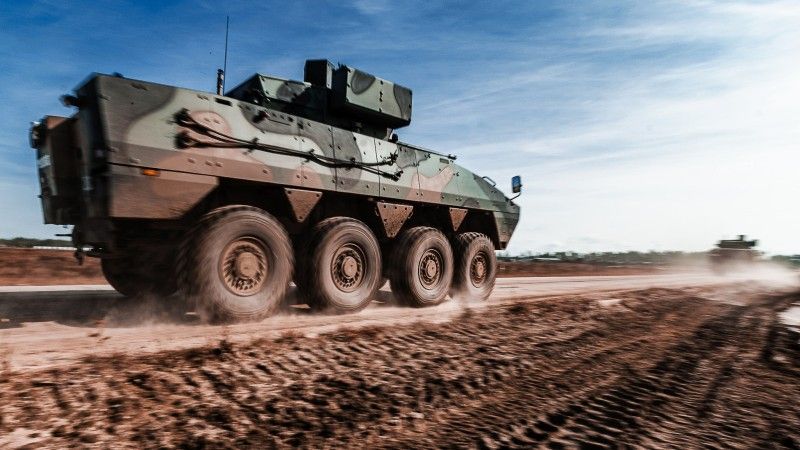
Photo. Platoon Leader Anna Wolska / 1. “Pomorska” Logistics Brigade
The government says nearly 90 percent of the funds Poland is set to receive under the SAFE programme will go to the domestic defence industry. The opposition warns that EU loans are merely a cover for transferring vast sums abroad. So what is the truth?
From this article you will learn:
- why neither the government nor the opposition is right about how much SAFE money will actually reach Poland's defence industry;
- which areas of the domestic defence sector depend on supplies of critical components from abroad;
- what remedial measures parts of Poland's defence industry are taking to reduce those dependencies;
- what the estimated share of imported parts is in the price of Poland's most important military vehicles.
Written with: Jędrzej Graf, Jakub Palowski
Of the nearly 44 billion euros allocated to Poland under the SAFE programme, around 89 percent will be spent in the Polish defence industry — at least according to government statements. The parliamentary opposition, meanwhile, is trying to raise alarm that a large portion of the EU loans will end up not with domestic manufacturers but with foreign defence companies. Reality, however, is more complex than politicians on either side of the barricade are willing to admit.
Available information suggests that, on average, around 20 to 30 percent of the cost of military equipment manufactured in Poland — whether fully Polish or produced under licence — consists of components purchased from foreign partners. This has been standard practice in Poland's defence industry for years.
Even if every cent borrowed under SAFE were spent in Poland’s defence sector, a significant portion of Polish expenditure would still flow to foreign companies. The reason is not the source of financing for technical modernisation. Nor is it the formal implementation procedure, which has been complicated by President Nawrocki’s veto. The real reason is purely technical: the production of Polish military equipment would be impossible without foreign-made components.
Risk factors
Replacing many of these elements with domestic equivalents would be very difficult, if not impossible, at least in the short term. The reason lies in the limited capabilities of Poland’s defence industry in several key areas. For example, Poland does not manufacture diesel engines for combat vehicles or modern automatic cannons. These components are bottlenecks in military equipment production. At a time of strained supply chains and international instability, such dependence on foreign suppliers is not merely a cost. It is also a risk factor. This is a broader problem, and Poland is not unique in this regard.
The precise level of import dependence is difficult to estimate because most contracts between manufacturers and subcontractors are confidential. But public data allow for a reasonable assessment of the proportions. Depending on the type of equipment, the cost of foreign components can account for anywhere from a dozen percent toseveral dozen percent of the price of a vehicle labelled „made in Poland”. The address of the contractor listed on the invoice is beside the point.
Percentage warfare
Perhaps the most striking example of Poland’s defence industry dependence on foreign components is the Jelcz truck. In the basic 442.32 model, the vehicle frame and cab are fully Polish products, but most of the remaining components are imported. The MTU diesel engine is made in Germany. The same applies to the gearbox, transfer case and steering gear, supplied by ZF. The drive axles, differentials and central tyre inflation system are products of the U.S. company AxleTech. The Eberspächer heating system and Rotzler winch come from Germany, while Michelin off-road tyres arrive from France. Even the dashboard gauges are imported.
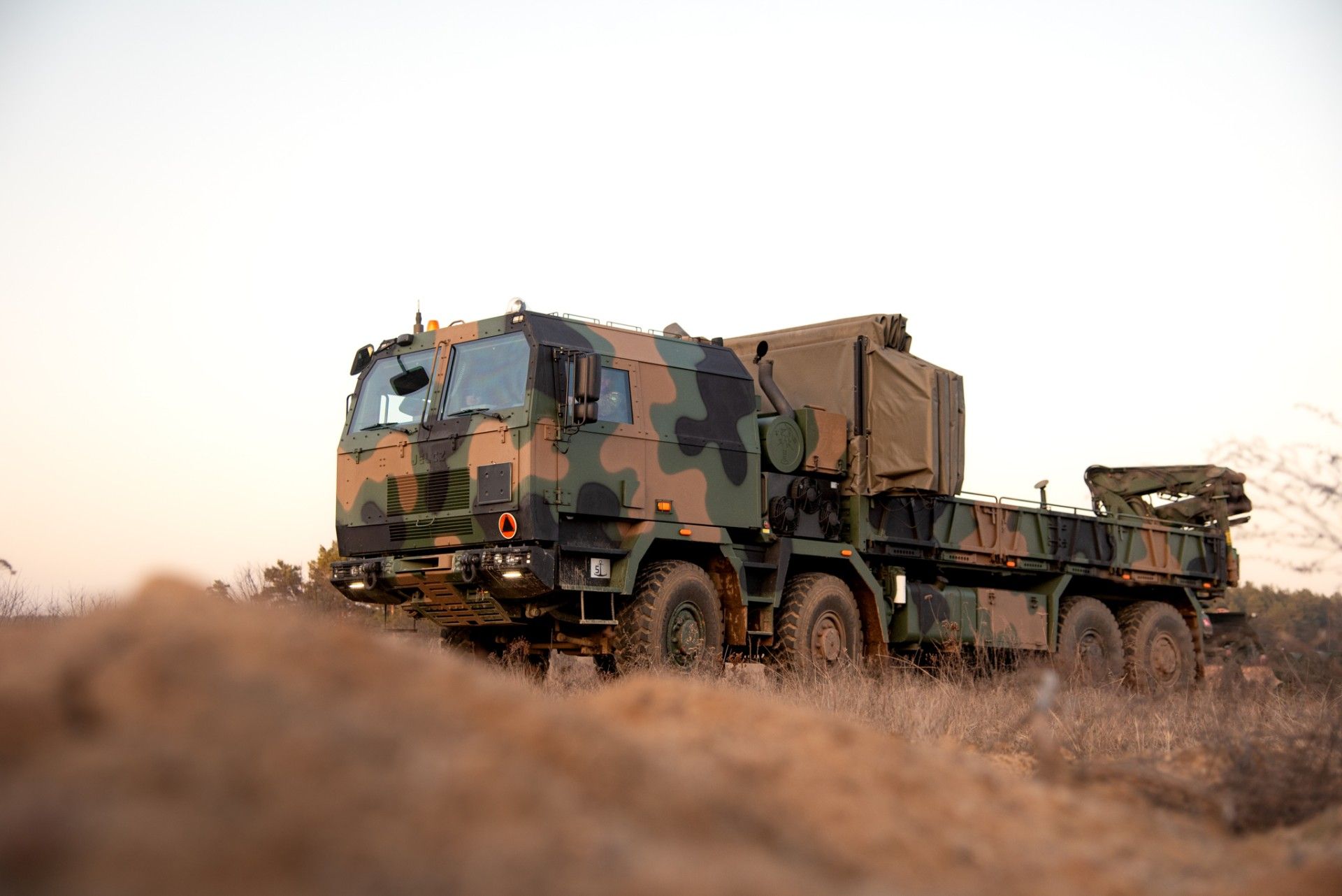
Photo. 5th 'Lubuski' Artillery Regiment
Engines offer a good illustration of the problems that dependence on imported components can create. The power unit used in the Jelcz 442.32 is based on a civilian Mercedes-Benz engine. MTU adapts these engines to military standards and is responsible for sales to institutional customers. But this is about to change. In the coming years, Deutz will take over from MTU the distribution of military engines based on Mercedes commercial designs. That puts Jelcz in a difficult position. Will existing contracts for engine and spare parts deliveries remain in force, with only the contractor changing? Or will the Polish manufacturer have to change supplier? Will the new engines have to undergo military qualification tests? The questions are multiplying.
The contracting authority is making no visible effort to increase the share of Polish suppliers in Jelcz production, for example through licensed production or technology transfers. The problem is systemic. When representatives of SKB Drive Tech of Radomsko proposed replacing the drive axles in the 442.32 model with a domestically developed solution, they were refused. The reason was that the military already had imported AxleTech axles in stock. Although the new components had passed military qualification tests, introducing them into service would have created logistical and training complications. The user was not interested in a change.
The Jelcz 442.32 costs around 1.5 million zlotys. Of every zloty spent on such a vehicle, several dozen groszy flow abroad. This is all the more striking because Poland has a strong automotive sector that could take on production of many key Jelcz components and, over time, develop and manufacture domestic equivalents.
I am not inclined to criticise Jelcz engineers for using so many foreign components in the 442.32. All the components listed above come from reputable manufacturers. More importantly, they meet stringent military standards. But this example perfectly illustrates the sleight of hand behind the claim that 89 percent of SAFE funds will be directed to Polish industry. Fortunately, there is evidence in the defence sector that foreign procurement can benefit Polish industry, the armed forces and the taxpayer alike.
Gradual polonisation
The Krab self-propelled howitzer is an example of a successful licensed purchase with adaptation. The AS90P turret is a fully Polonised variant of a system developed by Britain’s Vickers, now BAE Systems. The PK9 chassis, in turn, is a modified version of the carrier used by South Korea’s K9 howitzer, designed by Samsung Techwin, now Hanwha Aerospace. The fact that production of the turret system and hull was located in Poland makes it far easier to modify the vehicle. In addition, a significant share of expenditure on each Krab remains in Poland.

Photo. 5. "Lubuski" Artillery Regiment
The powerpack is a different matter. The engine is a German MTU design, while the transmission was developed by the U.S. company Allison. The complete powerpack — engine, gearbox and auxiliary equipment — arrives in Poland from factories in the Republic of Korea. Local manufacturers STX Engine and SNT Dynamics produce these components under licence. Such a powerpack costs around 9 million zlotys. This is known from a contract for the delivery of powerpacks signed last year between Huta Stalowa Wola and Hanwha Aerospace, the manufacturer of the K9. There are grounds to believe that the extensive spare-parts package had a significant impact on the contract price.
The Krab’s foreign lineage does not end there. It uses a ballistic radar from Denmark’s Weibel and a German Kidde-Deugra fire-suppression system. The hydropneumatic suspension modules are manufactured by PONAR Wadowice under licence from South Korea’s Doosan Mottrol. Poland’s Topaz fire-control system, produced by WB Group, receives the howitzer’s positioning data from a U.S.-made Honeywell inertial navigation system with an odometer and military GPS receiver. In the past, Krabs used a system from Italy’s Selex ES. At an early stage of the programme, meanwhile, the British Avimo direct-fire sight was replaced by a product from Poland’s PCO. The turret traverse and gun elevation systems are also domestic products.
Foreign components in the Krab self-propelled howitzer
| Component | Type | Manufacturer's HQ |
| Diesel engine | MTU MT 881 Ka-500 | Germany (Made in ROK) |
| Hydrokonetic transmission unit | Allison X1100-5A3 | USA (Made in ROK) |
| INS Unit | Honeywell TALIN 5000 | USA (Made in Poland, partially) |
| Fire extinguishing system | Kidde-Deugra AFES | Germany |
| Firefinder radar | Weibel MVRS-700 SCD | Denmark |
Thanks to the effective implementation of the Krab licence, Polish industry has made a significant technical and technological leap. Until recently, for example, the forgings used to manufacture gun barrels were supplied to Poland by France’s Aubert & Duval. Today they are produced by CELSA Huta Ostrowiec. Production of inertial navigation systems under licence from France’s Safran will also be launched at Wojskowe Zakłady Elektroniczne. This will allow Poland to replace a system mostly imported from the United States with a fully domestic product. Today WZE manufactures some mechanical parts of the Honeywell system under licence.
There are many indications that the Krab 2, now being prepared for production, will receive a turret system developed from scratch by HSW. Replacing the turret body will be necessary to enable the use of a fully mechanised ammunition-feeding system. The army has requested the introduction of an autoloader. Freed from licence restrictions, HSW will be able to develop and export the product without constraint. In vehicles such as tanks, infantry fighting vehicles and self-propelled howitzers, the turret system represents the largest share of the vehicle’s value. That share can reach as much as 60 to 70 percent of the vehicle price.
Procurement of engines and transmissions alone mean that around 10 to 15 percent of the amount spent on a Krab goes to companies in South Korea, Germany and the United States. The complete powerpack accounts for 15 to 20 percent of the vehicle price. The total share of imported parts in the vehicle's price can be roughly estimated at more than 25 percent. Similar dependencies exist in every Polish vehicle that uses an imported powerpack.
Despite HSW’s efforts, the Krab’s dependence on foreign components remains substantial. Still, HSW deserves credit for systematically Polonising the weapon system while adapting it to the army’s new requirements. Moreover, technology transfers to HSW and its domestic subcontractors represent a major gain for the national defence industry. The fruit of that experience and those acquired capabilities is a highly ambitious product — and one that is fully Polish.
A positive change
The Borsuk infantry fighting vehicle is the first series-produced armoured vehicle of the Polish Armed Forces to have been developed entirely in Poland. That applies both to the chassis and to the ZSSW-30 turret. As noted above, the turret system alone accounts for the largest share of the vehicle’s price. Yet although the Borsuk’s design and documentation are Polish-owned, domestic industry cannot meet demand for all of the vehicle’s most important components.

Photo. Pvt. Mateusz Mierzejewski / 15th Giżycko Mechanised Brigade
Readers will not be surprised to learn that the list of imported components is dominated by the powerpack. It consists of a German MTU engine and an American Allison transmission. Integration and installation of auxiliary equipment are handled by Wojskowe Zakłady Motoryzacyjne in Poznań. But the Borsuk programme will not end with the import of engines and transmissions and the assembly of powerpacks. HSW and Allison have signed an agreement on the co-production of Allison transmissions in Stalowa Wola. Polish Armaments Group has also agreed terms of cooperation with Rolls-Royce, the owner of MTU. Polish entities will be incorporated into the German manufacturer’s supply chain. They will also acquire broader capabilities in servicing, repairing and overhauling engines for land vehicles. Alongside HSW, WZM could also benefit from this cooperation.
The issue of the Bushmaster II automatic cannon, which HSW buys from U.S. company Northrop Grumman, looks less optimistic. Several years ago, HSW acquired the rights to routine servicing and repair of the weapon. Talks on launching licensed production ended without success. Several alternatives to the American cannon exist on the European market, particularly in Germany and Italy. Unofficial information suggests the matter is not yet closed. HSW may soon enter into cooperation in this field with a partner from Europe or the United States.
The status of the Polish hydropneumatic suspension project is less clear. The first Borsuks used the InArm system made by Britain’s Horstman. PONAR Wadowice, meanwhile, has developed a fully Polish system in this class, known as WHP35. It is not known which system will be used in series-produced vehicles. One could venture to say that, had Poland not bought the licence for the Krab chassis, companies such as PONAR would not have received such an impetus to develop specialised technical capabilities.
PGZ subsidiaries and their partners will not only produce parts for Polish powerpacks, but will also supply them to the licence holders. In future, complete powerpacks for the Borsuk may perhaps leave Polish factories. Although a significant part of the expenditure on the infantry fighting vehicle will go abroad, the inclusion of domestic entities in international supply chains will partly offset those losses. Polish industry will also acquire new capabilities.
The Borsuk is a Polish product, in its entirety. That will greatly facilitate modifications, upgrades and sales. During the Polish-Slovak Defence-Industrial Dialogue, PGZ representatives said they intended to export a version of the vehicle fitted with a Slovak turret system. Foreign components still account for a significant share of spending on every vehicle ordered by the Polish Armed Forces. Still, it is encouraging that industry has taken care to build the necessary support base for imported components. Moreover, bringing domestic entities into engine and transmission supply chains will help offset some of the costs incurred by purchasing components abroad.
A German scarecrow
If government declarations matched reality, more than 39 billion euros — about 166 billion zlotys — would flow to Poland’s defence industry thanks to SAFE. In reality, that amount will be lower. Because of President Nawrocki’s veto, Poland will probably lose the portion of SAFE loans intended for state protection services and infrastructure spending. In addition, the Polish defence sector’s dependence on supplies of foreign components remains high.
We know the working list of Polish procurements to be financed through SAFE, but we do not know how many units of various types of equipment will be ordered. We can already estimate that at least several billion euros will be transferred abroad for purchases of key components alone. In an extremely negative scenario, that figure could rise to as much as a dozen or so billion euros.
Spending money in a Polish plant is one thing. Keeping that money in the Polish economy so it can generate value is another. Economic development achieved through rational investment in industry will make it easier to repay the loans now being taken out. The examples of the Krab self-propelled howitzer and the Borsuk infantry fighting vehicle show that relations with suppliers do not have to remain a permanent financial ball and chain. The purchase price of a military vehicle usually amounts to around one-third of the costs the user will incur over its service life — from hanging the first air freshener on the rear-view mirror to scrapping the vehicle. The natural priority in such purchases is to secure equipment sustainment by acquiring capabilities in servicing, repair and overhaul.
On the other hand, it is hard to blame Poland’s defence industry for making extensive use of foreign components. Even France, the world’s second-largest arms exporter, does not produce its own engines for main battle tanks — and, for that matter, no longer produces the tanks themselves either. Paris has not adopted a North Korean-style autarkic model. Nevertheless, it pragmatically eliminates bottlenecks in strategic areas of the defence sector. That is precisely why French soldiers use German HK416F rifles, while French industry produces its own M88 jet engines and K15 nuclear reactors.
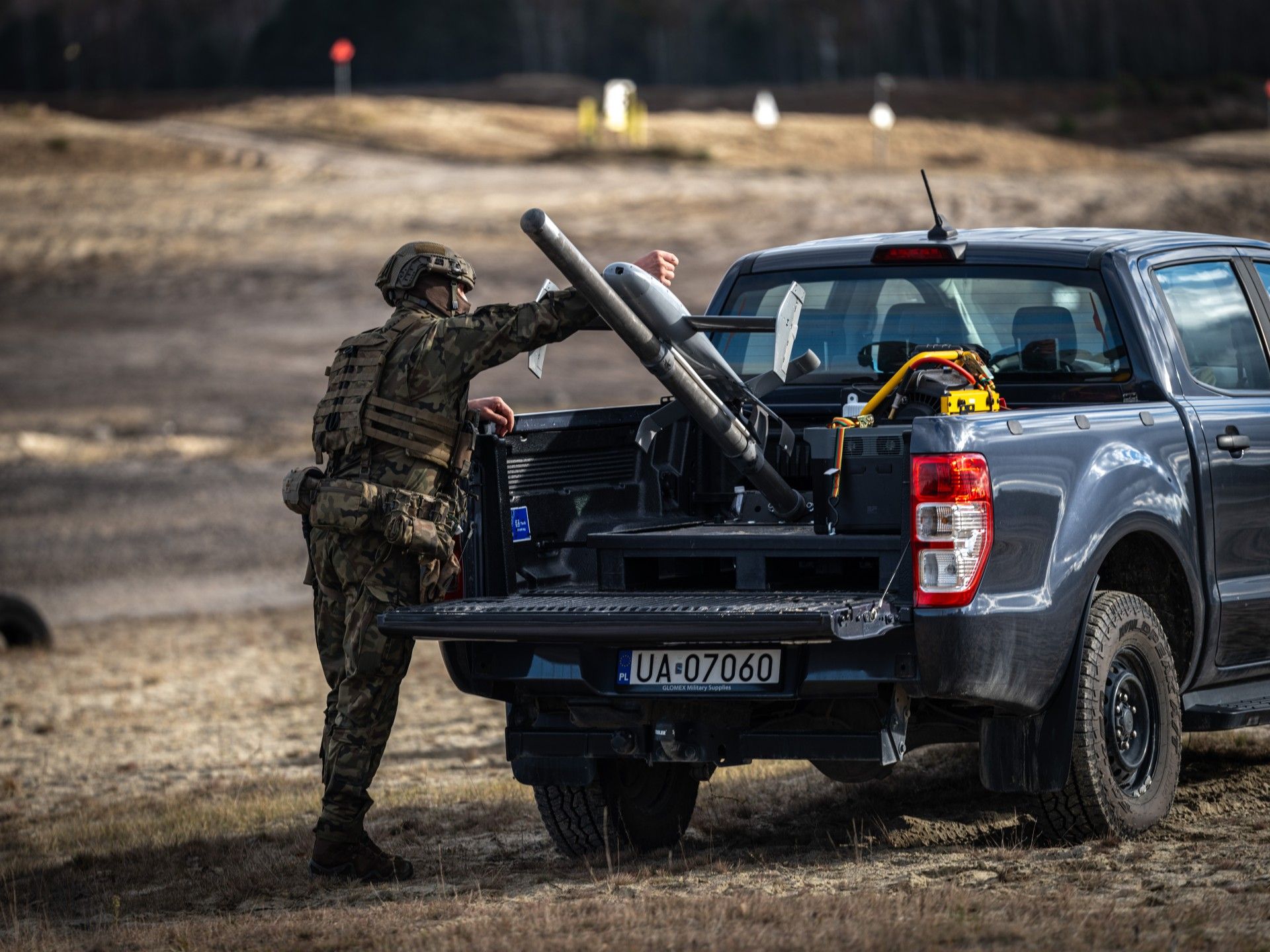
Photo. Sgt. Luis Garcia, 52d ADA Bde / U.S. Army
Could the French way of thinking take root in Poland? Armoured vehicles are becoming a specialty of Poland’s defence industry. Where developing a Polish component from scratch is impossible, it is worth considering licence acquisition and the inclusion of Polish factories in international military-equipment supply chains. At HSW, this approach produced the experience and capabilities that made it possible to build the Borsuk infantry fighting vehicle. While economic calculation should be one of the basic factors in such analyses, the logistical dimension, independence in procurement for the armed forces and the cultivation of national technical potential must not be overlooked.
One of the main purchases to be financed through SAFE loans will be the San air-defence systems. The government may officially claim that all funds allocated for this purpose will go to Poland’s defence industry — the invoice will indeed carry a Polish address. But according to official information, Kongsberg will receive just under 40 percent of the amount the Ministry of National Defence allocates for the San system. The remaining 60 percent is supposed to go to PGZ. How much money will actually remain in Polish industry is known only to the companies concerned. It will certainly not be 60 percent of the budget assigned to the programme. The reason is dependence on foreign supplies, including vehicles from South Korea, Merops Surveyor interceptor drones and APKWS rockets from the United States.
Producing critical components at home is a form of insurance for a crisis or wartime scenario, when military logistics are stretched to the limit and allies are unwilling or unable to share the contents of their own warehouses. Equipment readiness depends on the availability of spare parts and combat supplies. The war in Ukraine serves as a stark example.
This necessarily does not align with the government’s declarations, but nor is it the German bogeyman invoked by the opposition. The Ministry of National Defence will not order German Puma infantry fighting vehicles or French CAESAR howitzers. Instead, it will contract Polish Borsuks and Krabs. The problem is that no one will explain to ordinary Kowalskis and Nowaks what share of the money spent on this equipment will actually remain in Poland and work for the Polish economy. As is usually the case in Poland’s domestic political trench warfare, neither side of the dispute is right. The pity is that citizens lose the most from this political bludgeoning.
- ROLLS-ROYCE
- JELCZ S.A.
- NORTHROP-GRUMMAN
- KRAB
- JELCZ 442.32
- BORSUK IFV
- PGZ GROUP
- OFFSET
- BAE SYSTEMS
- PGZ
- USA
- POLISH MOD
- EUROPEAN UNION
- GERMANY
- POLISH DEFENCE INDUSTRY
- INDUSTRIAL COOPERATION
- FRANCE
- DEFENCE EXPENDITURE
- POLISH MINISTRY OF DEFENCE
- DEFENCE SPENDING
- HSW S.A.
- ARMAMENT AGENCY
- MAINTENANCE
- HANWHA AEROSPACE
- REPUBLIC OF KOREA
- MILITARY EQUIPMENT
- PRODUCTION
- SAFE
- DEFENCE COOPERATION