












- WIADOMOŚCI
- ANALIZA
Estonia shall not be threatened by Russia [COMMENTARY]

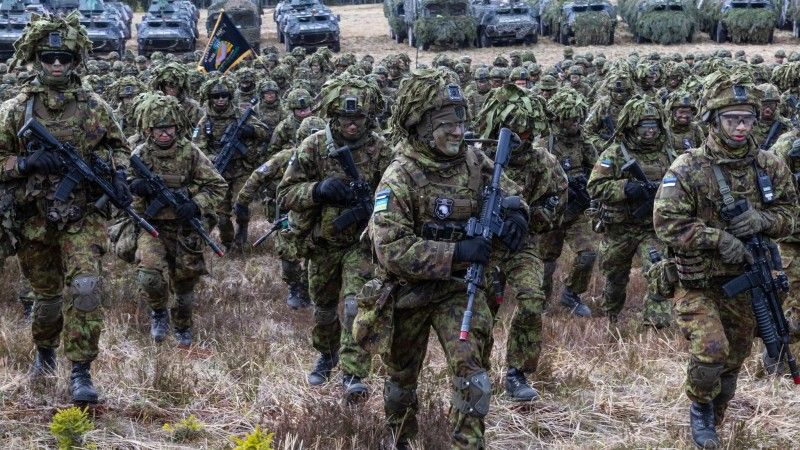
Photo. Sõdurileht/Facebook
Since regaining independence, Estonia has felt anxiety about Moscow’s imperial foreign policy. After the invasion of Ukraine in February 2022, and following numerous assertions that the Baltic countries would be the next target, significant investments in defence were launched. In addition, emphasis was placed on joint NATO exercises, particularly with France. Today Estonia fears a possible attack from the east and observes growing weapons production in Russia, but it trusts in collective defence with the support of its allies.
Estonia rejects its Soviet past and concentrates entirely on helping Ukraine. There is a conviction across the country that the best possible conditions must be created for stationed NATO forces. Historical memory matters greatly and is passed down from generation to generation. Several waves of Russification, deportations and ruthless treatment by Russia have left few illusions in the Estonian nation about the quality and way of life under Russian rule. At the same time, the protracted war in Ukraine has further militarized all the countries on NATO’s eastern flank.
Estonia’s road to independence
On 24 February 1918 a declaration of Estonia’s independence was proclaimed and a Provisional Government was established. During the subsequent two-year War of Independence, the armed forces drove Soviet troops out of the newly formed state. A constitutional assembly was also elected. For the first time in the history of the Estonian nation the foundations of statehood were created. On 24 February 2022, celebrations for the 104th anniversary of independence were held in Tallinn and across the country, conducted in the shadow of Russian aggression against Ukraine. In a few days another anniversary will follow.
After the Russian attack on its neighbour, the nation’s past returned in a sad form; memories of the brief period of statehood ended by the Soviet invasion in June 1940 resurfaced. This took a tragic form in Russification, arrests of the Estonian military leadership and political activists, mass deportations to Siberia, and conscription into Russian units and labour battalions in distant garrisons. Many of those people never returned because of the tragic living conditions, hard labour, cold or brutal treatment by the Russians.
There was also an effort to denationalize Estonians by destroying cultural centres, taking over the education system, and even seizing cemeteries such as the Military Cemetery in Tallinn. Many towns, islands and military sites ceased to be generally accessible to Estonians. Despite the repression, the Estonian nation survived, striving to create a democratic state based on values. These memories remain very vivid and are passed down from generation to generation; they are alive today as well.
Three years ago Russian expansionist ideas reappeared in the Kremlin’s narrative, and Estonian politicians and public opinion were aware of this. Aggressive rhetoric in strategic communications and physical violations of air and sea borders (aircraft without transponders, etc.) were constantly present in relations with the Baltic countries, even if less so for the rest of the world. Although the concept of “hybrid war” is not new, within it every possible means is used to influence Estonia, especially the Russian-speaking community (about 25% of the population).
Persistent fears and Tallinn’s faith
When the President of Ukraine announced that the next countries to be attacked by Russia would be Estonia, the whole country was stirred. For many years Tallinn has felt growing pressure from the words and actions emanating from the Kremlin. Although there is great faith in NATO’s capabilities and cooperation with the United States, the United Kingdom, France and, above all, Finland (joining the Alliance and, together with Sweden, helping to effectively close the Baltic Sea), this is not sufficient. Society also understands the seriousness of the situation.
The prolonged war in Ukraine means further militarization of Estonia and the countries in the region (including Poland). In Tallinn there is a sense that the longer Kyiv remains strong, the further Moscow is from plans to attack the Baltic states. There is also great faith in NATO, whose integrity and stability no one dares to challenge. Estonians understand what international cooperation is. They helped Poland during the border crisis with Belarus (sending troops), engaged in the Sahel supporting France, and continually participate in NATO exercises.
Commander of the Estonian Defence Forces Gen. Martin Herem stated that NATO’s predictions concerning Russian forces — which were thought to have reached the limits of their armament resources — did not prove accurate. He added that the Russian Federation’s military is capable of producing several million artillery shells a year, far outstripping European efforts, and that it can recruit hundreds of thousands of new soldiers (especially from the country’s eastern regions). It is true that this diagnosis is critical and ruthless, but in no way does it undermine Estonia’s faith in cooperation and actions within NATO.
Estonians are investing millions in armaments. In addition to purchases from the Americans, they have also opted for Polish Piorun missiles. They are considering further investments, including in drones and radars. Tallinn is aware of the growing danger and the hybrid actions of the Kremlin. Nevertheless, Estonia is certain it can count on its allies and will maintain defence on NATO’s eastern flank as long as it is able. That Russia is considering invasions of the Baltic countries is a fact, but in Tallinn one does not feel fear. The beginning of victory is courage.


