












- ANALIZA
- WIADOMOŚCI
- WAŻNE
Europe’s nuclear powers join forces

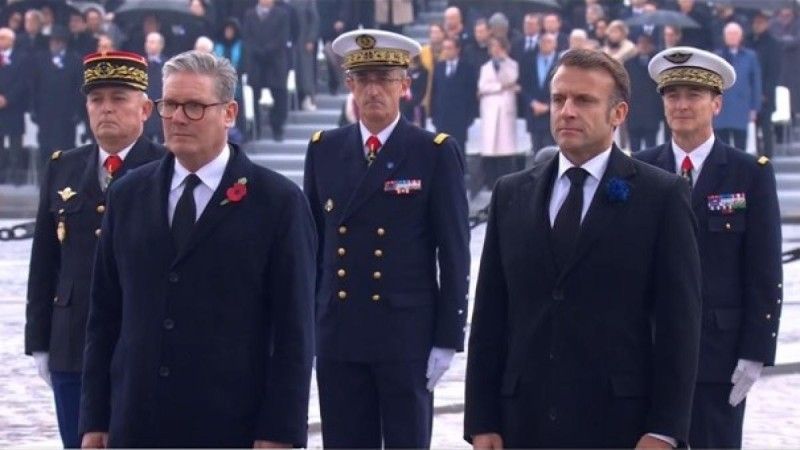
Several hundred nuclear warheads within a single European deterrence system against Russia? This is precisely the reality being shaped by London and Paris.
France and the United Kingdom remain the only NATO states in Europe that possess nuclear capabilities. The deepening of cooperation between them should be assessed positively, both in the context of seeking additional European deterrence guarantees (alongside the American nuclear umbrella) and in light of the persistent threat posed by Russia.
Discussions on enhanced nuclear cooperation between London and Paris have been ongoing for years. As early as 2008, and later in 2010, various models for closer relations were considered. These included:
- a warhead-sharing programme (opposed by the United Kingdom, which argued that such a pooling of sovereignty would be politically unacceptable);
- the creation of a UK–French nuclear deterrence mechanism through joint submarine patrols;
- shared use of aircraft carriers;
- a common strategy and joint acquisition of new weapons systems.
A breakthrough came in recent months, when both sides effectively demonstrated readiness to change their previous approach and began preparations for another high-level political conference. Importantly, this coincided with growing doubts in Paris and London regarding the administration in Washington, particularly in relation to its approach towards Moscow and the scale and nature of the support provided to Kyiv by Donald Trump. It is worth noting that Macron and Starmer are leaders of the „Coalition of the Willing” in support of Ukraine, and both countries have expressed readiness to deploy troops to Ukraine once peace is concluded.
Artur Kacprzyk, an analyst at the Polish Institute of International Affairs, notes: „In the near term, cooperation may include steps such as joint exercises, more in-depth discussions on concepts for the use of nuclear weapons, or support in protecting nuclear forces. Above all, both countries want to convince Russia that they could respond in a coordinated manner to a potential nuclear attack, including strikes against NATO allies.”
At the UK–France summit in July 2025, Prime Minister Starmer and President Macron confirmed their determination to further deepen nuclear cooperation. The formal expression of this commitment was the signing of the Northwood Declaration and the establishment of the UK–France Nuclear Steering Group. This new mechanism is intended to provide political oversight and coordination of bilateral efforts in the fields of nuclear policy, deterrence capabilities and the operational use of the strategic components of both states.
At the beginning of December, the Group held its first meeting in Paris. Senior representatives of the UK Cabinet Office and the Office of the President of the French Republic were present, alongside high-ranking military officials and representatives of the defence and foreign ministries of both countries.
Discussions covered Euro-Atlantic security issues and coordination between the British and French deterrence systems. Talks focused on approaches to strengthening deterrence in Europe and on reaffirming ambitions for continued, deepened bilateral cooperation in the field of nuclear deterrence.
An important element of the meeting was also the observation of the POKER exercise (a recurring drill of the French Air Force demonstrating nuclear deterrence readiness), which for the first time hosted foreign representatives. This display of openness carried significant political and military weight, signalling Paris’s willingness to increase transparency vis-à-vis London and to deepen coordination with a key European partner. It also sent a signal that France does not wish the United Kingdom’s nuclear deterrence to be entirely dependent on the United States.
It is worth noting here that when the debate over a French nuclear umbrella for Poland emerged (initiated by Presidents Macron and Duda), one of the cooperation options discussed was precisely the invitation of Polish air forces to observe the POKER exercises. At present, the topic of any such umbrella has subsided, and the key role in Central and Eastern Europe continues to be played by the Americans.
In broader terms, the establishment of the Nuclear Steering Group should be seen as part of the adaptation of European deterrence capabilities to a changing security environment. In the context of Russia’s ongoing war against Ukraine and intensifying Russian hybrid activities against NATO states, it is London and Paris that are demonstrating readiness to assume greater responsibility for stability in Europe. Unfortunately, for now only readiness.
A. Kacprzyk notes: „It is possible that in the longer term the United Kingdom may seek to acquire new nuclear delivery systems in cooperation with France, but at present there are no indications that this is planned in the immediate future. The main obstacle is financial constraints on the British side. These influenced the recent UK decision to return to the US Nuclear Sharing programme. The purchase of F-35A aircraft capable of carrying American nuclear bombs is a cheaper and faster solution than developing a domestic airborne nuclear weapon. Even if the British were to acquire suitable missiles from France or in cooperation with it, they would still have to spend billions of pounds to develop and manufacture their own warheads. In any case, this could take the United Kingdom more than a decade.”
It should be emphasised that this is only the beginning of coordination between the independent nuclear potentials of both states. These actions do not replace the broader deterrence system within NATO or the capabilities of the United States but rather reinforce them.
The development of nuclear capabilities and the tightening of cooperation within NATO translate into increased credibility, capacity and resilience of the Alliance in the years ahead. At the same time, this constitutes a significant signal to the Russian Federation.


