












- WIADOMOŚCI
- KOMENTARZ
Iceland without an army. Why NATO relies on it in the Arctic?

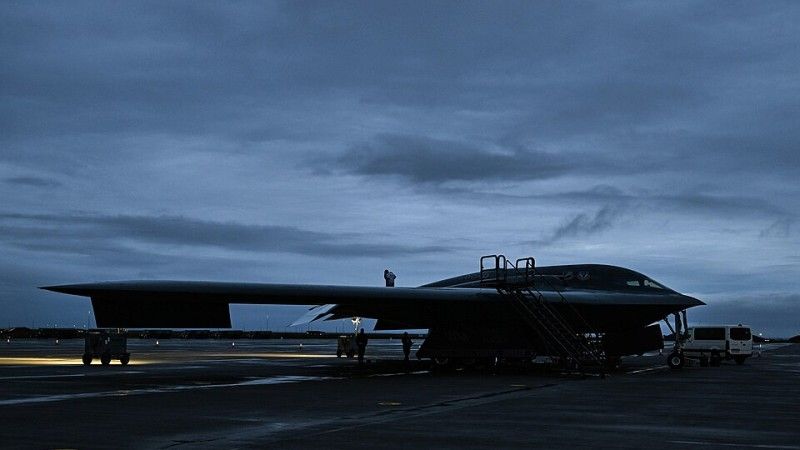
Photo. U.S. Air Force Tech. Sgt. Heather Salazar / Wikimedia Commons
Iceland does not possess its own armed forces, yet it plays a crucial role in NATO’s new Arctic strategy, designated Arctic Sentry. Its importance has grown particularly in the context of the Alliance’s increased activity in the region.
Iceland has been a member of NATO since 1949, i.e., since the very beginning of the Alliance. The country has no standing army, navy or air force. The only armed formations are the Icelandic Coast Guard (Landhelgisgæsla Íslands) and police units. Despite lacking its own armed forces, Iceland has for decades made its territory available to allies under bilateral agreements, initially with the United States and now within the NATO framework.
The Keflavik base
A key element of Iceland’s engagement is the Keflavik air base in the south‑west of the island. Built by the Americans during the Cold War, the base was for many years the main operating point for aircraft patrolling the North Atlantic. After the Cold War, the base’s importance diminished, but in recent years, due to growing Russian activity in the Atlantic and the Arctic, it has been expanded and reactivated. Multinational NATO forces now operate from Keflavik, including early warning and patrol aircraft conducting missions over the Norwegian and Greenland Seas.
The new Arctic Sentry strategy envisages an increased Alliance presence in the Arctic region, which covers areas under the jurisdiction of Norway, Denmark (Greenland), Canada, the United States (Alaska), and Iceland. The strategy responds to Russia’s growing military capabilities in the north, including increased patrols by strategic bombers and submarines in the Barents and Norwegian Seas. Iceland, lying on the Mid‑Atlantic Ridge, controls access to key sea lanes linking the Arctic with Europe and North America.
Early warning system
Under Arctic Sentry, Icelandic radar stations and communication systems form part of NATO’s integrated early warning system. The country is also a hub for underwater fibre‑optic cables and hydroacoustic systems that monitor submarine movements in the North Atlantic. Although Iceland has no fighters of its own, its airspace is regularly patrolled by allied aircraft under the Air Policing mission.
The Icelandic government, led by the prime minister (as of May 2026 – no specific name given in the source), consistently supports an increased NATO military presence on its territory. The arguments are the protection of communication routes and the securing of underwater energy and telecommunications infrastructure, which is critical for the entire Western world.

Domestic reactions
Decisions to participate in Arctic Sentry are not without controversy within Iceland itself. Part of society, accustomed to the country’s peaceful, army‑free image, fears being drawn into a potential conflict with Russia. At the same time, the main political forces recognise that NATO membership and participation in the new strategy are a guarantee of security that Iceland cannot provide on its own.
The new Arctic Sentry strategy does not replace NATO’s existing command structures but complements them by creating dedicated rapid‑response forces for operations in Arctic weather conditions. Iceland, thanks to its location and infrastructure (Keflavik airport, deep‑water ports, radar systems), is a natural logistical back‑up for these forces. Hence, despite its lack of an army, its role in NATO’s new strategy is fundamental.


