












- WIADOMOŚCI
- WYWIADY
Is the Police finally solving its staffing crisis? Gen. Boroń: “It’s not that our current numbers are too low” [Interview]

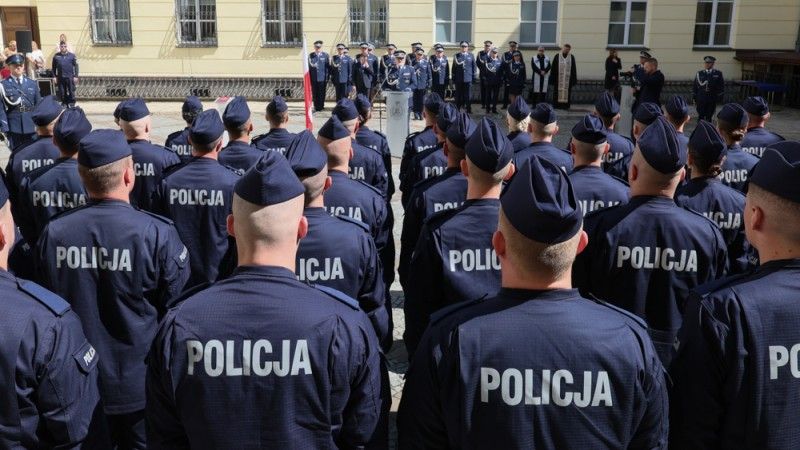
”I think the Police are already managing to get back on track in terms of staffing” – says General Inspector Marek Boroń, the Chief of Police, in an interview with InfoSecurity24.pl.
In the interview with the editorial team, the Chief of Police also discusses, among other things, modernization plans, the reform of the pay system, housing benefits, and the staffing gap in police aviation. The Genral Inspector explains, ”It’s also not the case that the current number of officers – over 98,000 – is low”.
Has contractual service helped improve the staffing situation? How many officers have decided to return to the force?
The numbers are not large just yet – so far, we’ve taken on 27 people under the contractual service scheme, of which 23 are former police officers. This is linked to changes in regulations regarding health conditions. There is interest, certainly, but the fact that these regulations came into force later than the main act means this process naturally still needs time to develop.
So broadly speaking, these measures aren’t a game changer for police staffing at the moment. Do you still hope that contractual service will become a significant element in the staffing puzzle?
I’d like it to be an option. Contractual service will undoubtedly form part of police staffing. Will it be a key element? That wasn’t my expectation. What matters most to me is the overall number of people interested in joining the police.
Contractual service offers a chance to gain experience, to test oneself – but also, as we’ve discussed, allows former officers, who may still have something to offer, to contribute again. We’re targeting individuals with specific experience and specialisations, such as instructors in tactics, intervention techniques, or firearms. We hope some of them will take up this attractive offer – especially since being on contract doesn’t suspend their right to draw a pension.
Those leaving the force are aware of this opportunity, and I hope it becomes well known enough in the community that we’ll receive solid support at the local level.
Speaking of staffing – the service has said interest in joining is growing, and this year a record number of candidates applied. In the end, more people put on the police uniform than last year. Still, the staffing situation remains difficult in many places. By the end of June, vacancies stood at nearly 13%. In some areas, the shortages are even greater. When will the police finally turn a corner on this issue?
I believe we’re already turning that corner. When else have we managed to recruit 10,000 officers in just over a year? Last year we recruited 6,500, and this year it’s already 3,500. So the gap left by the unexpected departure of 15,000 officers has been filled quickly – and that’s despite the limited training capacity we had.
We had to analyse locations and design our training to ensure high quality for new recruits. It’s vital that operational officers are not impacted by training gaps. Naturally, training efforts have shifted towards newcomers, but we’re also aware of the need for NCO, warrant officer, and specialist training. That’s why we’re rebuilding the police training system.
It’s July – simple maths says that if you recruit the same number in the second half of the year, you’ll end up with around 7,000 new officers in 2025, not 10,000.
We took on 6,500 last year and will bring in between 6,000 and 7,000 this year. That means we’ll end the year with over 100,000 officers.
The modernisation act granted additional posts this year, which increased the total number of vacancies. So while we’re accepting more recruits, mathematically the vacancy percentage isn’t changing much.
Then let’s talk net value – not the percentage, but the raw number. How many officers are needed for the service to operate smoothly?
It doesn’t depend on numbers alone. We have to consider the times we’re in. The police now perform tasks they didn’t before – we’re stationed at both the eastern and western borders, dealing with sabotage and cybercrime. The number of officers matters, but so do the circumstances and what’s happening around us. We also have new technology that helps lighten officers« workloads.
The 100,000 figure has been reached only a few times in the Police’s 30-year history – and yet we’ve managed. The current figure – over 98,000 – is not small. Though certain garrisons need reinforcement, especially in areas where the shortfall is more severe. The situation isn’t uniform nationwide. Hence the need for solutions like housing allowances and this year’s pay rise. I hope these incentives will attract new recruits and help fill gaps, especially in big cities where the problem is most acute.
The Police are also preparing – as you’ve mentioned – for the end of the war in Ukraine. Serious criminal threats are expected. But anti-terrorism units currently have over 20% vacancies. How can this be resolved quickly? Because clearly, it’s a serious issue.
I wouldn’t talk about quick fixes. We’ll effectively deal with anti-terrorism vacancies once we strengthen staffing at the garrison level. Then those with the right skills can apply to become counter-terror officers.
We’re also running external recruitment. But whether it’s a transfer from within the force or a new recruit, every counter-terror officer must meet strict standards – no exceptions. The faster we fill garrison posts, the quicker we can address the shortfall in the counter-terror division.
And if you had to convince young people to join, what would you say? „Join the police because…” Because doing good and caring about people are the most important values. If you want to combine the two, this is a unique opportunity to help others and make a difference. Our motto, „to serve and protect,” reflects both the present and a broader spirit of service – it’s a form of volunteering, really.
Wearing the uniform also allows you to serve your country. That might sound lofty, but today that’s exactly what we need – people who don’t just say they’re patriots, but show it through action. As officers, we safeguard public security and have a real impact on people’s safety.
And what about money? It’s an important factor when choosing a career.
One doesn’t exclude the other – the goal is for policing to be a well-paid passion. That’s why we’re not just talking about change, we’re implementing it. In 2024, officers received a 20% pay rise. We’re introducing housing allowances this year, and I recently signed an agreement with PKO BP to offer preferential loan terms to police officers.
The idea is to create a self-contained support system: housing allowances that help cover preferential mortgage repayments. This offer should help officers in expensive cities and attract potential recruits.
Staying on the topic of money – next year’s planned pay rise is 3%. Officers are saying that’s not acceptable. Can they expect more, beyond what’s in the state budget? Perhaps from the new modernisation programme?
The new modernisation act will focus only on investment, material needs, and logistics. I want those funds to really support the Police’s modernisation.
As for pay, I’ve set up working groups on a new pay structure and career paths. Some results are already visible – like the housing allowance and service card – and we’re working on more. The aim is to introduce system-wide changes so officers and staff see further financial improvement next year.
You’ve mentioned pay reform. A few months ago, a map of changes was presented. What progress has been made? So far, we haven’t seen a major breakthrough.
We have – the housing allowance is one such tool to improve officers« financial situations. But let’s be realistic – we can’t roll out every plan at once. No national budget could handle that.
We’re taking a phased approach: first the pay rise, then housing allowance, next year restructuring of allowances. We’ve got more ideas, but I won’t talk about them until funding is secured.
And that hasn’t happened yet?
Not yet. I know what I want for next year and what I plan for 2027. This will be a gradual process – I knew that from the start. My talks with the Ministry are producing tangible results, so I’m optimistic.
So your message to officers is: „Give me some time, and things will improve”?
Give me time, evaluate the results – but understand that I won’t promise anything until the money is on the table. I won’t mislead anyone – that leads nowhere.
Let’s talk about the modernisation programme. Since we can’t count on raises just yet, what are the Police’s top priorities?
We need to focus on improving the working environment – for officers, employees, and the public. If police stations and HQs are modern and welcoming, it improves comfort for everyone involved.
As the saying goes: „You’re judged by appearances.”
Exactly. We’ll also focus on equipment, fleet upgrades – acquiring new cars, vans, 4x4s. These are everyday tools.
We also aim to better protect officers – body armour and tactical vests with ballistic inserts. We’ve developed solutions and will pilot them in patrol and traffic units.
You recently said there are „more helicopters than pilots ready to fly”. That doesn’t sound reassuring. How will you fix this?
There are willing candidates, but the issue is training. We don’t have our own pilot training centres – we rely on the military and civilian carriers. We’re currently training pilots with the military, but it’s a long process. We all knew this gap wouldn’t be filled overnight.
Are you facing crew shortages across all helicopter types, or is one more problematic?
Black Hawks are the biggest challenge – training in the US takes longest, and they require larger crews. As for Bell helicopters, we’re assigning them to provinces, per our plan to decentralise aviation where road infrastructure calls for aerial support.
Are all Bell helicopters fully crewed?
Not all – but that process is easier than with Black Hawks and is progressing steadily.
Let’s leave the pilots for a moment. Looking at the police air fleet – would you say it meets the current needs of the force, or is there still more shopping to do?
When it comes to helicopters, we’re well-equipped. What we need now is to bolster personnel numbers.
And drones?
We already use drones and plan to further develop this area. Each province now has unmanned aerial teams, but we’re far from finished. We’ll definitely keep expanding that capability.
Recently, the Police have turned to hybrid learning – not for vehicles, but for training. This model is now used in NCO, warrant officer and officer training. Are you worried about criticism that the Police are producing »correspondence-course« officers?
Do universities not produce »hybrid« graduates? These methods are widely used in higher education globally. Why should we lag behind? I have no such concerns.
Where physical presence is essential – for example, tactical training, intervention techniques or firearms – nothing has changed and won’t change. But where lectures involve theory in a classroom, it truly doesn’t matter whether they’re delivered in person or online. Everyone still has to learn the material. I don’t see any threats here.
You mentioned training challenges, particularly the lack of capacity. Your predecessor said a police school was supposed to be established in Lublin, but the project was scrapped. Why didn’t it happen?
Because it wasn’t funded. If you’re planning an investment like that, you need to ensure funding is included in the following year’s budget. That wasn’t done. But we haven’t abandoned that region – we’ve set up a training centre there.
Do you plan to seek funding to make that school a reality?
I’ll seek funding for all investments I can develop properly. I take a comprehensive approach to training. I’d like to see training centres across the country – we need continuous training in difficult interventions, local content, and physical fitness. That kind of training can never be too frequent.
That’s why hybrid training – for NCOs and warrant officers – is being held at Police training centres. If there’s a chance to expand a centre into a full police school, we’ll go down that path. That’s already happening in Sieradz, which will eventually become a school for road policing. We’ve opened training centres in Warsaw and Lublin; more are coming in Zielona Góra, Gdańsk and Gniezno. This decentralised model is crucial, so garrison commanders can co-create the training process and define needs in real time.
For example, we currently have two pre-emptive (patrol) schools – in Słupsk and Katowice. Once basic training is done, we want to train officers further – neighbourhood officers, riot control, and those dealing with juvenile crime.
I mentioned the traffic school in Sieradz. There’s also the Piła school, which will train personnel in criminal investigation. I want to see police schools return to training specialists – because specialisation matters. But before we could focus on that, we had to address basic training and fill vacancies.
We’re also planning to transform the Police Training Centre in Legionowo into a second higher education institution for the Police. We want healthy internal competition. We already have the Police Academy that trains senior officers, but with so many police recruits and such a young workforce, we need a second university-level institution.
These new training models have been in place long enough for you to form an opinion. Any early lessons or changes needed?
So far, the hybrid model – for NCOs and warrant officers – is working well. We’re analysing the process, but for now we’re pleased with the results.
Moving to current affairs – recently, checks were introduced on the German and Lithuanian borders. Border Guard officers carry out most of the duties, but what role do the Police play?
We support the Border Guard, within our statutory remit, primarily in managing road traffic and, where necessary, in pursuit operations. We’ve already been assisting at the eastern border for some time, and now we’ve added the German and Lithuanian borders. We’re doing our best not to disrupt people’s daily lives.
Have you had to deploy extra resources and personnel for these unplanned duties?
In most cases, border duties are handled by officers from border-area garrisons. One such garrison – Gorzów Wielkopolski – was reinforced with two riot control platoons, because I didn’t want to burden already understaffed units.
The decision was clear: border operations must not come at the cost of day-to-day policing or public safety.
Recently the Central Bureau of Investigation (CBŚP) celebrated its 25th anniversary. You spent many years there yourself. Now that you lead the entire Police force, your perspective is broader. What lies ahead for CBŚP? You’ve said the challenges won’t be easy. Are we returning to the circumstances that led to the Bureau’s creation?
I hope not – but we must be prepared. We’re a frontline country, and based on post-Balkan war experience, we must anticipate a rise in arms trafficking, human trafficking, drug crime, and organised crime more generally.
We must combine experience, preparedness and modernisation. The last 25 years have seen real success in tackling crime, but now we must rise to new challenges: understanding eastern criminal networks, acts of sabotage, diversion – this is all happening now.
We may face a return to the criminal underworld of the 1990s. That’s why we must train our people accordingly. If these predictions don’t come to pass – all the better. But only by looking ahead, diagnosing problems properly, and staying alert can we respond effectively.
We must consolidate our forces. The Police must be ready – not just CBŚP – but the whole organisation, across all divisions. Often it’s not immediately clear when a crime is part of a larger criminal enterprise. Good intelligence and analysis are key to connecting cases and identifying organised groups.
Author: Dominik Mikołajczyk


