












- WIADOMOŚCI
Kaja Kallas accuses the US of pushing Ukraine towards surrender. Estonia knows what is at stake

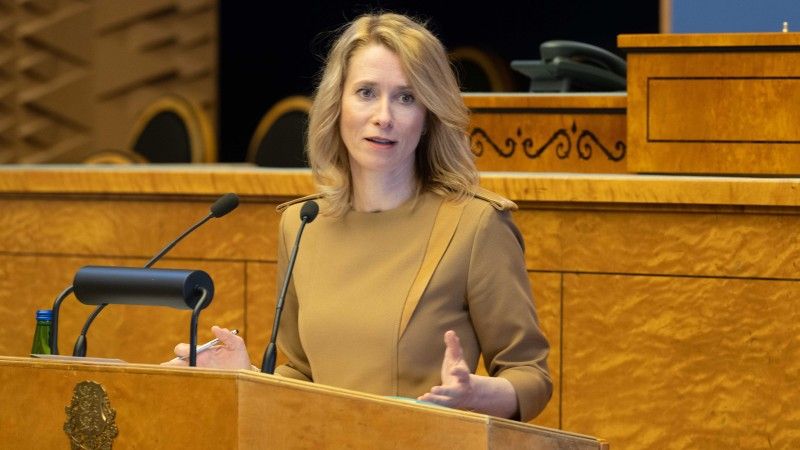
Kaja Kallas has openly accused American negotiators of pressuring Ukraine to accept Vladimir Putin’s conditions for ending the war. Her statement comes as Washington, Kyiv and European representatives discuss a possible peace settlement in Oslo. However, Kallas is also a former Prime Minister of Estonia, a country directly exposed to the Russian threat. For Tallinn, the outcome of the war in Ukraine has direct consequences for its own security and the future of NATO’s eastern flank.
Speaking before the European Parliament, Kallas accused American negotiators of trying to push Ukraine towards surrender on Russian terms for approximately a year and a half. She argued that European military and financial assistance had allowed Kyiv to resist this pressure. Her criticism exposes increasingly visible differences between Washington and Brussels over the concessions Ukraine should make and the conditions Russia should fulfil.
Kallas served as Estonia’s Prime Minister from 2021 to 2024, and this experience is important. Although she now represents the entire European Union, she understands the consequences of Russian aggression from the perspective of a country bordering Russia. Estonia has spent years strengthening its armed forces, civil defence and cooperation with NATO. For Tallinn, an agreement that rewards Russian territorial aggression would raise serious questions about the security of Estonia, Latvia, Lithuania and Poland.

Europe also possesses instruments that Washington cannot simply negotiate away. The European Union controls its own sanctions against Russia, provides substantial support to Ukraine and will play an important role in future security guarantees. Kallas has therefore argued that European representatives must participate directly in negotiations and present their own demands towards Moscow. Russia cannot expect sanctions relief without making concessions, particularly while continuing attacks against Ukrainian cities and critical infrastructure.
The Oslo talks have produced some concrete developments, including the restoration of American intelligence sharing on Russian ballistic missile attacks. However, no ceasefire has been agreed, and the future security guarantees remain unclear. Moscow has indicated its willingness to continue negotiations while maintaining its fundamental territorial demands. Russia has also rejected proposals to halt attacks on energy infrastructure, according to Kyiv.
Kallas is defending a European position, but her Estonian political experience gives particular weight to her warnings. For countries on NATO’s eastern flank, the consequences of a weak settlement would extend far beyond Ukraine. Europe must therefore ensure that its participation in negotiations is supported by military assistance, economic pressure and enforceable security guarantees. Otherwise, Washington and Moscow could negotiate the future of European security while the countries most exposed to Russia are left to deal with the consequences (for instance, Poland).


