












- WIADOMOŚCI
- KOMENTARZ
More US troops for Poland. US Ambassador to NATO: “We will carry out Trump's decision”

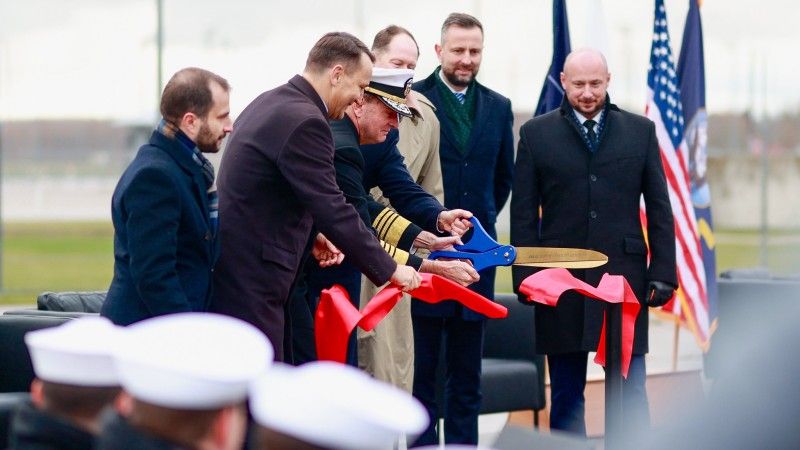
Photo. MON
The United States is planning to increase the number of American troops stationed in Poland. „President Trump has already announced that more troops are coming to Poland,” Matthew G. Whitaker, US Ambassador to NATO, told Dr Aleksander Olech in an exclusive interview for Defence24. At the same time, American forces are resuming military rotations in Estonia and Lithuania. On 10 November, Polish Defence Minister Władysław Kosiniak-Kamysz will meet Pete Hegseth at the Pentagon to discuss, among other issues, the establishment of a new permanent US military base in Poland.
During the interview with Defence24, the Ambassador was asked about the future of American forces in Poland, including the possibility of establishing a new permanent US military base. Whitaker confirmed the direction set by Donald Trump, while emphasising that the details of deploying additional troops had not yet been finalised.
„President Trump has already announced that more troops are coming to Poland. That is the President’s direction, and we will execute that direction. Obviously, we need to put them somewhere, and there are a lot of details to work through,” Whitaker said.
The Ambassador also indicated that further decisions would be announced once the review of US military deployments in Europe had been completed. „But I think that once we have completed the force posture review, that will include announcements about how we are going to proceed in Poland. I think there are some really exciting developments coming up here in Poland,” he added.
American troops return to Estonia and Lithuania
The announcements concerning Poland are not isolated developments. As previously reported by Defence24, the arrival of Apache Troop from the US Army’s 5th Squadron, 4th Cavalry Regiment, in Estonia was confirmed on 6 November. American soldiers began a nine-month rotation, ending a gap of several months in the deployment of successive US units. The previous contingent left Estonia during the summer, but its replacements did not arrive immediately because of the ongoing review of American forces in Europe. Washington is now resuming the rotation.
A similar situation occurred in Lithuania. In June, approximately 1,000 American soldiers left the country without being immediately replaced by new forces. In September, President Gitanas Nausėda confirmed Washington’s decision to deploy another rotation, and in October the first soldiers from the US 1st Infantry Division began arriving in Pabradė.
Lithuania’s Ministry of Defence had announced the deployment of two battalions by mid-November. This is an important development for a country bordering both Belarus and Russia’s Kaliningrad Oblast.
The return of American troops to the Baltic states does not mean that the review of US forces in Europe has been completed, nor that plans to reduce certain units have been abandoned. It does, however, demonstrate that Washington does not intend to transfer full responsibility for the defence of NATO’s eastern flank to its European allies.
In the event of potential Russian aggression, Moscow would have to take into account, from the very first hours of a conflict, the presence not only of Estonian and Lithuanian forces, but also American troops and soldiers from other NATO countries (particularly the United Kingdom, France, Canada and Germany).
A new US base in Poland. Is a decision getting closer?
Poland remains one of the most important locations for American military forces in Europe. In September, the Pentagon confirmed that it was examining the possibility of establishing a new permanent US base on Polish territory. In the longer term, approximately 15,000 American soldiers could be stationed in Poland, including 4,000–5,000 at the new permanent base and another 10,000–11,000 as part of rotational deployments. The estimated cost of preparing the base exceeds PLN 15 billion. However, these are Polish proposals rather than decisions approved by Washington.
Important discussions took place on 3 November in Kraków during a meeting of the Bergen Group, attended by Pentagon representatives, including Elbridge Colby and Michael Duffey, alongside representatives of European NATO countries. The following day, Deputy Defence Minister Magdalena Sobkowiak-Czarnecka indicated that the issue of a new base could be resolved within a few weeks. The final decision, however, rests with President Donald Trump.
Further talks are scheduled for Tuesday, 10 November. Władysław Kosiniak-Kamysz will meet US Defence Secretary Pete Hegseth at the Pentagon. The meeting is scheduled to begin at 10.30 a.m. local time, or 4.30 p.m. in Poland.
„We will be at the Pentagon. We will discuss bases, the presence of American troops and the Polish-American alliance,” the Polish Defence Minister announced. The discussions are also expected to cover industrial cooperation, including a planned PAC-3 MSE missile maintenance facility. The visit was originally scheduled for September but was postponed at the request of the American side.
The American military presence in Europe is changing, and not every country will retain its existing troop contingents. Poland, Estonia and Lithuania nevertheless demonstrate that reductions in certain US forces on the continent do not necessarily mean their withdrawal from NATO’s eastern flank. For Warsaw, the key questions now concern how many additional American soldiers will actually arrive, which units will be deployed and whether these announcements will ultimately result in the establishment of a permanent base. The development of such a base would extend well beyond Trump’s presidency.
Russia remains the most significant military threat to NATO, which is why political declarations alone are no longer sufficient. Further meetings with representatives of the White House are a positive signal, but Poland is also investing billions in American military equipment. As we know, a strategic partnership comes at a price. Warsaw is allocating the required 5% to defence spending and is repeatedly described as a „model ally”.
Ambassador Whitaker summed up the discussion about additional American troops, weapons production and a new military base with one sentence: „I wish there were 30 other allies like Poland and the United States.”


