












- WIADOMOŚCI
Poland harassed by attacks from Russia and Belarus. Gawkowski: we will spend billions

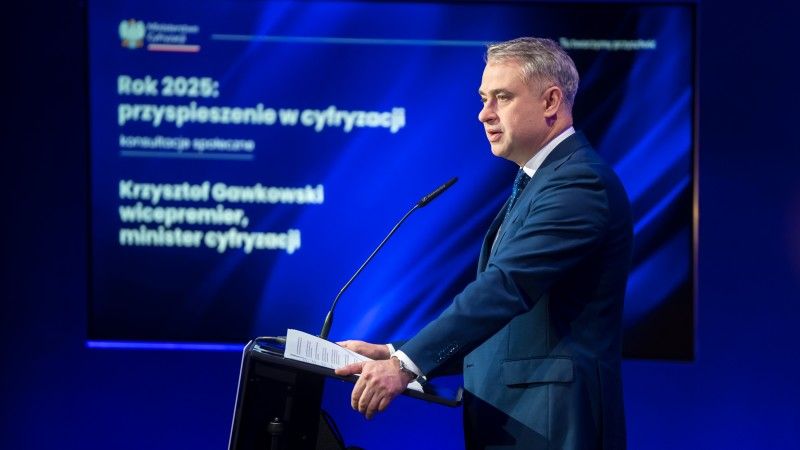
Photo. Ministerstwo Cyfryzacji (@CYFRA_GOV_PL)/X
Russia and Belarus continue hostile operations targeting Poland. Each day, our country faces threats such as espionage by foreign intelligence services. The Deputy Prime Minister has pledged billions to strengthen national security.
Deputy Prime Minister and Minister of Digital Affairs Krzysztof Gawkowski regularly cites statistics in public appearances showing that the number of attempted cyberattacks on Poland is growing year by year. This trend is directly linked to the role Poland plays in the context of the war in Ukraine – as a key logistics hub for delivering aid to Kyiv, including arms shipments.
Attacks from Russia and Belarus: The POLADA Case
The primary source of these threats are APT (Advanced Persistent Threat) groups linked to Russia and Belarus. A notable example is the cyberattack on the Polish Anti-Doping Agency (POLADA), which was reportedly targeted by entities associated with Eastern regimes.
In early September, Polish authorities revealed that they had dismantled a group of Russian and Belarusian saboteurs responsible for the attack, which resulted in a serious data leak from POLADA. This incident was covered in detail in the report:Polish Security Services Dismantle Russian and Belarusian Saboteur Group.
Russia’s Clear Objective in Poland
In a media interview, Major General Karol Molenda, Commander of the Polish Cyber Defense Forces Component, emphasized that hostile operations also target the Polish Armed Forces and institutions subordinate to the Ministry of National Defense. He explained that the Kremlin’s primary goal is to obtain classified information held by the Polish military – classic espionage activities.
Poland’s Security: Gawkowski Announces Billions in Funding
During thePoland’s Security – Total Security Congress, Deputy Prime Minister Gawkowski once again stressed that Poland remains in the crosshairs of hostile intelligence services and that the threat is constant. „Today’s tanks are virtual,” he said.
„This year alone, we have already recorded over 80,000 incidents – a 100% increase compared to 2023,” Gawkowski stated, underlining the importance of building a cyber shield and raising public awareness.
He stressed the need to develop an ecosystem capable of responding to the challenges posed by Russian and Belarusian hacker groups. For this reason, he announced that the government will allocate nearly PLN 10 billion for cybersecurity efforts in 2025–2026.
Funding for Businesses and Local Governments
According to PAP, PLN 1.5 billion of this amount will be allocated to strengthening the cyber resilience of local governments, which the Deputy Prime Minister has described as the „soft underbelly” of the state.
Additionally, a PLN 2.8 billion loan program for business digitalization was announced in partnership with the National Development Bank (BGK) during the Economic Forum in Karpacz. Another PLN 2 billion is earmarked for expanding high-speed internet infrastructure.
Digital Strategy Just Around the Corner
These billions will also support the implementation of the goals outlined in the upcomingState Digitalization Strategy. While the document is scheduled for official release on October 28, a draft version has already been leaked to the media. It reveals the Ministry’s focus on improving quality of life through digital solutions in key areas such as healthcare and public administration. More details are available in the report:Draft Version of the State Digitalization Strategy Reveals Ministry’s Intentions.
Implications for Poland’s National Security
The intensified actions by Russia and Belarus confirm that Poland stands on the frontline of modern hybrid warfare. Investments in cybersecurity are not merely a reaction to growing threats – they represent a strategic step toward enhancing the country’s resilience. Strengthening the digital protection of public institutions and local governments directly improves citizen safety and solidifies Poland’s position as a reliable NATO and EU partner.
Author: Szymon Palczewski, CyberDefence24


