












- KOMENTARZ
- WIADOMOŚCI
Poland’s Air Defence Test: Success, but Major Gaps Remain

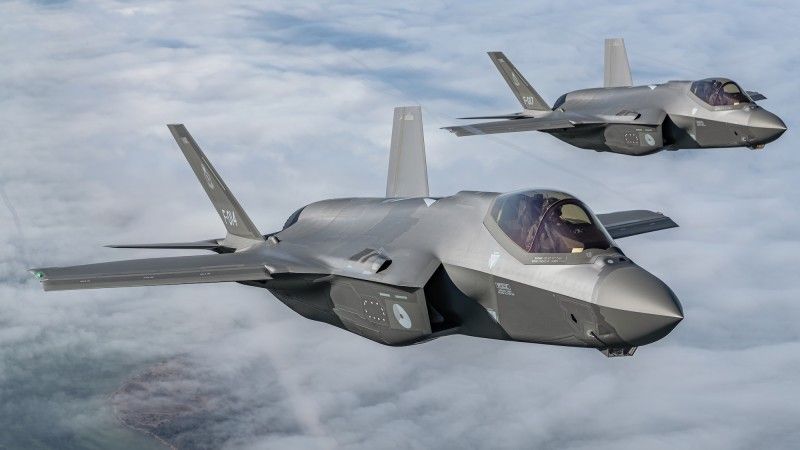
Photo. Holenderskie F-35 nad Polską
The recent downing of Russian Shahed drones over Poland demonstrated that national and allied defence procedures work under pressure. Yet the reliance on fifth-generation fighters and the absence of a robust lowest-tier counter-drone capability highlight critical vulnerabilities. The episode was less a victory than a warning of what lies ahead.
The overnight incursions of 9–10 September, coinciding with Russian-Belarusian Zapad 2025 exercises, were clearly designed as a hybrid operation. Drone attacks were synchronised with online disinformation campaigns, spreading false claims of strikes deep inside Poland. The intent was to test not only military readiness, but also the resilience of public confidence and information management.
From an operational standpoint, Poland passed the test. Airspace was closed to civilian traffic, NATO aircraft were deployed, and the threat was neutralised. The involvement of allied assets stationed in Poland underlined the credibility of NATO’s collective defence posture. Yet the greater challenge now lies in the diplomatic arena. Without a coordinated response from the Alliance, Russia may interpret the silence as a green light to escalate provocations further.
The choice to employ F-35s against relatively unsophisticated drones has drawn criticism. Military experts, including former US Army Europe commander Gen. Ben Hodges, argue that this approach is unsustainable. Gen. Gromadziński shares this view, emphasising that Poland lacks a complete layered air defence structure. While medium- and high-tier systems are being developed, the lowest layer—dedicated to countering drones with kinetic and electronic means—remains underprepared. This gap forces reliance on assets unsuited to the task.
The events also revealed a weakness in strategic communication. Unverified reports from local authorities fuelled confusion, while no centralised channel provided clear, authoritative updates. In an age of information warfare, the absence of such a capability leaves society vulnerable to disinformation.
Poland’s forces demonstrated professionalism and NATO solidarity was on display. But the use of advanced aircraft against drones, the unfinished counter-UAV layer, and the lack of coherent crisis communication expose significant vulnerabilities. The test has been passed, but the exam for Poland and its allies is yet to come.


