












- KOMENTARZ
- WIADOMOŚCI
- WAŻNE
Reduction of the U.S. military contingent in Romania

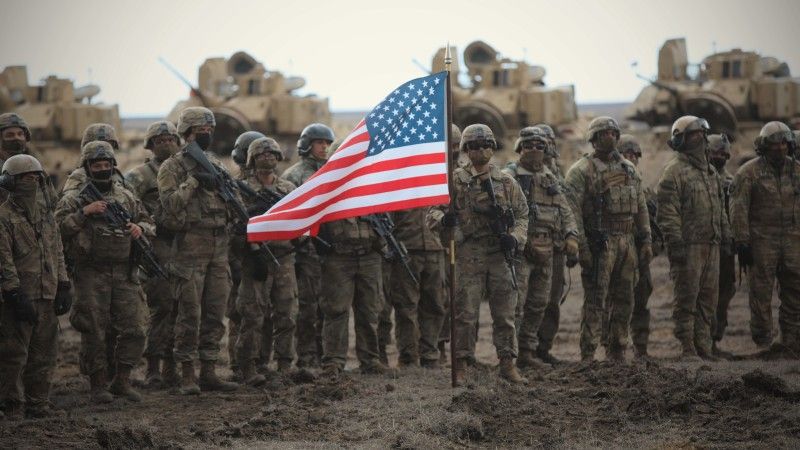
On October 29, Romanian Defense Minister Ionuț Moșteanu announced that the number of U.S. troops stationed in Romania will soon be reduced – a declaration that caused considerable commotion along the Danube, particularly since the information was released to the public two days after it had been officially communicated to Bucharest.
The question naturally arises: does this decision signal a weakening of Romania’s ties with NATO – and by extension, the security of the Alliance’s eastern flank – or a tangible reduction in the country’s defense capabilities? Despite the departure of roughly half of the U.S. troops currently stationed in Romania, no major strategic shift in either Romania’s security position or its bilateral relations with the United States should be expected.
For decades, Romania has been one of the key members of NATO’s eastern flank. Since joining the Alliance in 2004, the country – the region’s second largest after Poland – has played an active role in NATO operations and international missions, including in Iraq and Afghanistan. Between 2019 and 2024, Romanian politician Mircea Geoană served as NATO’s Deputy Secretary General, symbolizing Bucharest’s elevated standing within the Alliance.
While the first decade of Romania’s NATO membership focused on building frameworks for cooperation, the large-scale and permanent presence of U.S. forces began after 2014, following Russia’s first incursion into Ukraine and the launch of Operation Atlantic Resolve. That contingent was reinforced in 2022, after Moscow’s full-scale invasion of Ukraine.
The main hub of U.S. operations in Romania is Mihail Kogălniceanu Air Base, located near the Black Sea port of Constanța. Other strategic facilities include Câmpia Turzii Air Base in Transylvania, near Cluj, and Deveselu in southern Romania, home to the U.S. Aegis Ashore Ballistic Missile Defense system.
Currently, approximately 1,700 American troops are stationed in Romania, down from a peak of about 3,000 at the beginning of 2023. Following the planned reduction, that number will fall to around 1,000 –1,100. It is important to note that the American presence has always operated on a rotational basis, and the current decision primarily concerns the non-replacement of one such rotation, which also included deployments in Hungary, Slovakia, and Bulgaria. Post-reduction, roughly 700–800 troops will remain at Mihail Kogălniceanu, about 200 in Deveselu, and around 100 in Câmpia Turzii.
The Romanian government received notice of the decision through its embassy in Washington but delayed public disclosure for two days until after a scheduled U.S. House Committee on Armed Services briefing. However, the information had already leaked to the Kyiv Post before Bucharest made it official. U.S. military command later confirmed the move, describing it as part of a „deliberate process to ensure a balanced U.S. military force posture,” reflecting „increased European capability and responsibility.”
In Romania, the decision was met with cautious official optimism tempered by visible unease – both about the country’s potential loss of strategic significance within NATO and the domestic political ramifications of the announcement. The political climate in Bucharest has only recently stabilized following Nicușor Dan’s presidential victory and the apparent exit from public life of the controversial Călin Georgescu. The government is now pursuing long-overdue economic reforms that require politically sensitive measures – curbing entrenched elite’s privileges on one hand while risking public discontent on the other.
Public sentiment in Romania remains overwhelmingly pro-Western and pro-American, with widespread anxiety about Russian aggression against Ukraine. The announcement of a reduced U.S. presence, therefore, risked fueling public concern. To mitigate this, President Dan emphasized that the drawdown merely returns troop levels to their pre-2022 baseline –before Russia’s full-scale invasion. „The security of Romania and the eastern flank will not, in any way, be diminished,” he assured. Defense Minister Moșteanu likewise underscored the need for Romania to strengthen its own military capacity rather than rely exclusively on foreign forces, while Foreign Minister Oana Țoiu stressed that the U.S.–Romanian partnership remains one of „mutual trust and shared strategic objectives.”
Romania’s current defense strategy prioritizes the development of its own capabilities alongside closer cooperation with European NATO partners – a course that recent large-scale „Dacian Fall” exercises, involving some 5,000 troops from ten allied nations, clearly demonstrate.
In this broader context, the U.S. decision to withdraw roughly 800 troops should not be interpreted as a weakening of NATO’s posture or of Romanian-American relations, which remain traditionally strong. The key challenge for Bucharest – and indeed for the Alliance – will be to ensure that this adjustment does not mark the beginning of a broader retrenchment of U.S. engagement on NATO’s eastern flank. At this stage, there is no evidence to suggest such a development.


