- WIADOMOŚCI
- KOMENTARZ
Russian services detain two Poles. FSB accuses them of espionage in the Kaliningrad Oblast


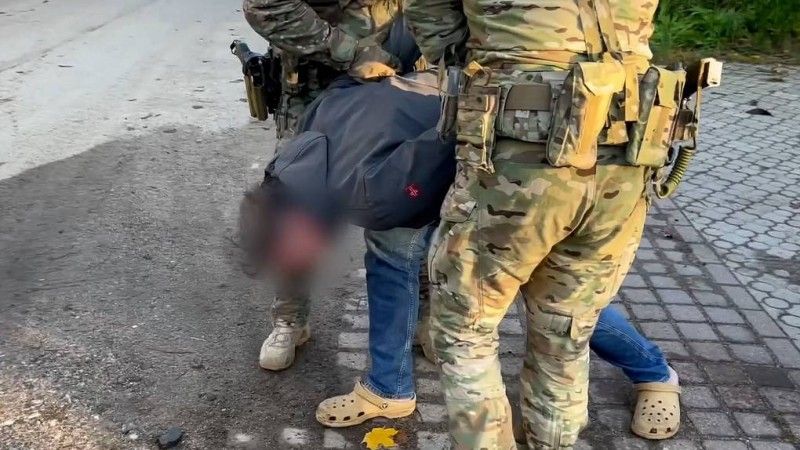
Photo. TASS Russian News Agency
The Federal Security Service (FSB) has reported the detention of two Polish citizens in the Kaliningrad Oblast on espionage charges. According to Russian state news agencies, the Poles were allegedly gathering information on military facilities and the socio-economic situation in the Russian exclave.
Early this morning, Russian services detained two Polish citizens within the territory of the Kaliningrad Oblast. As reported by the regime-controlled TASS agency, citing official FSB statements, the detainees are allegedly Polish intelligence agents conducting operational activities on the territory of the Russian Federation.
According to the information provided by the Russian side, the primary task of the Poles was supposedly reconnaissance and the subsequent transmission of data regarding the deployment and operation of Russian military bases in the region. Furthermore, the detainees were reportedly gathering information on the current economic and social situation in the exclave, which is physically separated from the rest of the country.
We can reasonably assume that this was a deliberate action by the Russian authorities aimed at disrupting Poland’s Independence Day celebrations on 11 November. Interestingly, the Russian Ministry of Foreign Affairs released detailed information about the incident remarkably quickly and with an unusual degree of transparency.
⚡️ Russia’s Federal Security Service: Russia's #FSB disrupted a Polish intelligence network in the Kaliningrad Region. It detained two agents who collected & relayed data on @mod_russia sites, the Region’s socio-economic conditions & policies. https://t.co/j4M8dMP53l https://t.co/H0SsbM6sFr
— MFA Russia 🇷🇺 (@mfa_russia) November 11, 2026

Tightened border controls
In its statement, the FSB also announced the issuance of official warnings to seven other Polish citizens and two Russian citizens, who were allegedly in the sphere of interest of foreign intelligence services.
As reported by TASS, citing sources within the security apparatus, the Russian border guard has intensified verification activities at border crossings. As a result of these tightened border control procedures, visas for 14 Polish citizens have been canceled this year, and another six individuals have received entry bans and been blacklisted.
It should also be noted that Russia’s alleged „success” was poorly orchestrated. Even the screenshots circulated on social media, purportedly showing conversations between Polish agents, contained dozens of errors.
Rosjanie aresztowali "polskich" szpiegów w obwodzie królewieckim. Jest jeden problem. W Polsce nie ma zwrotu robić rozmowy. To ruskie делать разговоры (delat razgovory), stąd w wielu przypadkach kalkowanie tego na polskie „robić rozmowy” Rosjanie oczywiście kłamią. https://t.co/xdQCANQE13
— Koneser Związku Radzieckiego/X (@KrzysiekWSK) November 11, 2026

Retaliation for yesterday's ABW operation?
It is noteworthy that the Russian statement coincided with a high-profile operation conducted by Polish counterintelligence. A day prior, on November 10, the Internal Security Agency (ABW) reported the detention of two Ukrainian nationals, aged 24 and 25, in Mińsk Mazowiecki.
The individuals were charged with espionage and conducting sabotage operations on behalf of Russian special services. Findings from the Polish investigation indicate that they were conducting reconnaissance of critical infrastructure facilities and carrying out arson attacks on vehicles. Crucially, prior to the arson, they deliberately swapped the license plates to resemble those utilized by the Ukrainian Armed Forces, in a false-flag effort aimed at shifting the blame to Kyiv. They were remunerated in cryptocurrencies for their activities on behalf of Russia
It should be remembered that statements published by the Federal Security Service and Russian state media are a permanent element of Moscow’s ongoing information warfare. Detentions of this nature frequently serve Kremlin propaganda in creating a domestic narrative about an alleged threat from NATO’s eastern flank countries, including Poland.