












- KOMENTARZ
- WIADOMOŚCI
Sweden and Poland should seize the NATO moment

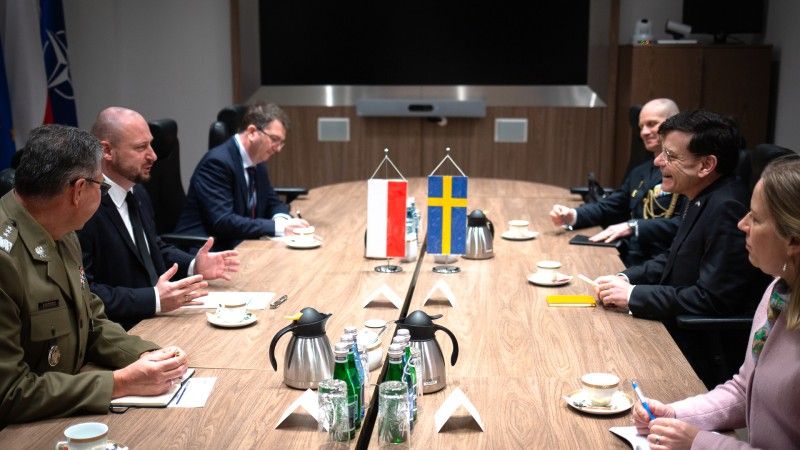
As NATO faces softened rhetoric but rising defence demands, Sweden and Poland stand poised to shape the Alliance’s future. United by robust defence investments, unwavering support for Ukraine, and a shared readiness to defend Europe, both nations have an unique opportunity to turn the „NATO moment” into lasting momentum for the entire Alliance.
A month ago, the NATO Summit concluded in the Hague. Many headlines derided the overt flattery of Trump, in particular newly appointed Secretary General Mark Rutte’s „daddy” remarks. A close look at the summit declaration revealed even further embarrassments.
The previous year’s clarity on the multi-dimensional challenges and hostile actors were suddenly absent, and the collective threats seemed distinctly blurred.
The Russian threat was still mentioned, as was Ukraine as a victim of the unjustified aggression, but in less direct terms and without the strong rhetoric. Another obvious difference was the lack of clarity about China. Named a „decisive enabler” of Russia’s war in 2024, such language no longer appeared in the 2025 declaration, despite evidence of China’s support becoming even more evident over the past year.
The largest change was not the wording itself but rather the new numbers and figures. Five percent of GDP was suddenly no longer an abstract, ambitious number floating around but the one that the Allies, except Spain, agreed upon investing annually by 2035. Trump has had outsized influence on watering down language while ratcheting up financial demands.
For countries like Poland, and even more recently, Sweden, five percent is not just a number taken out of the blue. It is a signifier of becoming leaders in Europe in no small part due to defence investments, steadfast support of Ukraine, and psychological readiness to defend Europe. Sweden and Poland are drawing closer in a wide range of areas. The Nordic-Baltic-Poland (NBP) format is a natural outgrowth of the Nordic-Baltic-Eight (NB8) and part of a wider coalition of the willing that demands leadership.

It is in this context that the two countries have become closer. Since 2022, Swedish debate and media more regularly cover Poland with curiosity and seriousness, and there is a sense of heightened expectancy of what the relationship can continue to develop into. The countries have been working tightly in many areas, such as Baltic air policing and the deployment of Swedish JAS Gripens to Poland, and recently committed to strengthening strategic ties in a 2025 statement of intent in the fields of civil protection and civil defence. This includes enhancing national preparedness and resilience strategies, particularly on critical infrastructure in the Baltic Sea Region, countering hybrid threats, and providing additional support to Ukraine.
Outside our region, with the coming years promising more turbulence and continued aggression of authoritarians globally, it is more important than ever to shape and maintain NATO’s mission and narrative.
The Alliance will survive one or two declarations with softened language about the core threats and actors, but in the long run as well as in the immediate future, the Alliance must be able to carry the language of the core tasks and be truthful to the realities of security politics.
At this moment, NATO needs the voices and vanguards who will carry the Alliance forward. Poland, with close relations to the United States, and Sweden, as a new ally with deep ties across the Atlantic and with key European allies, can partner in fostering this shared narrative and mission in a new era. In this era nothing should be disregarded, nor should anything be taken for granted. Sweden and Poland should therefore seize the NATO moment and turn it into a momentum for the whole of the Alliance.
Author: Anna Rennéus Guthrie


