












- WIADOMOŚCI
Terrorism – old wine in new bottles

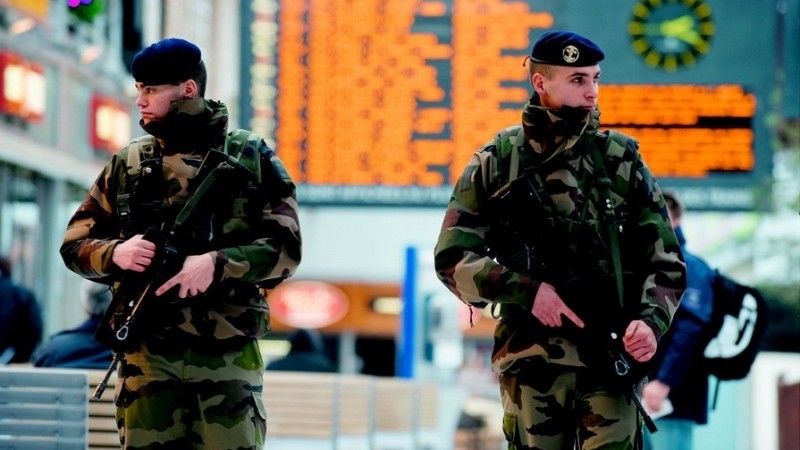
As a timeless threat, terrorism is constantly evolving to a greater or lesser extent, and is therefore reminiscent of the proverbial old wine in new bottles. This is reflected in Europol’s latest report,TE-SAT.The European Union Terrorism Situation and Trend Report for 2025, which identifies several changes terrorism has been undergoing, including a gradual decrease in the age of terrorists (the youngest person arrested in the EU in 2024 was only 12 years old).
Another example is the perpetrators of attacks using new technological solutions such as drones, 3D printing, and artificial intelligence. What is particularly worrying, however, is the growing links between terrorists, criminal groups, and the secret services of hostile states. This is evident in frequent cases of terrorism and sabotage.
The scope of terrorist threat in the EU
In 2024, Europol recorded a total of 58 terrorist attacks, including 34 that were carried out, five which failed and 19 which were foiled. These attacks occurred in 14 EU member states, primarily in Italy (20), France (14) and Germany (6), followed by Austria, Greece (three each), the Czech Republic, Denmark, Lithuania (two each), Belgium, Ireland, Malta, the Netherlands, Slovakia and Spain (one each). Twenty-four of the attacks were attributed to jihadist terrorists, 21 to left-wing and anarchist terrorists, eight were classified as other or unspecified forms of threat, four were separatist in nature, and one was right-wing. Most of the attacks in 2024 targeted civilians. The industrial sector was the second most frequent target. Other popular targets included private companies, religious entities/symbols, critical infrastructure, political entities and law enforcement agencies. Arson was the most common form of terrorist activity, followed by bombings, stabbings, the use of firearms and damage to property.
Pessimistic message of the report
Although the number of attacks fell significantly in 2024 (from 120 in 2023 to 58), a detailed analysis of the Europol report makes it difficult to remain optimistic. Firstly, it is important to note that the number of EU member states that suffered attacks increased from seven to 14. This is particularly evident in the case of the jihadist threat. In 2024, 24 jihadist attacks were recorded, compared to 14 the previous year. Jihadist terrorism also remained the deadliest form of terrorism analyzed in the EU, killing five people and injuring a further 18 last year.
The international context is very important in this case. On the one hand, it involves the conflict in the Gaza Strip, which has had a significant impact on the terrorist threat in the EU. Numerous attacks or calls for violence related to this conflict have been reported. Online propaganda spread by fundamentalists inciting extremism, hatred and anti-Semitism has played a significant part here. Secondly, the success of the Syrian opposition, including its Islamist factions, must be taken into account. A third important factor is that jihadist groups linked to Islamic State or al-Qaeda have grown in strength in Africa, making the Sahel a focal point for global jihad. According to Europol, militias trained in Africa are targeting Europe.

Juvenile perpetrators
Another highly worrying trend is that the number of minors and young people involved in terrorist and extremist activities increased across the EU in 2024. Of the 449 individuals arrested, 133 were aged between 12 and 20, accounting for over 29% of all arrests for terrorism-related offences. The youngest suspect, who was arrested for planning an attack, was 12 years old. The vast majority of juvenile perpetrators were linked to jihadist terrorism. They were most often charged with participating in attacks, creating and disseminating radical propaganda, and membership of a terrorist or extremist group. These juvenile terrorists were primarily males who had been radicalized online and acted independently of any organization.
Arrested persons
Notably, the total number of arrests for terrorism-related offences has increased. In 2024, it stood at 449 individuals across 20 EU member states, compared to 426 such cases in 2023. The majority of arrests were carried out in Spain (90), France (69), Italy (62) and Germany (55). In Poland, 13 arrests were made, including one jihadist-related arrest, while 12 arrests were »unclassified«. Across the EU, the majority of arrests were related to jihadist terrorism (289); however, this is a decrease compared to 334 in 2023. Conversely, the number of arrests related to other forms of terrorism has gone up. This applies particularly to right-wing, left-wing and anarchist terrorism, as well as other, unclassified forms.

Photo. TE-SAT. European Union Terrorism Situation and Trend Report 2025 - (EU Member States' contributions).
Cyberterrorism
Another rapidly growing problem is posed by the terrorist threat combined with the increasing diversity of online platforms used by perpetrators for activities such as recruiting minors and carrying out acts of violence. Groups associated with such activities often advocate the collapse of democratic societies by creating chaos or terror. Many represent ideological views linked to jihadist, right-wing or left-wing terrorism, as well as Satanism and occultism. In 2024, the range of new services in cyberspace reached record levels, as did the use of artificial intelligence and other technologies to create and disseminate propaganda and hate speech. The same applies to other manifestations of cyberterrorism.
A brief conclusion
The European Union continues to implement various measures, including new ones to prevent and combat terrorism. These include Referral Action Days, a campaign to swiftly report and remove terrorist content online; task forces addressing cryptocurrencies and updating the list of foreign fighters. There are also mobile laboratories analyzing improvised explosive devices (IEDs). However, the measures taken so far have been insufficient. The EU needs a new, comprehensive approach to terrorism, which has gained in importance due to the escalation and evolution of the terrorist threat. This includes the mass smuggling of weapons from the Balkans or Ukraine, terrorists using modern solutions such as drones, 3D-printed weapons and artificial intelligence, cryptocurrencies, terrorist activities in cyberspace and links between terrorists, criminal groups and the secret services of hostile states.
This is particularly relevant in relation to Russia’s and its collaborators« policies towards Poland, the Czech Republic, Estonia, Germany and Spain. Launching anti-terrorist measures may be hampered by the particular interests of individual EU member states, ongoing political crises in some of them, discord in transatlantic relations, financial constraints, and the frequently forecast economic collapse. Nevertheless, even approaching terrorism as old wine served in new bottles, it must not be allowed to spread across Europe.
Author: Sebastian Wojciechowski – professor, the Head of the Department of Strategic Studies and International Security at the Faculty of Political Science and Journalism at Adam Mickiewicz University. Chief Analyst at the Western Institute in Poznań. OSCE security expert and NATO DEEP eAcademy expert on internal and international security. Editor-in-chief ofPrzegląd Strategiczny \[Strategic Review\]. His most recent publications include:The hybrid dimension of contemporary terrorism and critical infrastructure. Analysis of Europol’s TE-SAT reports from 2021–2024 and (together with A. Wejksznerem)The new face of terrorist threat in the European Union. Analysis of the EU Terrorism Situation and Trend Report 2024 (TE-SAT) and other sources.


