


- ANALIZA
- WIADOMOŚCI
The end of post-Soviet unity? Russian influence and Armenia’s strategic dilemmas

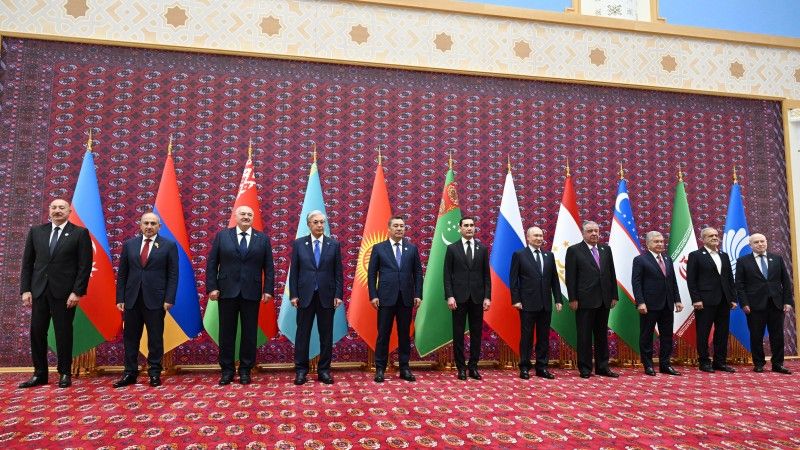
On the 8th and 9th of October, the Prime Minister of Armenia travelled to Turkmenistan on a working visit to attend the Council of Heads of State of the Commonwealth of Independent States (CIS) meeting. These are regular annual meetings bringing together representatives of Kazakhstan, Uzbekistan, Kyrgyzstan, Tajikistan, Armenia, Azerbaijan, Russia, Belarus and Moldova (which will leave the organisation’s structures in April 2027).
The Commonwealth of Independent States is an organisation established in the 1990s following the collapse of the Soviet Union. It was created as a platform for cooperation among the former Soviet republics. In its early years, the CIS played a key role in stabilising the region after the dissolution of the Soviet Union. The organisation coordinated the division of Soviet assets, the management of the strategic nuclear arsenal, and issues related to the transit of energy resources. The Commonwealth also established a framework for resolving disputes between member states peacefully. Over time, however, many of these functions ceased to be carried out effectively.
Conflicts between the organisation’s members and Russia’s imperial policy are among the reasons why the CIS is losing its significance. The dispute between Kyrgyzstan and Tajikistan, armed clashes between Armenia and Azerbaijan, and Russia’s wars against Georgia and Ukraine—both former members of the organisation—have seriously called into question the practical value of its existence. For Russia, the CIS is one of the instruments of geopolitical, economic and propaganda influence. For the Kremlin, the organisation is a mechanism for keeping the former Soviet republics within its exclusive sphere of influence.

Russia dominates CIS structures militarily and economically. It uses trade agreements within the bloc to make smaller states—such as Armenia, Kyrgyzstan and Tajikistan—dependent on its markets, energy supplies (gas and oil) and remittances sent by migrant workers. At CIS summits, Vladimir Putin regularly calls for the “removal of trade barriers”, which in practice means opening these countries’ markets further to Russian capital and limiting their economic sovereignty. For the Kremlin, the CIS is an invaluable propaganda tool on the international stage. By organising regular summits attended by the leaders of post-Soviet states, Russia can demonstrate—particularly in the face of Western sanctions imposed after its invasion of Ukraine—that it is not isolated and still leads a powerful bloc of countries. This helps legitimise Russia’s imperial policy.
Russia presents itself as the sole and ultimate arbiter in regional conflicts within the CIS, including the border disputes between Kyrgyzstan and Tajikistan and relations between Armenia and Azerbaijan. Rather than pursuing lasting solutions, Moscow often preserves the status quo or employs a “divide and rule” strategy, offering military support or diplomatic mediation in exchange for the parties’ political loyalty.
How does Armenia see its place in this arrangement? Armenia regards the CIS as a relatively neutral body. Given its flexibility and limited institutional formalisation, Yerevan views the organisation as a platform for dialogue and meetings with other leaders from the former Soviet Union. Armenia has frozen its participation in another Russian-led organisation, the Collective Security Treaty Organisation (CSTO), because it failed to fulfil its obligation to assist Armenia in 2022, during Azerbaijan’s attack on Armenia’s internationally recognised territory. Yerevan remains a member of the Eurasian Economic Union (EAEU), an organisation established in 2014. The EAEU allows the free movement of goods, services, capital and labour. Remaining a member is economically beneficial for Armenia. The Union’s rules ensure the free movement of goods and allow Armenia to purchase crude oil, petroleum products and natural gas at preferential prices.

However, disputes between Russia and Armenia within the Union have become increasingly frequent. Moscow has imposed restrictions on imports of various Armenian goods, citing, among other things, alleged sanitary issues. The restrictions have affected alcoholic beverages, dairy products, flowers and foodstuffs. Russia has also used the threat of completely cutting off gas and oil supplies to Armenia as a means of pressure. The dispute has intensified because of Armenia’s aspirations to join the European Union and the Nikol Pashinyan-led Armenian government’s criticism of the Kremlin’s policy. Armenia takes a pragmatic and flexible approach to its relations with Russian-led structures, seeking cooperation wherever it serves its interests. It is, however, becoming increasingly difficult. In connection with its plans to submit a formal application for EU membership, Armenia may face an important choice between the “East” and the “West”. As part of the ongoing debate in Armenia about beginning the EU integration process, Nikol Pashinyan has proposed a referendum in which citizens could express whether they support the idea of integration with the EU. The timing of such a referendum remains distant and difficult to determine, but the very idea of joining Western structures has drawn criticism from the Kremlin. Russian Deputy Foreign Minister Mikhail Galuzin issued what amounted to an ultimatum to Yerevan, demanding a declaration on the referendum by December 2026. Prime Minister Pashinyan rejected this pressure, maintaining his proposed sequence: first a formal application and candidate status, and only then a nationwide referendum.
Tensions between Yerevan and Moscow appear likely to escalate further. As Armenia deepens its integration with Western countries, Russia will use additional forms of pressure. Prime Minister Nikol Pashinyan has repeatedly declared an end to Armenia’s policy of “relying on Russia” and announced a multi-vector foreign policy based on cooperation with a range of different partners.
About the Author:
Dominik Lebioda is a graduate of the University of Łódź with a master’s degree in international relations. His main research interests include the South Caucasus—particularly Armenia—Armenia’s foreign policy, geopolitical rivalry in the post-Soviet space, and international cooperation among cities and regions.


