












- ANALIZA
- WIADOMOŚCI
- WAŻNE
Armenia seeks new military partners. Why is Yerevan turning to China?

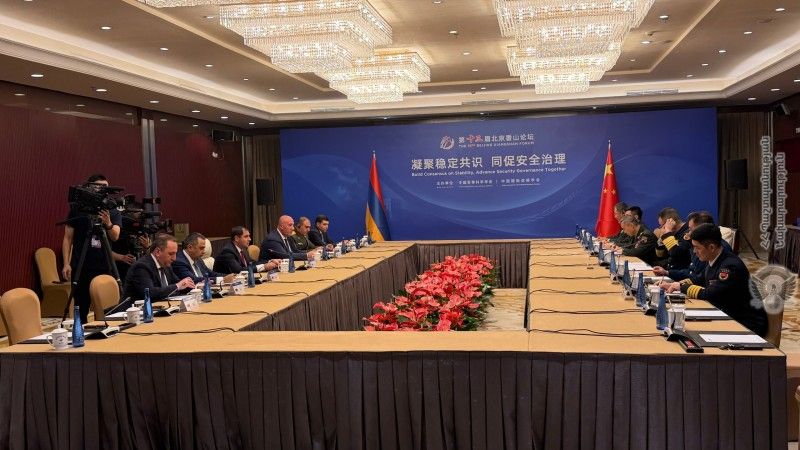
Photo. MINISTRY OF DEFENCE OF THE REPUBLIC OF ARMENIA
The visit of Armenian Defence Minister Suren Papikyan to the People’s Republic of China, which took place from 14 to 18 September 2026, represents a key element in the systemic reorganisation of the country’s security policy. After decades of near-total reliance on Russian technology and security guarantees within the Collective Security Treaty Organization (CSTO), Yerevan is now implementing a doctrine, described by Prime Minister Nikol Pashinyan as the diversification of arms procurement, that encompasses „six or seven states”.
At the same time, the visit appears to be more than a mere formality. It signals a shift towards intensive technological and industrial negotiations with a partner outside Moscow’s traditional sphere of influence.
The industrial dimension of the visit
The significance of the visit was underscored by a packed schedule of engagements, ranging from talks with the Minister of National Defense of the People’s Republic of China, Admiral Dong Jun (15 September), and participation in the 13th Beijing Xiangshan Forum (16 September) to direct discussions with the leadership of China’s defence sector (17 September) and a visit to the PLA National Defense University (18 September). Ambassador Vahe Gevorgyan’s presence at key panel discussions highlighted the diplomatic groundwork being laid for enduring, long-term military cooperation and, by extension, a partnership poised to become a pillar of Armenia’s new „sovereignty infrastructure”.
🇦🇲 🇨🇳 On September 16, the Minister of Defence of the Republic of Armenia Suren Papikyan attended the opening ceremony of the 13th Xiangshan Forum in Beijing. pic.twitter.com/HjAlPBUi2i
— MoD of Armenia 🇦🇲 (@armenia_mod) September 16, 2026
At the same time, for nations undergoing rapid technical modernisation – a group that currently includes Armenia – direct dialogue with China’s military-industrial complex (comprising giants such as CASC and CASIC) is of crucial importance. Although official statements from 17 September were brief, Papikyan’s meetings with the heads of corporations responsible for state-of-the-art missile and aviation systems suggest an interest in specific technologies capable of addressing the arms shortfalls that became apparent after 2022.
The situation is further complicated by a crisis of confidence regarding Russia. Moscow failed to fulfil arms contracts signed in 2021, forcing Yerevan to conclude an agreement under which funds paid for undelivered weaponry were credited against Armenia’s interstate debt. Faced with these gaps in defence capabilities, China offers immense production capacity and a readiness to supply systems that can be integrated into Armenia’s defence system in an exceptionally short time.

Chinese technology in Armenia’s arsenal
The effectiveness of Armenia’s Chinese arms acquisition strategy is evidenced by the presence of specific systems in Armenia’s arsenal, officially unveiled during a military parade in May 2026. The identified combat assets indicate that Yerevan is focusing on precision strike capabilities and unmanned systems, including:
- CH-4B (Armenian designation „Aghegh”): A MALE (medium-altitude, long-endurance) unmanned system designed for reconnaissance and strike missions. It is an aircraft with combat-proven potential—having been used in conflicts in Iraq and Yemen, among others—which enhances its value in the eyes of Armenian analysts.
- FL-300A/ASN-301 („Vorot-1” and „Vorot-2”): Anti-radar unmanned systems / loitering munitions with an estimated range of approx. 280–300 km. They have been showcased, among other configurations, with a six-tube container launcher mounted on trucks.
- CH-901/FH-901 („Kaytsak”): Lightweight loitering munition—comparable to the American Switchblade 600 system—providing precision support at the tactical level.
- GAM-102LR („Nizak”): A third-generation „fire-and-forget” anti-tank system, representing a technological equivalent to state-of-the-art Western solutions.
- WM-80 and AR1A: Heavy multiple-launch rocket systems that have long formed the backbone of Armenia’s long-range ground-attack capabilities.
In Beijing, Armenia likely sought to expand this arsenal to include medium-range air defence systems, C4ISR command and control systems, and advanced electronic warfare (EW) solutions.
What capabilities might Armenia need today?
The profound transformation and modernisation of Armenia’s armed forces create an urgent need for several key categories of weaponry, including areas where the Chinese defence industry offers a wide range of proven export products. These primarily include:
- short- and medium-range air defence systems (both mobile and stationary);
- unmanned reconnaissance and strike systems, as well as loitering munitions;
- radar stations and electronic warfare (EW) systems;
- multiple launch rocket systems (MLRS);
- command, control, communications, computers, intelligence, surveillance, and reconnaissance (C4ISR) systems, and precision-guided munitions.
At the same time, it should be clearly noted that there is no official information confirming which of these segments (or indeed whether any of them) were the subject of detailed arrangements during the meetings held in Beijing in September.
Personnel training at the National Defence University
Suren Papikyan’s visit to the National Defence University in Beijing on 18 September and the agreements reached there are of strategic importance. Although Beijing’s diplomatic rhetoric invokes „historical analogies between two ancient nations”, from a military analyst’s perspective, this signifies the building of a civilisational understanding that facilitates the transfer of Chinese military thought. Officer training in the PRC is intended to enable Armenia to assimilate technology more deeply and without ideological baggage, which is crucial for the independent operation and modernisation of Chinese-supplied weaponry.
This also indicates that Yerevan is seeking not only deliveries of finished weapon systems from China but also broader cooperation in the areas of military doctrine and institutional structures. Joint training programmes for senior officers and commanders could foster enduring procedural ties and enable Armenian personnel to familiarise themselves with Chinese strategic thought, command systems, and operational concepts. In the longer term, such cooperation could facilitate deeper organisational integration and make it easier for Armenia to incorporate Chinese-made systems into its evolving defence architecture.
Why Beijing?
The choice of the PRC as a strategic partner stems from technocratic pragmatism. China positions itself as a politically „neutral” supplier, guided by the principle of cooperation free from additional political conditions. For Yerevan – balancing between pressure from Moscow and a desire to cooperate with the West – Beijing represents a source of modern technology that does not require taking sides in the global ideological divide.
The appeal of the Chinese offer also lies in its cost-effectiveness and flexibility. Unlike Russia, China meets delivery deadlines, and – unlike some Western suppliers – it imposes fewer restrictions on the export of strike systems. Thus, Yerevan seeks to avoid dependence on a single source of supply, viewing Beijing not as a new, dominant supplier, but merely as a counterbalance to its existing partnerships.
Can China replace Russia?
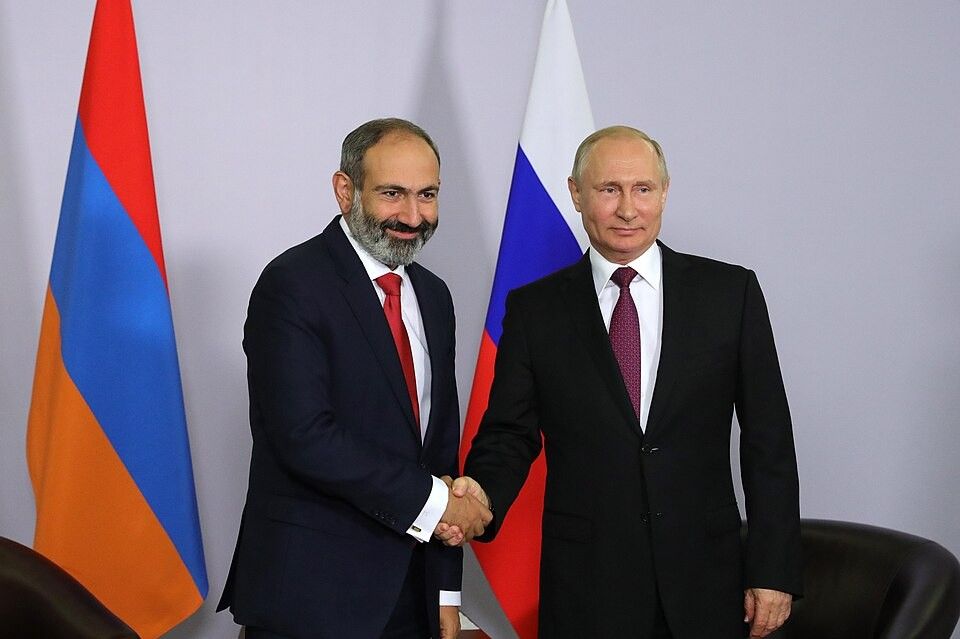
Analysts and observers monitoring the situation in the South Caucasus naturally wonder whether Beijing could take Moscow’s place as Armenia’s new primary security guarantor. However, based on available information and diplomatic actions to date, it does not appear that Yerevan seeks to swap one form of dependency for another.
The September talks should be viewed as another deliberate step towards broadly diversifying defence partnerships. Although official statements regarding the meeting between Papikyan and Admiral Dong Jun mentioned „developing new areas of interaction” and „long-term planning”, there were no indications of an intention to form a formal military alliance or secure binding security guarantees from the PRC. Instead, China is intended to serve as a distinct, independent source of technological and political capacity, thereby increasing Armenia’s freedom of manoeuvre.
China between Yerevan and Baku
Cooperation with Armenia does not mean that Beijing is abandoning its ties with Baku. China pursues a policy of careful balance, a fact underscored by the Joint Statement on the Establishment of a Comprehensive Strategic Partnership with Azerbaijan signed in April 2025. Moreover, almost concurrently with Papikyan’s visit, Azerbaijani Defence Minister Colonel General Zakir Hasanov visited the production facility of the China Aerospace Science and Industry Corporation (CASIC) in Beijing.
For China, both nations represent key links in the Belt and Road Initiative. Beijing supplies weaponry to both countries, viewing the South Caucasus as a market for its goods and a region for expanding economic influence, while simultaneously avoiding the role of arbiter or ally. Consequently, Yerevan must take into account the risk that the technologies it acquires from China may also be familiar, to some extent, to Azerbaijan.
See also 

Prospects and signs of success
Suren Papikyan’s visit to Beijing confirms that Armenia has shifted away from reliance on Russian military equipment in favour of a diversified network of partnerships. For Yerevan, China is not a new patron but rather one of several independent sources of strength. By building an „infrastructure of sovereignty”, Armenia is assuming significant logistical and integration-related risks, on the assumption that a diversity of suppliers will shield it from a scenario where any single power could once again impose its political will through military pressure. The success of this effort hinges on the ability of Armenian personnel to integrate Chinese technology with Western command-and-control standards. Key indicators of success will primarily include the scale of deployment of new types of Chinese weaponry at Armenian training grounds (particularly medium-range air defence systems), as well as the growing number of Armenian officers undergoing specialised training in the PRC.


