












- WIADOMOŚCI
The right moment for African–European cooperation

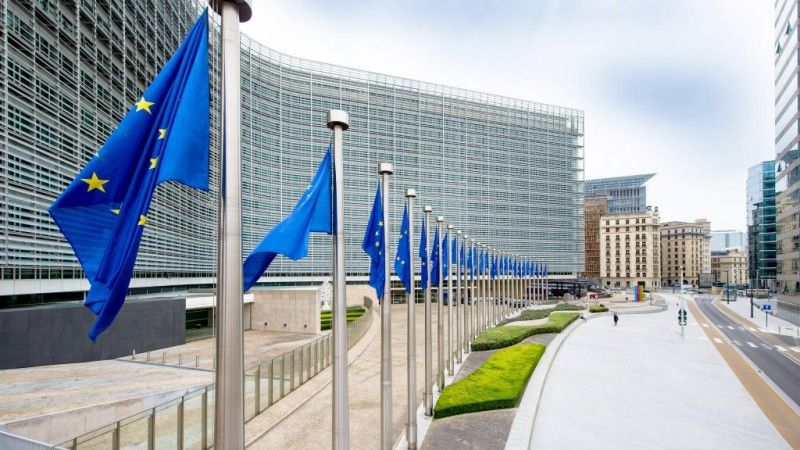
Photo. European Commissin (@EU_Commission)/Twitter
The end of November belonged to Africa, though this may have been easy to overlook from a European perspective absorbed by the Ukrainian peace talks. Beyond hosting the G20 Summit in South Africa, the continent also held the 7th African Union – European Union Summit in Angola, a timely meeting at a moment when both sides need each other more than ever.
The gathering marked the 25th anniversary of the AU-EU partnership, which today appears as difficult as indispensable. EU countries, fearing the growing economic and military influence of China and Russia, are trying to respond by offering a more competitive development model to the continent. The objective is to win a larger market share, secure access to critical raw materials, and stabilise the region’s internal situation, which could otherwise easily spill over into Europe via migratory pressures.
For their part, African countries fear the prospect of declining global cooperation and reduced access to foreign capital and investment. Their capitals are particularly concerned about the backlash against multilateralism and the growing tendency to prioritise national interests over global gains, often through the use of harmful unilateral economic measures. In such a self-help-based system, Africa stands little chance against major developed players like the US, China, and the EU.
Normative and economic convergence
As reflected in the summit’s joint declaration, there is a clear convergence between the two continents on the need to uphold a multilateral, rules-based world order, which is hardly surprising given the EU’s longstanding attachment to these principles.
Europe–Africa economic relations constitute another crucial pillar highlighted in the document. The EU is Africa’s largest trading partner, ahead of China, India, and the US, while Africa ranks only as the EU’s fourth, accounting for 6.4% of total EU exports. Yet the continent’s potential is far greater, given its 1.5-billion-strong, rapidly growing population, whose economic development remains constrained by underdevelopment and chronic political instability.
The EU’s flagship Global Gateway initiative aims to address this development gap by unleashing the potential of African economies while simultaneously securing a growing market for Europe. More than half of its projects and €150 billion in funding are dedicated to Africa through the Global Gateway Investment Package.
In this context, the EU focuses particularly on supporting the continent’s green and digital transitions, while placing growing emphasis on developing infrastructure for critical raw material value chains. This is exemplified by its involvement in the development of the Lobito Corridor, which will connect Angola’s port to the Democratic Republic of Congo and Zambia to facilitate the transport of rare-earth minerals.
Missed opportunity, unspoken issues, and historical shadows
Although all of these initiatives are mentioned and reaffirmed in this year’s summit declaration, a frequently raised concern is that none of them are truly new. In particular, African commentators note that the summit failed to provide the awaited fresh impetus.
The EU pledged to continue and strengthen the implementation of existing initiatives dating back to previous summits, but fell short of addressing core African concerns. Among them are the negative effects of EU climate measures, such as the Carbon Border Adjustment Mechanism (CBAM), on African industrial exports. There is also a growing perception that Europe affords far greater flexibility in its trade relations with the United States or China than it does with African countries.
This feeds into the persistent sense of unequal relations between former metropolises and their former colonies, along with lingering fears of neo-colonial motives behind European investments. These concerns must be addressed as far as possible if the EU hopes to reshape African perceptions vis-à-vis Russia and play a leading role on the continent.
The right moment to engage
As the context surrounding the historic summit demonstrates, the moment is right to deepen ties. Both continents need a stable, open, and rules-based international order. Europe seeks a fast-growing, absorptive market to offset losses in the United States and China, while reducing its core strategic vulnerabilities vis-à-vis these big two. Africa seeks a reliable partner to provide for the necessary capital, knowledge, and market access without creating a neo-colonial relationship of dependency. The key question now is whether both sides of the Mediterranean will be able to fully recognise this convergence of interests and build on it despite the obvious tensions that are to remain.
Agnieszka Rogozińska, PhD


