












- WIADOMOŚCI
- OPINIA
Towards a new security architecture in the Baltic Sea region

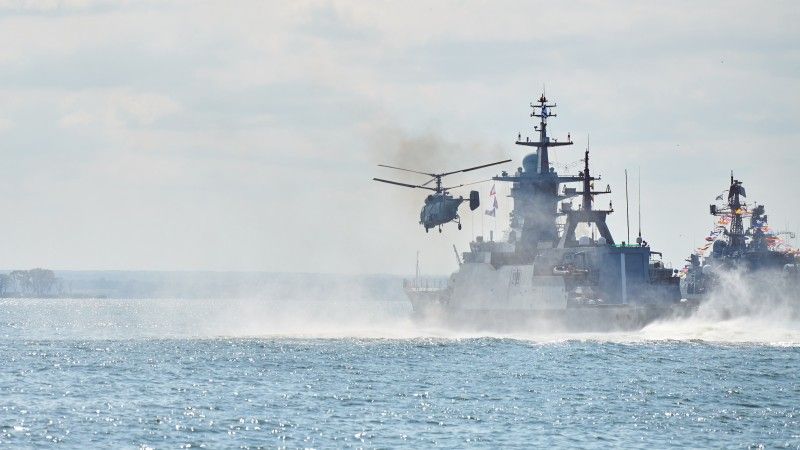
The Baltic Sea has emerged as one of Europe’s most strategically charged regions. NATO’s enlargement to include Finland and Sweden, coupled with rising defence spending across Central and Northern Europe, has transformed these waters into a theatre of intense geopolitical contestation. For Poland and Sweden, two of the region’s largest and most capable NATO members, this environment has catalysed a partnership that spans politics, economics, and military innovation.
Lieutenant General (ret.), Dr Jarosław Gromadziński, CEO of the Defence Institute
Together, the two countries are shaping a new Baltic security ecosystem, combining Poland’s scale and eastern-flank leadership with Sweden’s technological edge and northern-flank command. Their cooperation offers insights into how proximity, complementary capabilities, and shared threat perceptions can generate a high-impact regional security framework.
The Polish government, in setting out its vision for international and defence policy, places strong emphasis on deepening cooperation with the Nordic countries, especially Sweden. Its agenda centres on boosting security, resilience and modernisation across the Baltic Sea region. Warsaw regards the Nordic states as natural partners in building a stronger and more integrated European defence architecture.
During Poland’s first participation in the NB8 summit in November 2024, officials highlighted the need for joint efforts to protect critical infrastructure and counter hybrid threats — including through the establishment of permanent maritime patrols in the Baltic. They also underlined the crucial importance of sustained, collective support for Ukraine, as well as the need to strengthen Europe’s defence autonomy. Gotland A central pillar of this vision is the emerging partnership with Sweden. A meeting between the Polish and Swedish prime ministers on 28 November 2024 concluded with the signing of a declaration on a new strategic partnership. The agreement provides for closer cooperation in military affairs, civil defence and cyber-security, alongside the development of economic ties, innovation partnerships and collaboration on the energy transition.
For Poland, engagement with the Nordic countries constitutes a key instrument for bolstering regional stability and forging common positions within the EU and NATO.
Political convergence in a shifting landscape
Poland and Sweden share a similar perception of the strategic threat posed by Russia. From the militarisation of the Królewiec district to the expansion of Russian naval and air operations, both nations see the Baltic region as a zone demanding constant vigilance. Sweden’s accession to NATO has formalised years of informal cooperation, removing longstanding obstacles to joint operational planning.
In the new NATO framework, Sweden has emerged as the de facto leader of the northern flank, orchestrating maritime surveillance, air policing, and technological innovation in the Nordic theatre. Poland, in turn, anchors the eastern flank, providing forward-deployed land power, logistics hubs, and critical defence infrastructure. This dual leadership ensures that NATO can respond coherently to multi-directional threats—from potential pressures on the Suwałki Gap connecting Poland and Lithuania to protecting key islands such as Gotland in the central Baltic.
Political alignment between Warsaw and Stockholm extends beyond military planning. Both advocate greater European defence responsibility, credible defence spending, and coherent NATO coordination. Their joint approach strengthens the Alliance’s posture in the Baltic region while embedding bilateral initiatives within EU and NATO structures, establishing a durable strategic architecture that transcends short-term operational imperatives.
Industrial synergies: Bridging innovation and scale
Poland’s defence-industrial base is expanding at one of the fastest rates in Europe, driven by a modernisation programme that spans robotics, missile systems, electronics, and advanced munitions. Sweden, by contrast, has long been a technological leader, with a sophisticated defence industry excelling in naval systems, aerospace, sensors, autonomous platforms, and high-value munitions.
The resulting synergy is significant. Sweden contributes advanced know-how and research ecosystems; Poland contributes production capacity and sustained procurement demand. Together, they are developing joint industrial initiatives such as co-produced artillery systems, next-generation unmanned maritime platforms, and shared aerospace sensors, strengthening both NATO interoperability and European defence industrial autonomy.
One illustrative case is the co-development of a next-generation coastal defence missile system, leveraging Swedish precision and Poland’s manufacturing scale. Another is collaboration in autonomous underwater systems for maritime surveillance, enhancing the Alliance’s ability to monitor critical chokepoints in the Baltic. These projects not only accelerate capability development but also reduce dependence on non-European suppliers, reinforcing strategic resilience.
Operational Interoperability: Case studies in the Baltic
Operational integration between Polish and Swedish forces has become a hallmark of their partnership.
Suwałki Gap Exercises The Suwałki Gap—a narrow corridor linking Poland and Lithuania—is widely recognised as one of NATO’s most sensitive strategic points. Joint exercises have tested rapid deployment, combined arms operations, and logistics coordination under simulated multi-directional threats. Swedish units have provided advanced surveillance drones, electronic warfare support, and cyber capabilities, complementing Poland’s ground forces and artillery deployments. These exercises demonstrate the practical utility of a dual-flank leadership model and the speed at which integrated operations can be conducted.
Gotland Deployments The island of Gotland, situated in the central Baltic, has emerged as a key operational hub. Swedish forces, often operating alongside Polish contingents, have conducted anti-submarine warfare drills, maritime interdiction operations, and joint air policing missions. The presence of Swedish high-tech capabilities—particularly in submarine detection and coastal missile systems—combined with Poland’s logistical reach, provides NATO with a credible rapid-response posture across the central Baltic.
Grey-Zone Resilience Poland and Sweden also collaborate to counter hybrid threats, including cyber intrusions, sabotage of undersea cables, and disinformation campaigns. Joint exercises simulate attacks on critical infrastructure, integrating early-warning systems, intelligence sharing, and coordinated cyber responses. This approach reinforces regional resilience and safeguards the economic lifelines of the Baltic Sea, from offshore energy installations to trade routes.
Economic Connectivity and Strategic Infrastructure
The partnership extends beyond defence. Swedish investment in Polish industries spans automotive, electronics, energy, and logistics, while Polish firms increasingly form integral parts of Swedish manufacturing supply chains. New transport corridors, enhanced ferry links, and potential rail integration reinforce the economic dimension of security.
Collaborative projects in offshore wind, green hydrogen, and digital infrastructure further tie the two countries together, creating interdependencies that simultaneously strengthen commercial and strategic resilience. In this sense, the security partnership is as much about safeguarding the Baltic’s economic arteries as it is about military defence.
Strategic Outlook: Towards an integrated Northern Europe
With the Baltic Sea effectively becoming NATO’s internal waters, Poland and Sweden occupy central roles in the Alliance’s northern and eastern flank architecture. Their dual leadership, industrial synergy, and operational integration provide a template for regional defence that is both technologically sophisticated and operationally agile.
Future avenues for cooperation include joint R&D in missiles, naval systems, and aerospace; shared logistics hubs to improve readiness and efficiency; trilateral and multilateral initiatives with Finland, Norway, and the Baltic states; and expanded cyber and space surveillance programs. These measures collectively enhance NATO’s deterrence posture, foster European defence industrial autonomy, and strengthen regional resilience against a spectrum of conventional and hybrid threats.
Conclusion
As Europe faces heightened strategic uncertainty, the Polish–Swedish partnership stands out as a model of integrated regional security. By combining Sweden’s technological leadership with Poland’s scale, production capacity, and eastern-flank command, the two nations are shaping a resilient, high-tech Baltic defence ecosystem. Through political alignment, economic interdependence, and operational interoperability, Poland and Sweden are not just protecting the Baltic Sea—they are defining the future architecture of Northern European security.


