












- WIADOMOŚCI
Under the Baltic Sea lies 50,000 tons of chemical weapons

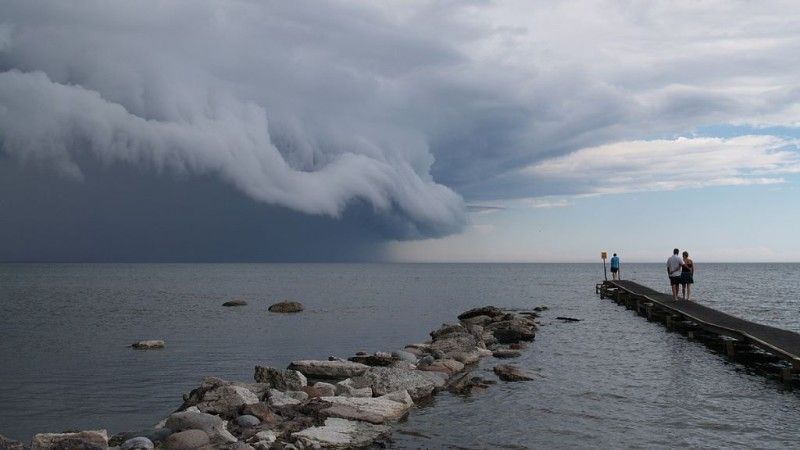
The Baltic Sea in danger? A ticking bomb that could explode at any moment.
After the World War II, the Allies and the Red Army dumped tens of thousands of tons of chemical warfare agents and half a million tons of conventional ammunition into the Baltic Sea. Eighty years later, the steel containers are corroding, and the toxins are beginning to leak. This is not history – it is a current threat to the security of all nine Baltic coastal states, their navies, fishermen, tourists, and critical infrastructure on the seabed.
A little bit of history
Between 1945 and 1948, at least 50,000 tons of sulfur mustard (yperite), adamsite, chloracetophenone, arsenic-based agents, phosgene, and tabun were sunk here. The largest concentrations lie in the Gotland Deep (approx. 32,000 tons), the Gdańsk Deep, east of Bornholm, and the Słupsk Furrow. In addition, nearly 500,000 tons of conventional ammunition containing TNT, phosphorus, and pyrotechnic materials rest on the seabed. All of this lies at depths of 40 to 120 metres – in areas now criss-crossed by commercial shipping lanes, where gas pipelines and power cables are laid, and where NATO warships conduct exercises.
The steel casings that were supposed to last forever are now, in most cases, completely destroyed. Corrosion advances fastest in low-oxygen zones – precisely where the Baltic is most dead. When a container ruptures, sulfur mustard and arsenic compounds do not dissolve immediately; they first form dense, sticky droplets that can lie on the seabed for decades before slowly breaking down and seeping into the water.

A threat we are only now beginning to see
In 2025, sonar surveys and underwater robots are revealing images no one wanted to see: hundreds of cracked bombs and shells oozing yellowish sludge, clouds of black sediment around ammunition-laden wrecks, and minefields still active after eighty years. Fishermen haul mustard-filled shells in their nets, recreational divers stumble upon barrels of unknown contents, and sailors train in areas where a single misstep could release a cloud of chemical warfare agents.
The greatest risk arises during seabed construction work. The building of Nord Stream, Baltic Pipe, and planned offshore wind farms near Bornholm and in Poland’s exclusive economic zone – all these projects require driving thousands of piles and anchors into the seabed. Any disturbance of the containers can cause local contamination covering dozens of hectares, and in the worst-case scenario, release a toxic cloud that would circulate for months in the semi-enclosed Baltic Sea.
If something goes wrong
Sulfur mustard causes third-degree burns on skin contact within minutes. Inhaled, it attacks the lungs and eyes. Organic arsenic compounds accumulate in the body, leading to nerve damage and cancer years later. In the event of a major release, the Baltic’s closed water circulation would carry the toxins to every coastline – from Świnoujście to St. Petersburg, and from Helsinki to Klaipėda.
There is no need to imagine a terrorist attack or deliberate sabotage. A ship’s anchor snagging accidentally, a mistake during naval exercises, or a collision with a wreck would be enough.


