












- WIADOMOŚCI
- KOMENTARZ
Will Europe’s response to Trump work? A look at defence procurement and intelligence

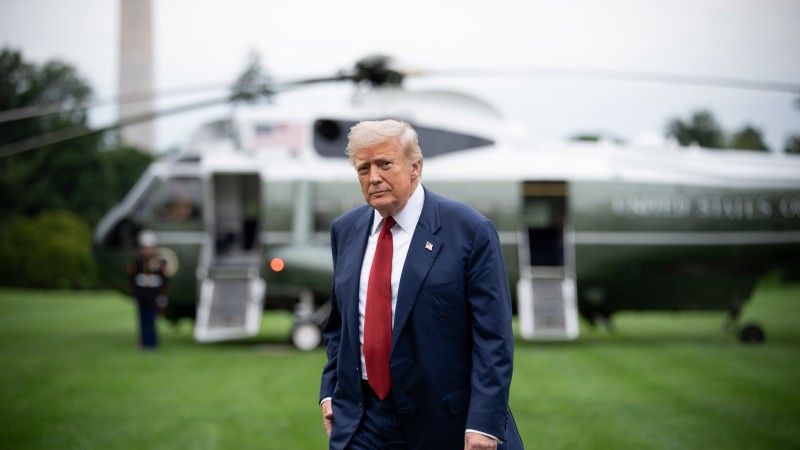
The return of Donald J. Trump to the US Presidency and his confrontational line towards Europe has unsettled the governments in the continent. While fears of a complete break or of a Trump-Putin alliance proved wrong so far, the transatlantic relationship is going through uncharted waters.
Author: Ivan U. Klyszcz. Research Fellow, International Centre for Defence and Security (ICDS)
This landscape has brought new life to conversations of »strategic autonomy«. The topic, however, remains ill-defined between aspirations and enduring need for US cooperation. Some have called the European response to the US shifting security policy as »hedging«. A better way to characterise the European response is vulnerability management paired with a persuasion strategy. Can this approach work in the long run?
What priorities?
Finding grounds for cooperation with the US depends on an overlap of priorities, which so far has proven elusive. Generally, it has been hard to pin down Trump’s foreign policy priorities. Analytical exercises that focus on supposed schools of thought (’restrainers«, »prioritisers«…) have mostly fallen short of the reality that, today, the only thoughts that count in US foreign policy are Trump’s.
As of October, the trend that seems to dominate is hemispheric retrenchment coupled with prestige »peace« projects, such as Gaza and Cambodia. In this context, Europe – the Russo-Ukrainian war – is only one such project among others.
In parallel, the US has moved 14% of its navy to the Caribbean. Notably, the move of the USS Gerald Ford will result in no US aircraft carrier deployed to the Mediterranean Sea for the first time in years. A full-blown war with Venezuela (which Europe should not join would only deepen the strategic divergence between the US and Europe.
While they remain mighty in terms of scale and capabilities, many worry that US intelligence is losing its edge. In May, it was reported that the CIA will reduce its headcount by over 1000. Many agencies have also reduced hiring in general. In August, US Director of National Intelligence Tulsi Gabbard announced a 50% staff cut for her office.
More worrying still, fringe ideologues such as Laura Loomer have reportedly made key organisational and personnel decisions for the National Security Council. In general, today, across Washington, loyalty trumps expertise.
Europe's response
Preventing Trump from further weakening NATO has been one been one bright spots where Washington and the European capitals have converged. Crucially, the NATO Allies pledged to raise defence expenditures to 5% (that is, except the US, which is set to diminish its military budget), which Trump could sell as a »win« for his constituents.
Beyond converging on ensuring NATO’s continuity, Europe considers the US, today, as a source of risks. Despite not even reaching one year, the second Trump term has already undermined the basis for trust in the transatlantic relationship. The reasons behind this dip in trust are well known. On a declarative level, Washington has explicitly referred to the European Union as created to »screw the US«. Trump has repeatedly referred to Russia’s full-scale war against Ukraine as « Zelensky’s war«.
On a policy level, the White House was found to carry out covert operations in Greenland,openly meddledin Europeanelections, and imposed tariffs. In Ukraine, US support has ceased, and the White House only agrees to maintain a flow of weapons when paid by Kyiv’s partners with a »10% markup«.
European capitals are divided on how to mitigate this risk. Namely, the division runs between those who argue that enhanced capabilities will provide the continent with better bargaining power vis-à-vis Washington, and those who argue that doing so will accelerate US disengagement. Paralyzed, the risks of cooperating with Washington are managed by intelligence curtailments and changes in defence procurement.
On intelligence, the concern lies on the reliance of US capabilities. Among other assets, the US had the largest satellite fleet of any country in the world, this mighty network provides an unparalleled intelligence gathering asset that no NATO ally can match. Upon Trump’s election – and especially after choosing Gabbard as intelligence chief –, allied intelligence services to the US began to worry about the reliability of US information sharing.
These concerns were warranted. In August, Gabbard announced that US services stopped sharing updates on the Russo-Ukrainian war to the closest circle of US intelligence allies (the »Five Eyes« consisting of Australia, Canada, New Zealand, the United Kingdom and the US).
As reported byDe Volksrant, the intelligence services of The Netherlands have decided to curtail some intelligence sharing with their US counterparts and enhance cooperation with European partners. Despite its crucial role in European security, the EU is not an intelligence alliance. Europol and the Club de Berne help, but they fall short of a true EU-wide intelligence sharing system. That said, recent reports suggest that intelligence cooperation in the EU is »at its best in modern history«.
These efforts at risk management have been paired with constant engagements with Trump himself. Persuasion has become a key tactic among European leaders in their approach to the US. Generally, diplomatic outreach to Trump has served as a way for Europe to prevent US-Russia alignment and the full abandonment of US commitments to Ukraine and NATO. Persuasion follows, in part, the logic that Europe requires more time for its defence build-up and for Ukraine to achieve additional military successes.
The most immediate test whether the European approach will pay off is the US Department of Defence force review. Set to be published in the winter of 2025/2026, the document is expected to delineate a reduction of forces from Europe. A gradual and coordinated process would be the best outcome, which is, in part, what European outreach has sought. However, persuasion will prove futile if, at the end, reductions are pursued unilaterally.
Outlook
The choice of vulnerability management and persuasion make it difficult to characterise the current European response to Trump as »hedging«. Namely, the behaviour of states to manage risks through diversifying partnerships. What is missing is a systematic engagement with other would-be security providers. Indeed, Europe appears to be aiming for something akin to »internal balancing«, that is, the development of capabilities without reliance on external partners.
This is evident when considering that European defence expenditures have risen dramatically in recent years. The collective expenditures of the EU-27 reached a total of EUR 343 bn in 2024, 19% more than in 2023 (EUR 288 bn), set to grow further soon. Not without hurdles, as a lot of the money that is spent on capabilities goes to US suppliers. This has the paradoxical effect of increasing dependence on the US even when raising defence budgets and increasing capabilities.
Still, European defence industrial capacity has been growing at break-neck speed. According to an estimate byThe Financial Times, Europe is building defence factories at triple the rate it did in 2020.
Buy European rules show promise. For the EU, the aim of these manoeuvres – as delineated in the 2024 European Defence Industrial Plan – is for half of EU defence procurement to be sourced from other European states by 2030.
Today, demand for arms outstrips European supply, so imports will remain a reality for the foreseeable future. In the meantime, investments must continue; defence cooperation with Korea and closer ties with Japan will add to the defence industrial base, as well as intelligence capabilities.
Supporting Ukraine and strengthening Europe’s defence remain the top security priorities of the continent. Europe should see keeping the US engaged in Europe as a means towards those goals, rather than a goal on its own.


