












- sponsorowane
- WYWIADY
- WIADOMOŚCI
There is no relevant combat capacity without modern optoelectronics [INTERVIEW]

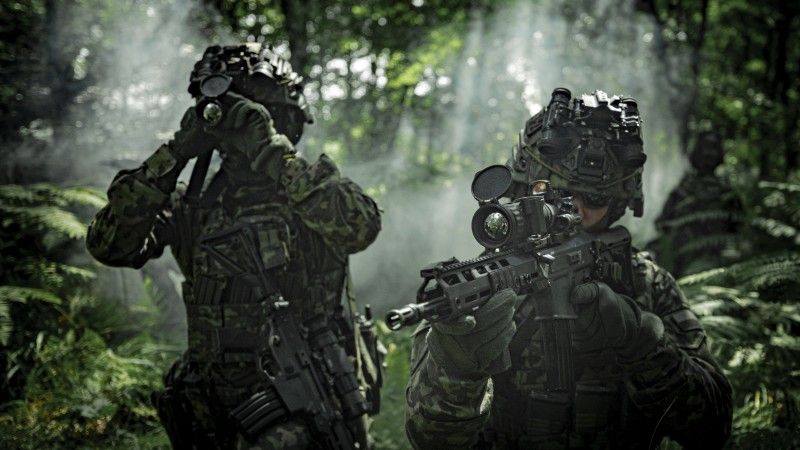
Photo. PCO S.A.
PCO is not merely a supplier of individual devices, but an important element of the national defence capability chain, from individual soldier equipment to systems for combat vehicles, says Marek Adamiak, President of the Management Board of PCO S.A., in an interview with Defence24.
Dr Jacek Raubo, Defence24: Sir, to begin with, I would like to ask you, in a sense, about the achievements of these 50 years of your history. Where is PCO S.A. today, especially when we think about the overall picture of the Polish defence industry, and what have been your greatest successes when viewed through the lens of such a rich company history?
Marek Adamiak, President of the Management Board of PCO S.A.: For 50 years, PCO S.A. has built its position as the largest Polish manufacturer of optoelectronic products for defence, particularly in the field of night vision, thermal imaging and laser technologies. Our history can be described as a steady transition from a domestic base of specialised optics to a mature centre of competence that genuinely co-creates the capabilities of the Armed Forces of the Republic of Poland. PCO’s greatest success is that our solutions have become standard in many areas of soldier equipment and combat platforms, while at the same time we remain a company that can combine production, development and operational implementation. In practice, this means that PCO is not merely a supplier of individual devices, but an important element of the national defence capability chain, from individual soldier equipment to systems for combat vehicles. The 50th anniversary is therefore not only an opportunity for us to take stock, but above all a confirmation that Polish optoelectronics can be modern, competitive and useful to the military.
PCO S.A. is part of Polska Grupa Zbrojeniowa, PGZ, and thus one of the most important entities in the Polish defence industry. Accordingly, I would like to ask about your role in the development of the entire PGZ structure, how important you are in this overall picture and in the current pace of change in the defence industry?
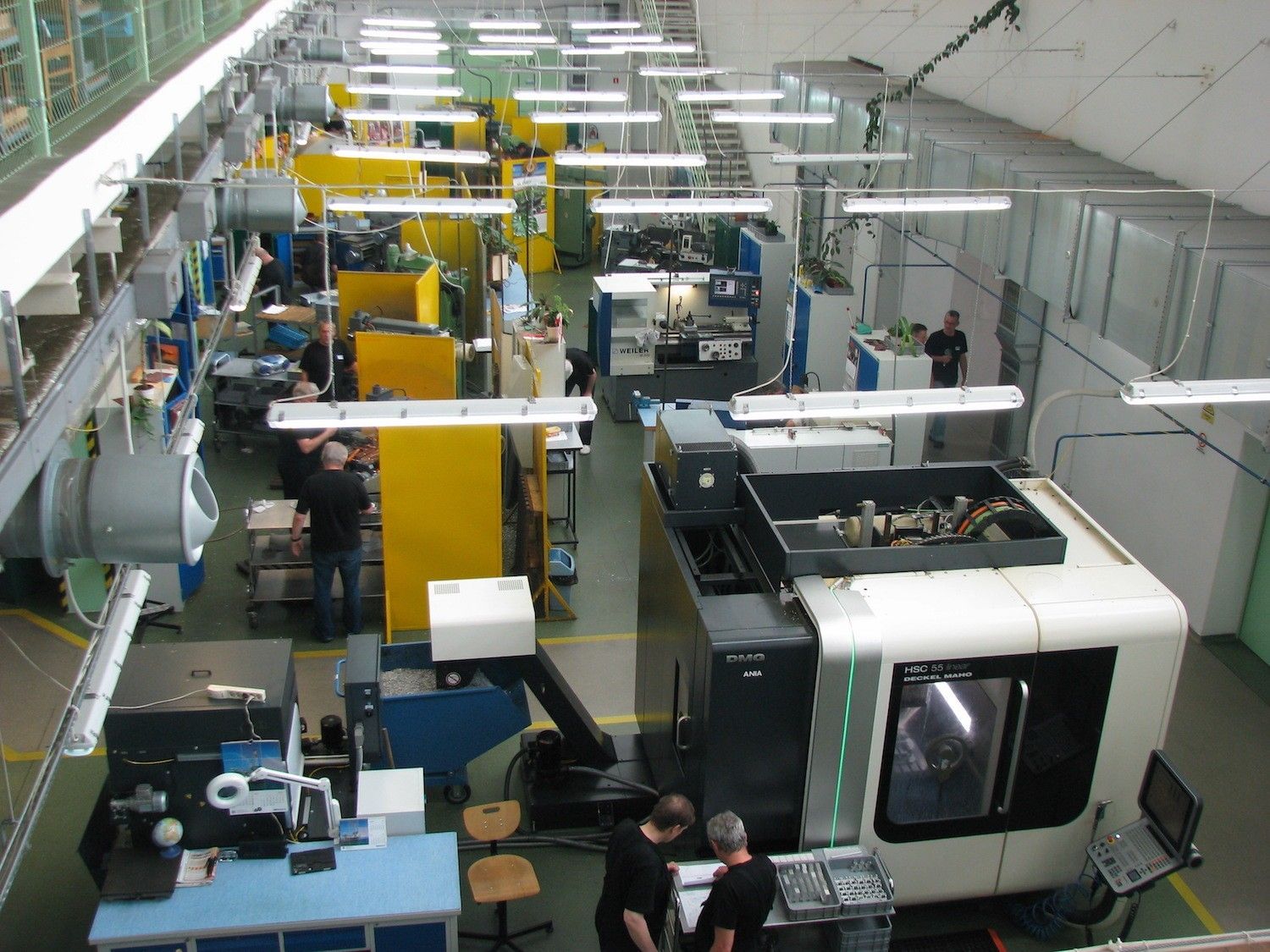
As part of the Polish Armaments Group, PCO plays the role of a specialist in optoelectronics, one of the key fields of the modern battlefield. It is precisely such competencies that build the value of the entire PGZ, because without advanced observation, reconnaissance, thermal imaging and night vision, it is difficult to speak of the full combat capabilities of modern armed forces. With the current dynamics of change in the defence industry that we observe, the importance of specialised companies is growing, because they deliver technologies with the highest added value. PCO has fit very well into the current needs of the defence market – both in quantitative terms and in terms of innovation and quality. We are responding to growing demand by expanding production capacity – over the last three years, we have more than doubled the sales volume of PCO products delivered to the Armed Forces. We are implementing a project to expand production capacity worth more than PLN 270 million, including optoelectronic heads for the NAREW, PILICA, PILICA+ „Eastern Shield”, and BORSUK programmes, among others. Our role can therefore be described as that of a supplier and a key architect of technological sovereignty. Cooperation with other PGZ companies, such as Rosomak, Bumar-Łabędy and Fabryka Broni „Łucznik” from Radom, shows that the strength of the Polish defence industry today lies in combining competencies, not dispersing them. From the perspective of the last year, it is also worth mentioning close cooperation with ZM Tarnów and PIT-RADWAR within the Drone Wall – a multi-layered network for the detection, tracking and neutralisation of UAVs, where our EO/IR sensor suites are used for identification and fire control. From PGZ’s perspective, PCO is an important pillar because it strengthens both the domestic offer and the export potential of the entire group.

Photo. PCO S.A.
Mr President, we have spoken about achievements, and now I would like to ask about the greatest challenges facing PCO S.A., looking perhaps not at the next 50 years, but at the coming decade. Especially since the defence industry today has been placed at the epicentre of thinking about state security. Where do you want to take the development of PCO S.A., and where do you see the greatest opportunities, but perhaps also threats?
The biggest challenge in the coming years will be maintaining the pace of innovation while at the same time increasing production scale and supply chain resilience. The defence industry is entering a phase in which not only product quality matters, but also the ability to implement quickly, certify and deliver on time. We have around 100 engineers in the Innovation, Research and Development Division, which enables us to respond quickly to challenges; as the first company in the PGZ Capital Group, we established an AI department for applications in optoelectronic systems. The key elements of transformation are digitalisation, innovation, technological sovereignty and securing supply chains – for example, the framework agreement with VIGO Photonics for T2SL matrices, awarded with a Defender at MSPO. For PCO, this translates into the need to develop new technologies while simultaneously strengthening its production and cooperative base. We see the greatest opportunities in the development of modern thermal imaging cameras, observation systems and the integration of optoelectronics with combat platforms. Poland needs an evolution of the defence industry: smart, systematic, based on anticipating the battlefield of tomorrow – with integration of the state, industry and science. Another important direction is solutions responding to the experience of the war in Ukraine, where the importance of situational awareness, 24-hour observation and system resilience to countermeasures and jamming is growing. Threats remain, however, in the form of limited access to components and pressure to increase production very rapidly, which must go hand in hand with quality.
Optoelectronic technologies also require equally careful production planning due to supply chains. How is PCO S.A. coping in a world that is increasingly concerned about turbulence around critical materials or constraints in the area of components? How important is your cooperation with European partners in this regard?
In optoelectronics, supply chain security is strategically important, because many components and materials are specialised and critical in nature. Thus, PCO builds relationships with technology partners that make it possible to reduce risks arising from dependence on individual suppliers. A good example here is the strategic agreement with VIGO Photonics concerning cooled infrared matrices for military applications, concluded until the end of 2031 (based on T2SL technology, awarded a Defender at MSPO). Cooperation with European partners is important not only from the point of view of access to components, but also for building technological sovereignty and scaling production. Such cooperation makes it possible to create solutions competitive with foreign offers, while at the same time strengthening the resilience of the entire domestic defence ecosystem. We participate in EDF programmes such as HEROIC/SPIRIT and ATRIT; our engineers take part in the EDA CapTech for optronics. In practical terms, this translates into striving to ensure that as much added value as possible remains in Poland and in Europe.
I would now like to clarify somewhat what changes are taking place in your offer relating to soldiers« individual equipment. Especially since the modern battlefield leaves no illusions when it comes to the need for the military to have extensive capabilities in night vision, thermal imaging, or more broadly, an expanded spectrum of observation in different weather conditions, by day or by night.
PCO’s offer in the area of individual equipment is directly linked to the needs of the modern battlefield, where information superiority and the ability to observe in all conditions are absolutely crucial. We are developing night vision and thermal imaging solutions with the aim of enabling the soldier to operate effectively both at night and in conditions of limited visibility, fog or smoke. We are implementing the expansion of capabilities for the individual equipment kit used by the Polish Armed Forces. It is precisely this area that is today one of the most important pillars of tactical advantage. Practically speaking, this means continuously improving devices so that they are lighter, more reliable, better integrated with other equipment and more comfortable to use. PCO is responding to the real needs of the Polish Armed Forces here, and the military expects solutions that increase situational awareness and soldier survivability. As an example, we can cite monoculars and night-vision goggles: the current offer provides full modularity, which means the possibility of freely configuring head-mounted observation sets – including assembling goggles with either one night-vision monocular (for one eye – e.g. the MU-3AM type) or two night-vision monoculars (e.g. by connecting two MU-3AM monoculars with a special bridge, MU-3ADM night-vision goggles were created) – or simultaneously: both a night-vision and a thermal-imaging monocular.
In this way, the goggles user can use night vision during normal operations, but when, for example, they enter a dark room, they can tilt down the thermal monocular and operate in darkness without the need to use illuminating flashlights, so as not to reveal their position to other users of night-vision systems.

Photo. PCO S.A.
We can see dynamic changes taking place in the Polish Armed Forces« capabilities to conduct operations, particularly in the land domain. Hence, I would like to ask about your approach to the most critical issues related to the equipment of combat platforms, including tanks, wheeled armoured personnel carriers, armoured personnel carriers and infantry fighting vehicles. Can modern land forces in our country even be imagined without PCO S.A. products?
With regard to combat platforms, PCO provides solutions that are today one of the baseline elements of modern tanks, wheeled armoured personnel carriers, armoured personnel carriers and infantry fighting vehicles. Our sensor suites for programmes such as KTO Rosomak, Borsuk, and the K2PL technology transfer. Thermal imaging cameras, observation systems and other optoelectronic elements increase fire lethality, situational awareness and crew safety. Without such systems, it is difficult to speak of full-fledged modernity in the land forces. I would not say, however, that modern land forces cannot exist without PCO, but rather that without domestic optoelectronic competencies they would be much more dependent on external supplies and less resilient to jamming and countermeasures. Our ambition is therefore not to establish a monopoly, but to get engaged in building of the state’s technological autonomy, in an area that is critical to the effectiveness of the land forces.
Today, the Polish Armed Forces are not only about new procurement and the development of new capabilities, but also about the modernisation of older technological solutions that are in service right now with our soldiers. How do you approach this balancing of future needs and matters related to the modernisation of existing resources?
PCO approaches this area in a balanced way: on the one hand, we support new programmes, and on the other, the modernisation of existing assets already in the Polish Armed Forces. The modernised T-72 tanks transferred to the Ukrainian side after the outbreak of the full-scale conflict can serve as proof. These vehicles proved themselves in combat conditions, repelling modern armoured equipment of the Russian Federation in the first phase of the war. This is important, because the military cannot wait exclusively for new platforms – it often needs a rapid boost to capabilities here and now. That is why the modernisation of older systems is as important as creating new generations of equipment. Such a model makes it possible to gradually raise the level of the entire armed forces without having to replace everything at once.
What can we say about cooperation with the Polish Armed Forces, which are the largest end user of your technological solutions? Over these 50 years, how did you manage to build cooperation that allows you to improve the offer for soldiers, but also to show the military the new technological possibilities behind your products?
Cooperation with the Polish Armed Forces is fundamental to PCO’s product development, because it is the end user who best shows whether a given solution truly works under field conditions. This relationship has developed over decades and is based on trust, testing, modifications and the joint drawing of conclusions from operation. The Armed Forces of the Republic of Poland remain the overriding priority – their needs determine the direction of investment. Such cooperation makes it possible not only to improve the offer, but also to show the military the new technological possibilities. In 2025, PCO took part, among other things, in events and presentations involving the military, including during visits by representatives of the Ministry of National Defence and at equipment displays for the military and international partners.
We cannot avoid questions about export capabilities either. What does your strategy look like in terms of activity in markets outside Poland? What are your priorities when it comes to acquiring new customers for your solutions and, above all, what can we say after these 50 years about your export successes to date?
Priority remains with the Armed Forces, but we are developing exports: an agreement with Hanwha Systems on APS and laser weapons (production in Poland), a HiL lab with Lockheed Martin (2026), K2PL. As far as exports are concerned, PCO’s strategy is based on developing its presence outside Poland while simultaneously strengthening its position at home as a reference base. The company has been signalling export ambitions for years, and cooperation with foreign partners and participation in international seminars and trade fairs are elements of this policy. Success in exports in this industry is not only about sales, but about gaining trust in the quality, compatibility and reliability of solutions. We are not afraid of competition – we have IPR, integration with global systems; an advantage in optoelectronics. Evidence confirming our export policy is the twofold increase in export sales in 2025, and in the current year we are not slowing down. At present, our products can be found in South-East Asia, the Middle East, Africa and, of course, in European countries.

Photo. PCO S.A.
Military technologies always require great flexibility in the search for new technological solutions, and this is particularly evident today in the impact of new and breakthrough technologies on the development of the military domain. What can be said about PCO S.A.’s capabilities in research and development, and cooperation with scientific centres in Poland?
Research and development is one of PCO’s key pillars of activity, and cooperation with universities and research institutes is embedded in the company’s officially declared mission. Cooperation with science: the 10th Optoelectronic Conference 2025 as a forum. The company also emphasises active support for science, entrepreneurship and educational initiatives, showing that technological development cannot be detached from a competence base. In practice, this is about building competencies that make it possible not only to buy technology, but to understand, develop and implement it. We cooperate with all the largest universities in Poland, and organise internships for students and secondary school pupils. At the same time, we have funded an extensive scholarship programme for the most talented pupils in fields key to our sector.
Finally, as we celebrate such a distinguished anniversary, I cannot omit the general question: what can be wished for PCO S.A. in the years ahead?
For the years ahead, PCO can above all be wished stable development, further successful implementations and maintaining its position as a leader of Polish defence optoelectronics. Equally important are resilient supply chains, strong technological partnerships and further deepening of cooperation with the Polish Armed Forces. I have deep conviction that the best is still ahead of us. We have the best specialists in the country, we have vast experience, we have the support of the PGZ Group and the Polish Armed Forces, and above all – we have the people who make PCO strong, a solid foundation on which we rely, because THE COMPANY IS THE PEOPLE!
Fifty years is not the end of the road. It is a beautiful stop from which the next stretch is already visible.
Sponsored article


