












- WIADOMOŚCI
Volkswagen was supposed to manufacture components for the Iron Dome. A shareholder from Qatar blocked the deal
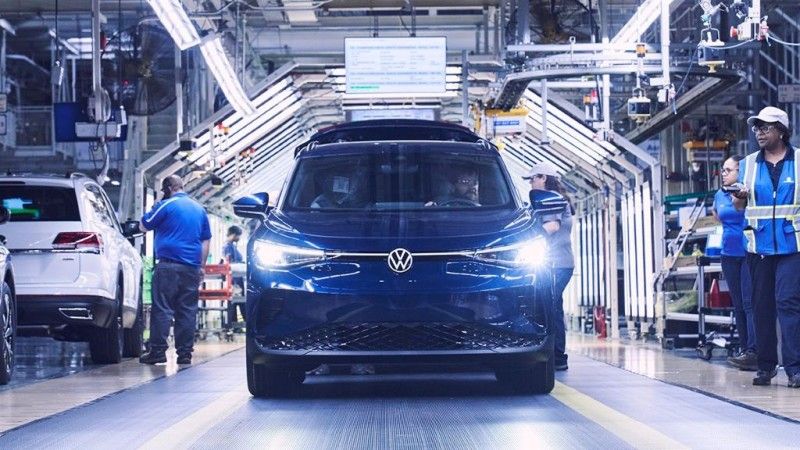
Photo. VW/X
The crisis at German Volkswagen continues. Just as it seemed the company would find its footing in the defence market, the execution of a lucrative contract with an Israeli firm was blocked by a shareholder from… Qatar.
Recent years have not been kind to the German automotive giant. The difficult and costly transition from internal combustion engines to electric vehicles, combined with growing problems stemming from the mass influx of cheaper Chinese competition into Europe, has forced the group known for Beetles, Golfs, and Passats to seek alternative revenue sources. The global geopolitical situation prompted the Germans to open up to the broadly defined defence industry.
Cooperation with Rafael
One manifestation of this opening was the collaboration with the Israeli defence company Rafael (Rafael Advanced Defence Systems) announced earlier this year. Joint activities were to be based on the production of components for „Iron Dome” anti-missile systems at the Volkswagen factory in Osnabrück, where car production is scheduled to end this year. The partnership was intended to satisfy both parties – the German side would prevent mass layoffs and the factory’s closure, while the Israeli entity would diversify its production, a move justified by security concerns given the tense situation in the Middle East. Under a letter of intent signed in April, the German automotive company committed not only to producing trucks to transport components of the Israeli system but also, among other things, to the production of power generators.
In July, it turned out that these investments will likely not materialize. This is due to a minority shareholder in Volkswagen—the Qatar Investment Authority (QIA)—which reportedly blocked the cooperation in Osnabrück. The main reason? Qatari policy toward Israel. An additional blocking factor was the labor unions within the company itself, which also protested against producing for an Israeli firm famous for its Trophy APS (Active Protection System) and Spike anti-tank missiles.

A Lost chance?
Despite the fact that Porsche SE holds more than 50 percent of the company’s shares and QIA is a minority investor (approximately 10 percent), Volkswagen management decided to respect the Qatari blockade. This decision stems not only from financial considerations (fears of losing a shareholder) but also from the aforementioned protests by some employees and local activists who want the factory in the German city to remain focused exclusively on production for the civilian market. The political dimension cannot be ignored either—Qatar’s relations with Israel are, to put it mildly, not the best, as evidenced by the fact that the two countries do not maintain official diplomatic relations. There is, therefore, a high probability that if the German group had decided to cooperate with a defence company from another country, the Qatari veto might not have occurred.
At this point, it is difficult to predict the future of Volkswagen in Osnabrück. It is also unknown whether the partnership with Rafael is a thing of the past, or if cooperation will be possible at another level or in a different location.


