












- WIADOMOŚCI
- WYWIADY
Wargaming beyond the battlefield: civilian and strategic applications

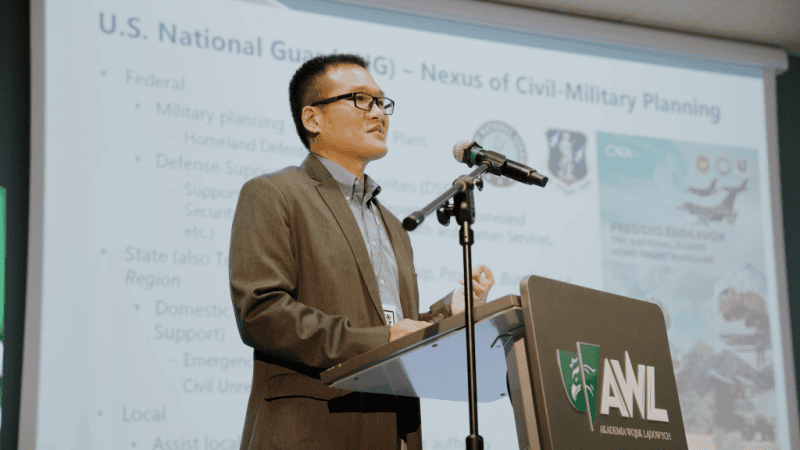
In this Defence24 interview, Patrick Feng from the Center for Naval Analyses (CNA) in the United States discusses how wargaming is evolving beyond its traditional military context to address a wide range of civilian and global challenges.
Feng explains that the methods and analytical rigor developed in military wargaming are increasingly being adapted for non-military use — from policymaking and crisis management to cyber defence and climate security. According to him, the core value of wargaming lies in its ability to explore complex, uncertain environments and test decisions before real-world implementation.
Drawing on best practices from defence simulations, Feng emphasises the importance of clear objectives, realistic assumptions, and diverse stakeholder participation in ensuring meaningful outcomes. When applied to civilian sectors, these principles can help improve coordination, resilience, and preparedness in the face of systemic risks.
He also notes that wargaming offers a unique platform for dialogue between experts from different fields — bridging gaps between science, policy, and strategy. By modelling interdependencies and long-term consequences, wargames can support decision-making in areas such as climate adaptation, critical infrastructure protection, and cyber resilience.
As Feng concludes, „wargaming is not only for soldiers” — it is a versatile analytical tool that can enhance understanding, cooperation, and strategic foresight across both military and civilian domains.


