












- WIADOMOŚCI
Baltics boost drone capability

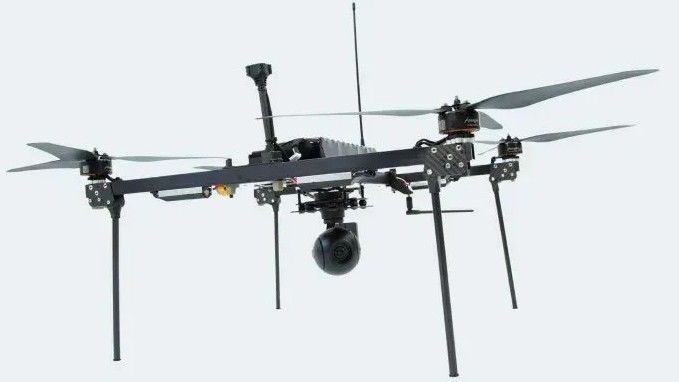
Photo. https://market.brave1.gov.ua
Lithuania, Latvia, and Estonia are accelerating drone training and infrastructure projects to enhance national defence readiness in response to mounting security concerns from Russia.
Lithuania will establish nine drone training centres between 2025 and 2028 under a joint Ministry of Defence and Ministry of Education initiative. The €3.3 million programme will train approximately 15,500 adults and 7,000 children in piloting, design, and maintenance. Courses will progress from basic indoor drones for primary pupils to FPV systems, 3D-printed components, and competitive flying for older students. The Lithuanian Riflemen’s Union will conduct adult training, while the Lithuanian Agency for Non-formal Education will manage youth instruction.
Latvia is advancing its own programme through youth engagement and military integration. In July 2025, the Youth Guard Centre hosted its first Drone Operator Camp at Mežaine, training 32 cadets in flight fundamentals, reconnaissance, and operations under simulated electronic warfare. The Ministry of Defence has allocated €20 million to create a „drone army”, funding domestic UAV production, multi-level operator training, and a dedicated testing range at the new Šēlija base.
Estonia is embedding drone operations into compulsory high-school national defence classes. Each participating school will receive drones and simulators, enabling students to develop operational proficiency. Officials cite a requirement for roughly 1,000 operators, based on Ukrainian experience. The education initiative complements a €20 million „drone wall” project — a border-wide network of sensors, counter-UAV systems, and AI-driven monitoring — scheduled for completion by 2027. Estonia has also opened its first military drone training centre in Nurmsi.
The Baltic approach underscores the necessity for European Union members to invest in indigenous drone capability. Lithuania, Latvia, and Estonia demonstrate that integrating UAV training, production, and operational infrastructure is essential for deterrence and resilience, and must be undertaken pre-emptively rather than reactively.


